
About This Book
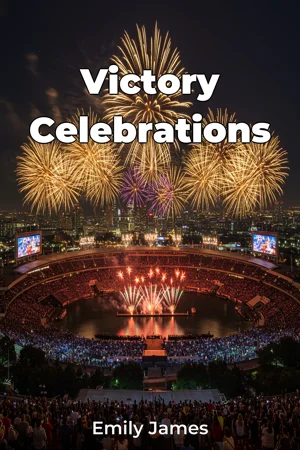
Why do we erupt in collective joy? This book, *Victory Celebrations*, delves into the multifaceted phenomenon of how societies commemorate pivotal victories – from the adrenaline-fueled euphoria of sports championships to the profound relief marking the end of conflicts and the hard-won successes of freedom movements. These celebrations, often dismissed as mere displays of exuberance, are in fact powerful social rituals that reveal deeply ingrained values, shape collective identity, and impact the course of history. We will explore the key elements and significance of victory celebrations, examining not only their outward manifestations but also their underlying psychological and sociological functions. Understanding why and how we celebrate is vital because these rituals reinforce social bonds, transmit cultural narratives, and even influence political outcomes. The book further examines the ways in which celebrations can be manipulated for political gain or used to exclude marginalized groups, thus providing a balanced view of their positive and negative implications. To provide context, we will explore the historical evolution of celebratory practices from ancient times to the present day. This includes examining the role of religion, politics, and social structures in shaping these rituals. While some prior knowledge of world history and basic sociological concepts will enhance the reading experience, it is not a prerequisite. The central argument of *Victory Celebrations* is that these collective displays of joy are not simply spontaneous outbursts but carefully constructed performances that serve distinct social, political, and cultural purposes. By analyzing these celebrations, we can gain a deeper understanding of the values and beliefs that underpin society. This is important as it challenges the conventional view of celebrations as superficial occurrences, instead positioning them as essential tools through which societies define themselves. The book will unfold in a structured manner. First, an introduction will establish the core concepts of victory celebrations: their psychological underpinnings, sociological functions, and historical context. The initial chapters then focus on sports, examining how victory celebrations in different sports reflect varying cultural values and national identities. The subsequent section will delve into celebrations surrounding the end of wars and conflicts, dissecting the complex emotions of relief, remembrance, and reconciliation that these events evoke. Finally, the book will explore celebrations arising from freedom movements and political revolutions, illuminating how these events solidify new social orders and promote ideals of justice and equality. The conclusion synthesizes these diverse examples to offer a comprehensive framework for understanding victory celebrations as a universal human phenomenon with profound implications. The arguments will be supported by a diverse range of evidence, drawing from historical accounts, sociological studies, psychological research, and media analysis. Data sources include archival materials, ethnographic studies of contemporary celebrations, and quantitative data on public attitudes towards various victories. *Victory Celebrations* connects to several other academic disciplines, including history, sociology, political science, psychology, anthropology, and sports studies. It also intersects with media studies through its examination of how celebrations are portrayed and shaped by media coverage. These interdisciplinary connections enrich the analysis by providing multiple perspectives on the complex phenomenon of victory celebrations. This book offers a comprehensive and nuanced exploration of how societies celebrate victory, providing a unique perspective on the ways in which these rituals shape collective identity, reinforce social bonds, and transmit cultural narratives. Written in an accessible style, the book targets a broad audience, including students, scholars, journalists, and general readers interested in history, sports, sociology, and the psychology of collective behavior. This book will be valuable to them by offering new insights into the hidden meanings and social functions of victory celebrations. As a work of non-fiction, the book adheres to the genre's conventions by presenting factual information, rigorous analysis, and clear evidence-based arguments. The scope of the book is global, covering celebrations from various cultures and historical periods. However, it does not delve into the specific details of every single victory celebration in history, focusing instead on representative examples that illustrate broader patterns and trends. The information conveyed in *Victory Celebrations* has real-world applications for anyone seeking to understand social dynamics, cultural values, and political trends. Journalists can use it to contextualize news events, policymakers can use it to design effective communication strategies, and community leaders can use it to foster social cohesion. While the book celebrates the positive aspects of victory celebrations, it also addresses potential controversies, such as the risk of exclusion or the manipulation of celebrations for political purposes. It will consider debates around nationalism and patriotism, while also acknowledging when celebrations can be divisive.
Why do we erupt in collective joy? This book, *Victory Celebrations*, delves into the multifaceted phenomenon of how societies commemorate pivotal victories – from the adrenaline-fueled euphoria of sports championships to the profound relief marking the end of conflicts and the hard-won successes of freedom movements. These celebrations, often dismissed as mere displays of exuberance, are in fact powerful social rituals that reveal deeply ingrained values, shape collective identity, and impact the course of history. We will explore the key elements and significance of victory celebrations, examining not only their outward manifestations but also their underlying psychological and sociological functions. Understanding why and how we celebrate is vital because these rituals reinforce social bonds, transmit cultural narratives, and even influence political outcomes. The book further examines the ways in which celebrations can be manipulated for political gain or used to exclude marginalized groups, thus providing a balanced view of their positive and negative implications. To provide context, we will explore the historical evolution of celebratory practices from ancient times to the present day. This includes examining the role of religion, politics, and social structures in shaping these rituals. While some prior knowledge of world history and basic sociological concepts will enhance the reading experience, it is not a prerequisite. The central argument of *Victory Celebrations* is that these collective displays of joy are not simply spontaneous outbursts but carefully constructed performances that serve distinct social, political, and cultural purposes. By analyzing these celebrations, we can gain a deeper understanding of the values and beliefs that underpin society. This is important as it challenges the conventional view of celebrations as superficial occurrences, instead positioning them as essential tools through which societies define themselves. The book will unfold in a structured manner. First, an introduction will establish the core concepts of victory celebrations: their psychological underpinnings, sociological functions, and historical context. The initial chapters then focus on sports, examining how victory celebrations in different sports reflect varying cultural values and national identities. The subsequent section will delve into celebrations surrounding the end of wars and conflicts, dissecting the complex emotions of relief, remembrance, and reconciliation that these events evoke. Finally, the book will explore celebrations arising from freedom movements and political revolutions, illuminating how these events solidify new social orders and promote ideals of justice and equality. The conclusion synthesizes these diverse examples to offer a comprehensive framework for understanding victory celebrations as a universal human phenomenon with profound implications. The arguments will be supported by a diverse range of evidence, drawing from historical accounts, sociological studies, psychological research, and media analysis. Data sources include archival materials, ethnographic studies of contemporary celebrations, and quantitative data on public attitudes towards various victories. *Victory Celebrations* connects to several other academic disciplines, including history, sociology, political science, psychology, anthropology, and sports studies. It also intersects with media studies through its examination of how celebrations are portrayed and shaped by media coverage. These interdisciplinary connections enrich the analysis by providing multiple perspectives on the complex phenomenon of victory celebrations. This book offers a comprehensive and nuanced exploration of how societies celebrate victory, providing a unique perspective on the ways in which these rituals shape collective identity, reinforce social bonds, and transmit cultural narratives. Written in an accessible style, the book targets a broad audience, including students, scholars, journalists, and general readers interested in history, sports, sociology, and the psychology of collective behavior. This book will be valuable to them by offering new insights into the hidden meanings and social functions of victory celebrations. As a work of non-fiction, the book adheres to the genre's conventions by presenting factual information, rigorous analysis, and clear evidence-based arguments. The scope of the book is global, covering celebrations from various cultures and historical periods. However, it does not delve into the specific details of every single victory celebration in history, focusing instead on representative examples that illustrate broader patterns and trends. The information conveyed in *Victory Celebrations* has real-world applications for anyone seeking to understand social dynamics, cultural values, and political trends. Journalists can use it to contextualize news events, policymakers can use it to design effective communication strategies, and community leaders can use it to foster social cohesion. While the book celebrates the positive aspects of victory celebrations, it also addresses potential controversies, such as the risk of exclusion or the manipulation of celebrations for political purposes. It will consider debates around nationalism and patriotism, while also acknowledging when celebrations can be divisive.
*Victory Celebrations* explores the profound role of societal celebrations, from sports championships to the end of wars, as powerful social rituals. These collective displays of joy are not mere outbursts but reflections of deeply ingrained cultural values and shapers of collective identity. Examining these celebrations offers insight into how societies reinforce social bonds and transmit cultural narratives. For instance, victory celebrations can solidify a new social order after political revolutions. The book delves into the historical evolution of these practices, revealing how religion, politics, and social structures have shaped celebratory rituals over time. It offers a structured approach, starting with the psychological and sociological underpinnings of victory celebrations. It progresses from examining sports, where celebrations reflect national identity, to exploring the complex emotions surrounding the end of conflicts and the ideals promoted by freedom movements. By analyzing a diverse range of historical accounts, sociological studies, and media analysis, *Victory Celebrations* challenges the conventional view of celebrations as superficial occurrences. It positions them as essential tools through which societies define themselves, highlighting their impact on political outcomes and their potential for both inclusion and exclusion. This interdisciplinary approach makes it uniquely valuable for understanding the hidden meanings and social functions of victory celebrations.
Book Details
ISBN
9788235241726
Publisher
Publifye AS
Your Licenses
You don't own any licenses for this book
Purchase a license below to unlock this book and download the EPUB.
Purchase License
Select a tier to unlock this book
Need bulk licensing?
Contact us for enterprise agreements.