
About This Book
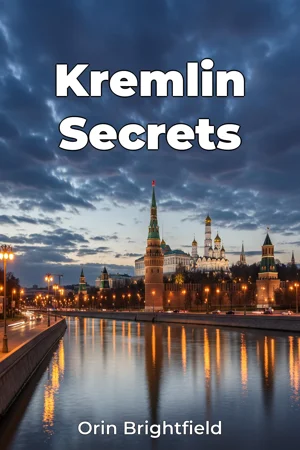
What secrets lie hidden within the walls of the Kremlin, beyond its iconic silhouette? This book, *Kremlin Secrets*, delves into the political heart of Russia, exploring the Kremlin's architectural evolution, the intense power struggles that have unfolded within its confines, and its enduring significance on the world stage. It is a journey into the heart of Russian power, examining how this ancient fortress has adapted, survived, and shaped the nation’s destiny. The Kremlin is much more than a historical monument; it is a living testament to Russia's political landscape. Understanding its architecture provides insight into the changing ideologies and ambitions of its rulers. From its origins as a wooden fortress to its transformation into a symbol of imperial grandeur and later, Soviet might, the Kremlin's stones whisper tales of ambition, resilience, and transformation. Similarly, the power struggles enacted within these walls, from Ivan the Terrible’s brutal reign to the intricate political games of the Soviet era and the modern machinations of contemporary Russia, reveal the cyclical nature of power and its relentless pursuit. Its evolving architecture reflects Russia's changing identity and geopolitical aspirations. To fully grasp the Kremlin's significance, we must consider the broader context of Russian history, the rise and fall of empires, and the constant interplay between East and West. We must understand the autocratic traditions that have shaped Russian governance and the societal forces that have both challenged and reinforced these traditions. This book argues that the Kremlin is not merely a building; it is a physical manifestation of Russia’s complex relationship with power, both internal and external. It serves as a mirror reflecting the nation’s evolving identity and its place in the world order. *Kremlin Secrets* unfolds in a structured manner. Beginning with an introduction to the Kremlin's foundational history and architectural development, it moves through key periods shaped by pivotal leaders who left their mark on the complex. The book then investigates the power dynamics during the Tsarist era, analyzing the intrigues and rivalries that shaped Russian policy. A significant section is devoted to the Soviet period, examining how the Kremlin adapted to Communist ideology and became the nerve center of a global superpower. The final part of the book analyzes the post-Soviet era, exploring how the Kremlin has been redefined under new leadership, addressing contemporary challenges and future trajectories. The book draws upon a wide range of sources, including historical documents, architectural plans, personal memoirs of Kremlin insiders, and newly declassified material from Russian archives. A key aspect of the research involves analyzing the symbolism embedded within the Kremlin's architecture, deciphering how specific design elements were employed to project power and legitimize the ruling elite. This study explores the intricate connections between architecture, political science, and world history. By examining the Kremlin through these lenses, the book offers a multi-faceted understanding of Russian power and its global implications. The architectural analysis connects directly to art history and structural engineering. The power struggles connect to political science and leadership studies. The overall historical narrative situates events squarely within a world history context. A unique aspect is its dual focus on both the physical structure and the human dramas that have unfolded within it. By interweaving architectural analysis with political narrative, the book offers a deeper, more nuanced understanding of the Kremlin's enduring legacy. The work adopts a narrative non-fiction approach, presenting complex information in an accessible and engaging style. Targeted towards readers interested in Russian history, political science, architecture, and international relations, *Kremlin Secrets* offers a comprehensive and insightful exploration of one of the world's most iconic and politically charged landmarks. It will appeal to anyone seeking a deeper understanding of Russia's past, present, and future. While the book provides a broad overview of Kremlin history, it does not delve into highly specialized areas such as specific construction techniques or detailed biographies of every Kremlin official. The focus remains on the architectural evolution and power struggles within the Kremlin itself. The insights gleaned from this book have practical applications for understanding contemporary geopolitical events, interpreting political symbolism, and analyzing power dynamics in authoritarian regimes. The book sheds light on the ongoing debates surrounding Russia's political trajectory, its relationship with the West, and the role of the Kremlin in shaping the nation's destiny. *Kremlin Secrets* will equip readers with a richer understanding of the forces that have shaped Russia.
What secrets lie hidden within the walls of the Kremlin, beyond its iconic silhouette? This book, *Kremlin Secrets*, delves into the political heart of Russia, exploring the Kremlin's architectural evolution, the intense power struggles that have unfolded within its confines, and its enduring significance on the world stage. It is a journey into the heart of Russian power, examining how this ancient fortress has adapted, survived, and shaped the nation’s destiny. The Kremlin is much more than a historical monument; it is a living testament to Russia's political landscape. Understanding its architecture provides insight into the changing ideologies and ambitions of its rulers. From its origins as a wooden fortress to its transformation into a symbol of imperial grandeur and later, Soviet might, the Kremlin's stones whisper tales of ambition, resilience, and transformation. Similarly, the power struggles enacted within these walls, from Ivan the Terrible’s brutal reign to the intricate political games of the Soviet era and the modern machinations of contemporary Russia, reveal the cyclical nature of power and its relentless pursuit. Its evolving architecture reflects Russia's changing identity and geopolitical aspirations. To fully grasp the Kremlin's significance, we must consider the broader context of Russian history, the rise and fall of empires, and the constant interplay between East and West. We must understand the autocratic traditions that have shaped Russian governance and the societal forces that have both challenged and reinforced these traditions. This book argues that the Kremlin is not merely a building; it is a physical manifestation of Russia’s complex relationship with power, both internal and external. It serves as a mirror reflecting the nation’s evolving identity and its place in the world order. *Kremlin Secrets* unfolds in a structured manner. Beginning with an introduction to the Kremlin's foundational history and architectural development, it moves through key periods shaped by pivotal leaders who left their mark on the complex. The book then investigates the power dynamics during the Tsarist era, analyzing the intrigues and rivalries that shaped Russian policy. A significant section is devoted to the Soviet period, examining how the Kremlin adapted to Communist ideology and became the nerve center of a global superpower. The final part of the book analyzes the post-Soviet era, exploring how the Kremlin has been redefined under new leadership, addressing contemporary challenges and future trajectories. The book draws upon a wide range of sources, including historical documents, architectural plans, personal memoirs of Kremlin insiders, and newly declassified material from Russian archives. A key aspect of the research involves analyzing the symbolism embedded within the Kremlin's architecture, deciphering how specific design elements were employed to project power and legitimize the ruling elite. This study explores the intricate connections between architecture, political science, and world history. By examining the Kremlin through these lenses, the book offers a multi-faceted understanding of Russian power and its global implications. The architectural analysis connects directly to art history and structural engineering. The power struggles connect to political science and leadership studies. The overall historical narrative situates events squarely within a world history context. A unique aspect is its dual focus on both the physical structure and the human dramas that have unfolded within it. By interweaving architectural analysis with political narrative, the book offers a deeper, more nuanced understanding of the Kremlin's enduring legacy. The work adopts a narrative non-fiction approach, presenting complex information in an accessible and engaging style. Targeted towards readers interested in Russian history, political science, architecture, and international relations, *Kremlin Secrets* offers a comprehensive and insightful exploration of one of the world's most iconic and politically charged landmarks. It will appeal to anyone seeking a deeper understanding of Russia's past, present, and future. While the book provides a broad overview of Kremlin history, it does not delve into highly specialized areas such as specific construction techniques or detailed biographies of every Kremlin official. The focus remains on the architectural evolution and power struggles within the Kremlin itself. The insights gleaned from this book have practical applications for understanding contemporary geopolitical events, interpreting political symbolism, and analyzing power dynamics in authoritarian regimes. The book sheds light on the ongoing debates surrounding Russia's political trajectory, its relationship with the West, and the role of the Kremlin in shaping the nation's destiny. *Kremlin Secrets* will equip readers with a richer understanding of the forces that have shaped Russia.
*Kremlin Secrets* explores the heart of Russian political power through the lens of its most iconic structure. This book examines the Kremlin's architectural evolution alongside the intense power struggles that have shaped Russian history, from the Tsarist era through the Soviet period and into modern times. The book argues that the Kremlin is more than just a building; it is a physical embodiment of Russia's complex relationship with power, reflecting the nation’s evolving identity on the world stage. For instance, the architectural changes reflect changing ideologies, while the power struggles, like those during Ivan the Terrible's reign, reveal recurring patterns in the pursuit of political control. The book provides a unique perspective by interweaving architectural analysis with the political narratives that have unfolded within the Kremlin's walls. It traces how the Kremlin adapted to different eras, from its origins as a wooden fortress to a symbol of imperial grandeur and later, Soviet might. The comprehensive exploration of the Kremlin's history unfolds chronologically, examining its foundational history, key periods shaped by pivotal leaders, and the power dynamics during the Tsarist and Soviet eras, before analyzing the post-Soviet period. Readers gain an understanding of Russian history, political science, and international relations.
Book Details
ISBN
9788235241467
Publisher
Publifye AS
Your Licenses
You don't own any licenses for this book
Purchase a license below to unlock this book and download the EPUB.
Purchase License
Select a tier to unlock this book
Need bulk licensing?
Contact us for enterprise agreements.