
About This Book
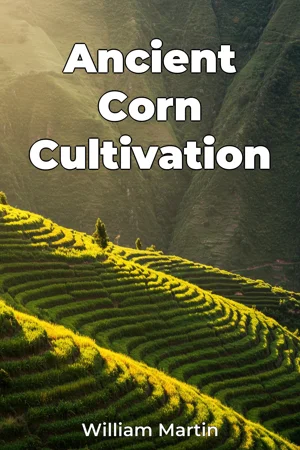
How did ancient societies achieve agricultural innovation centuries before modern technology? "Ancient Corn Cultivation" delves into the ingenuity of indigenous farmers who transformed maize into a dietary staple, engineered complex agricultural systems, and sustained substantial populations through sophisticated techniques. This book explores the development and societal impact of maize cultivation, focusing on selective breeding and landscape modification. These topics are vital for understanding the roots of agriculture and its profound influence on civilization. The book provides a historical and scientific context, assuming the reader has a basic understanding of genetics and agricultural principles. It examines the origins of maize, tracing its evolution from teosinte, a wild grass, to the diverse varieties cultivated across the Americas. This evolution involved intentional selection for desirable traits, transforming the plant's characteristics over generations. The book also details the development of terraced fields, irrigation systems, and other landscape modifications that maximized crop yields and supported growing populations. The central argument of "Ancient Corn Cultivation" is that indigenous farmers were highly skilled agricultural engineers and geneticists who demonstrated remarkable innovation in maize cultivation, fostering societal development. Their techniques, though pre-dating modern science, showcase a deep understanding of plant biology and environmental management. Understanding their accomplishments is critical for appreciating the history of agriculture and exploring sustainable farming practices. "Ancient Corn Cultivation" is structured to provide a comprehensive overview of the topic. First, it introduces the origins of maize and the early stages of its domestication. Then, it develops this with several key areas: the selective breeding processes used by indigenous farmers to alter maize genetics, the engineering of terraced fields to optimize growing conditions, and the social and economic impacts of these innovations on ancient societies. The book culminates by synthesizing these elements, examining their interconnectedness and long-term effects. It concludes by exploring the practical implications of these ancient techniques for contemporary agriculture. The book draws from archaeological evidence, genetic studies, and historical accounts to support its arguments. Analysis of ancient maize cobs, soil samples from terraced fields, and settlement patterns provide concrete evidence of the sophistication of indigenous agricultural practices. The research combines scientific methods with historical interpretations to offer a comprehensive perspective. "Ancient Corn Cultivation" connects to fields like anthropology, environmental science, and economics. Anthropological insights shed light on the cultural significance of maize and its role in shaping social structures. Environmental science helps analyze the sustainability of ancient agricultural systems and their impact on ecosystems. Economic analysis reveals how maize cultivation supported economic development and trade networks. This book distinguishes itself through its holistic approach, combining genetic, environmental, and social perspectives to provide a comprehensive understanding of ancient corn cultivation. It adopts an academic yet accessible tone, aiming to present complex information clearly and engagingly. The target audience includes students and researchers in history, archaeology, biology, and agricultural science. It is also intended for anyone interested in the history of food production, indigenous cultures, and sustainable agriculture. "Ancient Corn Cultivation" offers valuable insights into the origins of agriculture and the ingenuity of ancient societies. As a work of history and science, the book adheres to the standards of academic rigor, presenting evidence-based arguments and acknowledging different interpretations. The scope of the book is limited to the Americas, focusing on the most significant regions of maize cultivation. The book does not attempt to provide a comprehensive account of all agricultural practices worldwide. Information in the book has real-world applications for contemporary agriculture, offering insights into sustainable farming practices and crop diversification. The book addresses ongoing debates about the origins and impacts of agriculture, presenting different perspectives while maintaining a balanced and objective approach.
How did ancient societies achieve agricultural innovation centuries before modern technology? "Ancient Corn Cultivation" delves into the ingenuity of indigenous farmers who transformed maize into a dietary staple, engineered complex agricultural systems, and sustained substantial populations through sophisticated techniques. This book explores the development and societal impact of maize cultivation, focusing on selective breeding and landscape modification. These topics are vital for understanding the roots of agriculture and its profound influence on civilization. The book provides a historical and scientific context, assuming the reader has a basic understanding of genetics and agricultural principles. It examines the origins of maize, tracing its evolution from teosinte, a wild grass, to the diverse varieties cultivated across the Americas. This evolution involved intentional selection for desirable traits, transforming the plant's characteristics over generations. The book also details the development of terraced fields, irrigation systems, and other landscape modifications that maximized crop yields and supported growing populations. The central argument of "Ancient Corn Cultivation" is that indigenous farmers were highly skilled agricultural engineers and geneticists who demonstrated remarkable innovation in maize cultivation, fostering societal development. Their techniques, though pre-dating modern science, showcase a deep understanding of plant biology and environmental management. Understanding their accomplishments is critical for appreciating the history of agriculture and exploring sustainable farming practices. "Ancient Corn Cultivation" is structured to provide a comprehensive overview of the topic. First, it introduces the origins of maize and the early stages of its domestication. Then, it develops this with several key areas: the selective breeding processes used by indigenous farmers to alter maize genetics, the engineering of terraced fields to optimize growing conditions, and the social and economic impacts of these innovations on ancient societies. The book culminates by synthesizing these elements, examining their interconnectedness and long-term effects. It concludes by exploring the practical implications of these ancient techniques for contemporary agriculture. The book draws from archaeological evidence, genetic studies, and historical accounts to support its arguments. Analysis of ancient maize cobs, soil samples from terraced fields, and settlement patterns provide concrete evidence of the sophistication of indigenous agricultural practices. The research combines scientific methods with historical interpretations to offer a comprehensive perspective. "Ancient Corn Cultivation" connects to fields like anthropology, environmental science, and economics. Anthropological insights shed light on the cultural significance of maize and its role in shaping social structures. Environmental science helps analyze the sustainability of ancient agricultural systems and their impact on ecosystems. Economic analysis reveals how maize cultivation supported economic development and trade networks. This book distinguishes itself through its holistic approach, combining genetic, environmental, and social perspectives to provide a comprehensive understanding of ancient corn cultivation. It adopts an academic yet accessible tone, aiming to present complex information clearly and engagingly. The target audience includes students and researchers in history, archaeology, biology, and agricultural science. It is also intended for anyone interested in the history of food production, indigenous cultures, and sustainable agriculture. "Ancient Corn Cultivation" offers valuable insights into the origins of agriculture and the ingenuity of ancient societies. As a work of history and science, the book adheres to the standards of academic rigor, presenting evidence-based arguments and acknowledging different interpretations. The scope of the book is limited to the Americas, focusing on the most significant regions of maize cultivation. The book does not attempt to provide a comprehensive account of all agricultural practices worldwide. Information in the book has real-world applications for contemporary agriculture, offering insights into sustainable farming practices and crop diversification. The book addresses ongoing debates about the origins and impacts of agriculture, presenting different perspectives while maintaining a balanced and objective approach.
"Ancient Corn Cultivation" explores the remarkable agricultural innovations of indigenous societies in transforming maize into a staple crop. This book highlights how ancient farmers acted as early geneticists, selectively breeding teosinte, a wild grass, into the diverse varieties of maize we know today. These societies engineered sophisticated agricultural systems, such as terraced fields and irrigation, to maximize yields, showcasing their deep understanding of plant biology and environmental management. The book delves into the history of agriculture and its profound impact on civilization. It examines archaeological evidence, genetic studies, and historical accounts to support its arguments, offering a comprehensive perspective on pre-Columbian agriculture. "Ancient Corn Cultivation" traces the evolution of maize and examines the societal effects of agricultural innovations, emphasizing sustainable farming practices and agricultural innovation. Structured to provide a comprehensive overview, the book progresses from the origins of maize to the selective breeding processes, the engineering of landscapes, and the social and economic impacts on ancient societies. By combining genetic, environmental, and social perspectives, the book provides valuable insights for contemporary agriculture, including crop diversification and sustainable farming.
Book Details
ISBN
9788235241382
Publisher
Publifye AS
Your Licenses
You don't own any licenses for this book
Purchase a license below to unlock this book and download the EPUB.
Purchase License
Select a tier to unlock this book
Need bulk licensing?
Contact us for enterprise agreements.