
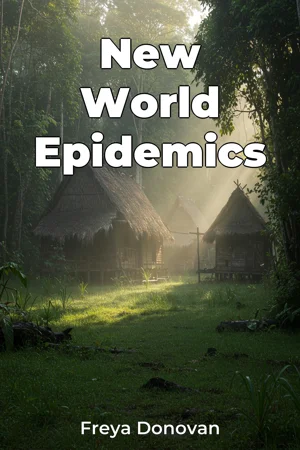
About This Book
Could the fall of empires and the reshaping of continents be attributed to something invisible to the naked eye? This book, "New World Epidemics," examines the pivotal role of European diseases in the demographic collapse of indigenous populations and the subsequent transformation of societies across the Americas beginning in the 15th century. We delve into the intricate web of interactions between colonizers, native peoples, and the unseen forces of infectious disease, revealing how these biological factors dramatically altered the course of history. This book addresses two central themes: the specific diseases introduced by Europeans, such as smallpox, measles, and influenza, and their devastating impact on immunologically naive indigenous populations; and the long-term consequences of these epidemics, including societal disruption, political instability, and the facilitation of European colonization. Understanding these topics is crucial for comprehending the demographic shifts that allowed European powers to establish dominance in the Americas and to evaluate the lasting ethical implications of these events. To fully grasp the magnitude of these epidemics, it is essential to understand the pre-Columbian state of the Americas, including the size and distribution of indigenous populations, their agricultural practices, and their social and political structures. It is also important to recognize the concept of "virgin soil epidemics," where a population is exposed to a disease for the first time and lacks any immunity to it, resulting in exceptionally high mortality rates. The core argument of this book is that European diseases acted as a decisive, though often overlooked, catalyst in the reshaping of the New World. The decimation of indigenous populations through disease weakened their resistance to European encroachment, leading to profound and irreversible changes in the social, political, and economic landscape of the Americas. "New World Epidemics" begins by establishing the demographic context of the Americas prior to European contact and detailing the introduction of specific diseases. The book is structured in three parts: first, an examination of the epidemiology of key diseases and their initial impact on indigenous populations; second, an in-depth analysis of the social, political, and economic consequences of these epidemics, including the disruption of indigenous governance systems, the collapse of agricultural production, and the rise of new forms of labor; and third, a consideration of the long-term ramifications of these events, including their effects on race relations, land ownership, and the development of colonial societies. We highlight case studies from various regions, including Mesoamerica, the Andes, and North America, to illustrate the diverse ways in which disease shaped the colonial experience. The evidence presented is drawn from a range of sources, including historical chronicles, archaeological data, demographic studies, and analyses of disease patterns. A unique aspect of our research involves integrating paleopathological data with historical accounts to reconstruct the spread and impact of specific diseases. This book connects to several other fields, including medical history, anthropology, and postcolonial studies. By drawing on insights from these disciplines, we offer a more nuanced and comprehensive understanding of the complex interactions between disease, culture, and power in the colonial context. The approach taken in "New World Epidemics" stands out due to its synthesis of epidemiological data with detailed historical analysis. Rather than simply cataloging the diseases introduced by Europeans, we seek to understand the ways in which these diseases interacted with existing social and environmental conditions to produce specific outcomes. We adopt a multidisciplinary approach, drawing on insights from history, epidemiology, and anthropology to offer a holistic understanding of the complexities inherent in the study of epidemics. The book presents information in an academic yet accessible style, suitable for both scholars and general readers interested in the history of disease and its impact on society. This book is written for students and scholars of history, epidemiology, and related fields, as well as for anyone interested in learning more about the history of the Americas and the role of disease in shaping global events. "New World Epidemics" is intended for a broad audience with an interest in historical events and social dynamics. As a work of history and epidemiology, this book adheres to the conventions of scholarly research, including thorough documentation, critical analysis of sources, and a commitment to presenting a balanced and nuanced account of events. While the book covers the entirety of the Americas, it focuses primarily on the regions most heavily impacted by European diseases during the early colonial period. The insights provided by "New World Epidemics" have practical applications for understanding contemporary global health challenges. By studying the historical impact of epidemics, we can gain valuable lessons about the importance of public health infrastructure, the need for equitable access to healthcare, and the social and political factors that influence the spread of infectious diseases. One continuing debate in the field concerns the precise demographic impact of European diseases. While it is clear that these diseases caused widespread mortality, there remains uncertainty about the exact numbers of people who died and the relative contribution of disease compared to other factors, such as warfare and forced labor. This book addresses these controversies by carefully evaluating the available evidence and presenting a range of perspectives on these complex issues.
Could the fall of empires and the reshaping of continents be attributed to something invisible to the naked eye? This book, "New World Epidemics," examines the pivotal role of European diseases in the demographic collapse of indigenous populations and the subsequent transformation of societies across the Americas beginning in the 15th century. We delve into the intricate web of interactions between colonizers, native peoples, and the unseen forces of infectious disease, revealing how these biological factors dramatically altered the course of history. This book addresses two central themes: the specific diseases introduced by Europeans, such as smallpox, measles, and influenza, and their devastating impact on immunologically naive indigenous populations; and the long-term consequences of these epidemics, including societal disruption, political instability, and the facilitation of European colonization. Understanding these topics is crucial for comprehending the demographic shifts that allowed European powers to establish dominance in the Americas and to evaluate the lasting ethical implications of these events. To fully grasp the magnitude of these epidemics, it is essential to understand the pre-Columbian state of the Americas, including the size and distribution of indigenous populations, their agricultural practices, and their social and political structures. It is also important to recognize the concept of "virgin soil epidemics," where a population is exposed to a disease for the first time and lacks any immunity to it, resulting in exceptionally high mortality rates. The core argument of this book is that European diseases acted as a decisive, though often overlooked, catalyst in the reshaping of the New World. The decimation of indigenous populations through disease weakened their resistance to European encroachment, leading to profound and irreversible changes in the social, political, and economic landscape of the Americas. "New World Epidemics" begins by establishing the demographic context of the Americas prior to European contact and detailing the introduction of specific diseases. The book is structured in three parts: first, an examination of the epidemiology of key diseases and their initial impact on indigenous populations; second, an in-depth analysis of the social, political, and economic consequences of these epidemics, including the disruption of indigenous governance systems, the collapse of agricultural production, and the rise of new forms of labor; and third, a consideration of the long-term ramifications of these events, including their effects on race relations, land ownership, and the development of colonial societies. We highlight case studies from various regions, including Mesoamerica, the Andes, and North America, to illustrate the diverse ways in which disease shaped the colonial experience. The evidence presented is drawn from a range of sources, including historical chronicles, archaeological data, demographic studies, and analyses of disease patterns. A unique aspect of our research involves integrating paleopathological data with historical accounts to reconstruct the spread and impact of specific diseases. This book connects to several other fields, including medical history, anthropology, and postcolonial studies. By drawing on insights from these disciplines, we offer a more nuanced and comprehensive understanding of the complex interactions between disease, culture, and power in the colonial context. The approach taken in "New World Epidemics" stands out due to its synthesis of epidemiological data with detailed historical analysis. Rather than simply cataloging the diseases introduced by Europeans, we seek to understand the ways in which these diseases interacted with existing social and environmental conditions to produce specific outcomes. We adopt a multidisciplinary approach, drawing on insights from history, epidemiology, and anthropology to offer a holistic understanding of the complexities inherent in the study of epidemics. The book presents information in an academic yet accessible style, suitable for both scholars and general readers interested in the history of disease and its impact on society. This book is written for students and scholars of history, epidemiology, and related fields, as well as for anyone interested in learning more about the history of the Americas and the role of disease in shaping global events. "New World Epidemics" is intended for a broad audience with an interest in historical events and social dynamics. As a work of history and epidemiology, this book adheres to the conventions of scholarly research, including thorough documentation, critical analysis of sources, and a commitment to presenting a balanced and nuanced account of events. While the book covers the entirety of the Americas, it focuses primarily on the regions most heavily impacted by European diseases during the early colonial period. The insights provided by "New World Epidemics" have practical applications for understanding contemporary global health challenges. By studying the historical impact of epidemics, we can gain valuable lessons about the importance of public health infrastructure, the need for equitable access to healthcare, and the social and political factors that influence the spread of infectious diseases. One continuing debate in the field concerns the precise demographic impact of European diseases. While it is clear that these diseases caused widespread mortality, there remains uncertainty about the exact numbers of people who died and the relative contribution of disease compared to other factors, such as warfare and forced labor. This book addresses these controversies by carefully evaluating the available evidence and presenting a range of perspectives on these complex issues.
"New World Epidemics" explores the profound impact of European diseases on the indigenous populations of the Americas, highlighting their role in reshaping the continent's history. Examining the introduction of illnesses like smallpox, measles, and influenza, the book details how these "virgin soil epidemics" decimated native communities lacking immunity. This demographic collapse significantly weakened indigenous resistance and facilitated European colonization, leading to lasting social disruption and political instability across the Americas. The book presents a comprehensive analysis of these historical epidemics, starting with the pre-Columbian demographic context and the initial impact of diseases. It then delves into the long-term consequences, such as the disruption of indigenous governance and the rise of new labor systems. Drawing from historical chronicles, archaeological data, and demographic studies, "New World Epidemics" offers a unique synthesis of epidemiological data and historical analysis. The book's approach emphasizes understanding how diseases interacted with existing social and environmental conditions, providing a holistic view suitable for scholars and general readers alike. The exploration progresses through three main parts: the epidemiology of key diseases, the resulting social and political consequences, and the long-term ramifications on race relations and colonial development. Case studies from Mesoamerica, the Andes, and North America illustrate the diverse ways disease shaped colonial experiences. By understanding these past epidemics, we can gain valuable insights into contemporary global health challenges and the importance of equitable healthcare access.
Book Details
ISBN
9788235241337
Publisher
Publifye AS
Your Licenses
You don't own any licenses for this book
Purchase a license below to unlock this book and download the EPUB.
Purchase License
Select a tier to unlock this book
Need bulk licensing?
Contact us for enterprise agreements.