
About This Book
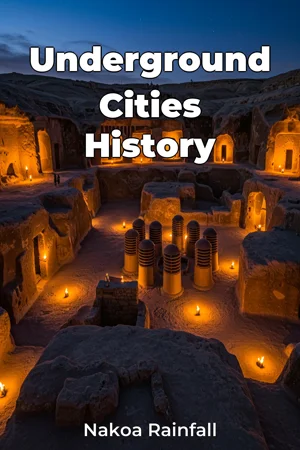
Imagine entire cities, carved deep beneath the earth, bustling with life, secrets, and the ingenuity of civilizations past. Why did humanity choose to burrow into the ground, creating these subterranean metropolises? "Underground Cities History" delves into the compelling reasons behind the construction of these hidden structures, exploring their role as crucial defensive measures, and ultimately, as havens for survival. This book examines the history, architecture, and lasting legacy of underground cities across the globe. Central to our investigation are two primary themes: firstly, understanding the architectural and engineering challenges inherent in creating sustainable underground environments; and secondly, exploring the socio-political contexts that drove different cultures to seek refuge beneath the surface. These topics are vital because they offer a unique perspective on human resilience, adaptability, and the enduring quest for security in the face of environmental and societal threats. To fully appreciate the phenomenon of underground city construction, we must first understand the historical landscape in which they emerged. From ancient Anatolia to medieval Europe and beyond, the constant threat of invasion, religious persecution, and natural disasters shaped the very fabric of societies. Lacking modern technology, these civilizations ingeniously utilized the earth itself as a shield, transforming geological formations into complex networks of living spaces, storage facilities, and escape routes. The central argument of "Underground Cities History" is that the construction and habitation of underground cities represent a profound and often overlooked chapter in the history of human adaptation. These structures are not merely historical curiosities but rather exemplify the remarkable capacity of civilizations to innovate and endure under extreme pressure. Recognizing this capacity is crucial for understanding the breadth of human responses to existential challenges throughout history. This book systematically explores the world of subterranean urbanism. Initially, it introduces key concepts related to underground architecture, including ventilation systems, water management, and structural integrity. Subsequent chapters delve into specific case studies, such as Derinkuyu and Kaymakli in Turkey, the catacombs of Rome, and the rock-cut settlements of Cappadocia. These sections detail the specific motives, design features, and daily life within these underground communities. The culmination of our argument showcases how the lessons learned from these past endeavors can inform modern urban planning and disaster preparedness, particularly in light of increasing climate change and geopolitical instability. The evidence presented throughout the book is drawn from a variety of sources: archaeological excavations, historical texts, geological surveys, and architectural analyses. We incorporate data from recent explorations and utilize cutting-edge imaging techniques to provide a comprehensive visual and factual account of these subterranean realms. "Underground Cities History" connects to several other fields of study, including archaeology, sociology, and urban planning. Archaeological evidence provides insights into the material culture of the inhabitants, while sociological perspectives illuminate the social dynamics and governance within these underground communities. Finally, the principles of urban planning help us understand how these spaces were organized to maximize efficiency and habitability. These interdisciplinary connections enrich our understanding of the complexities involved in creating and maintaining these hidden worlds. The book stands out by taking a holistic approach, combining architectural analysis with social and historical context. We move past simply describing physical structures to truly explore the lived experiences of those who inhabited them. This approach offers readers a deeper understanding of the motivations and innovations behind these underground cities. The tone of the book is informative and engaging, aiming to strike a balance between scholarly rigor and accessibility. Complex technical concepts will be explained clearly, allowing readers from various backgrounds to appreciate the intricacies of underground architecture. "Underground Cities History" is aimed at anyone interested in history, architecture, archaeology, or human resilience. This book is a valuable resource for students, researchers, and general readers seeking a deeper understanding of how civilizations have adapted to adversity. In keeping with non-fiction conventions, this book relies on verifiable facts, credible sources, and clear, objective analysis. Arguments are supported by evidence, and all sources are properly cited to ensure accuracy and transparency. The scope of the book encompasses a global overview of significant underground city constructions throughout history, with specific focus on those where substantial archaeological research has been undertaken. The book does not delve into every minor subterranean dwelling, focusing instead on the larger, more complex, and historically significant sites. The insights gleaned from these underground cities have real-world applications today. Understanding their design principles can inform modern attempts to create sustainable underground infrastructure, disaster shelters, and even extraterrestrial habitats. While this book focuses on the historical and architectural aspects of underground cities, it also touches upon ongoing debates surrounding their original purposes and construction techniques. Differing interpretations of archaeological evidence are discussed, offering readers a balanced perspective on the mysteries surrounding these subterranean worlds.
Imagine entire cities, carved deep beneath the earth, bustling with life, secrets, and the ingenuity of civilizations past. Why did humanity choose to burrow into the ground, creating these subterranean metropolises? "Underground Cities History" delves into the compelling reasons behind the construction of these hidden structures, exploring their role as crucial defensive measures, and ultimately, as havens for survival. This book examines the history, architecture, and lasting legacy of underground cities across the globe. Central to our investigation are two primary themes: firstly, understanding the architectural and engineering challenges inherent in creating sustainable underground environments; and secondly, exploring the socio-political contexts that drove different cultures to seek refuge beneath the surface. These topics are vital because they offer a unique perspective on human resilience, adaptability, and the enduring quest for security in the face of environmental and societal threats. To fully appreciate the phenomenon of underground city construction, we must first understand the historical landscape in which they emerged. From ancient Anatolia to medieval Europe and beyond, the constant threat of invasion, religious persecution, and natural disasters shaped the very fabric of societies. Lacking modern technology, these civilizations ingeniously utilized the earth itself as a shield, transforming geological formations into complex networks of living spaces, storage facilities, and escape routes. The central argument of "Underground Cities History" is that the construction and habitation of underground cities represent a profound and often overlooked chapter in the history of human adaptation. These structures are not merely historical curiosities but rather exemplify the remarkable capacity of civilizations to innovate and endure under extreme pressure. Recognizing this capacity is crucial for understanding the breadth of human responses to existential challenges throughout history. This book systematically explores the world of subterranean urbanism. Initially, it introduces key concepts related to underground architecture, including ventilation systems, water management, and structural integrity. Subsequent chapters delve into specific case studies, such as Derinkuyu and Kaymakli in Turkey, the catacombs of Rome, and the rock-cut settlements of Cappadocia. These sections detail the specific motives, design features, and daily life within these underground communities. The culmination of our argument showcases how the lessons learned from these past endeavors can inform modern urban planning and disaster preparedness, particularly in light of increasing climate change and geopolitical instability. The evidence presented throughout the book is drawn from a variety of sources: archaeological excavations, historical texts, geological surveys, and architectural analyses. We incorporate data from recent explorations and utilize cutting-edge imaging techniques to provide a comprehensive visual and factual account of these subterranean realms. "Underground Cities History" connects to several other fields of study, including archaeology, sociology, and urban planning. Archaeological evidence provides insights into the material culture of the inhabitants, while sociological perspectives illuminate the social dynamics and governance within these underground communities. Finally, the principles of urban planning help us understand how these spaces were organized to maximize efficiency and habitability. These interdisciplinary connections enrich our understanding of the complexities involved in creating and maintaining these hidden worlds. The book stands out by taking a holistic approach, combining architectural analysis with social and historical context. We move past simply describing physical structures to truly explore the lived experiences of those who inhabited them. This approach offers readers a deeper understanding of the motivations and innovations behind these underground cities. The tone of the book is informative and engaging, aiming to strike a balance between scholarly rigor and accessibility. Complex technical concepts will be explained clearly, allowing readers from various backgrounds to appreciate the intricacies of underground architecture. "Underground Cities History" is aimed at anyone interested in history, architecture, archaeology, or human resilience. This book is a valuable resource for students, researchers, and general readers seeking a deeper understanding of how civilizations have adapted to adversity. In keeping with non-fiction conventions, this book relies on verifiable facts, credible sources, and clear, objective analysis. Arguments are supported by evidence, and all sources are properly cited to ensure accuracy and transparency. The scope of the book encompasses a global overview of significant underground city constructions throughout history, with specific focus on those where substantial archaeological research has been undertaken. The book does not delve into every minor subterranean dwelling, focusing instead on the larger, more complex, and historically significant sites. The insights gleaned from these underground cities have real-world applications today. Understanding their design principles can inform modern attempts to create sustainable underground infrastructure, disaster shelters, and even extraterrestrial habitats. While this book focuses on the historical and architectural aspects of underground cities, it also touches upon ongoing debates surrounding their original purposes and construction techniques. Differing interpretations of archaeological evidence are discussed, offering readers a balanced perspective on the mysteries surrounding these subterranean worlds.
"Underground Cities History" explores the fascinating phenomenon of subterranean urbanism, examining why civilizations throughout history chose to build elaborate cities beneath the earth. These underground metropolises served as defensive structures, havens from persecution, and testaments to human resilience. The book highlights architectural ingenuity, such as sophisticated ventilation systems and water management techniques, while also delving into the socio-political factors that drove communities to seek refuge below ground. The book progresses from introducing key architectural concepts to detailed case studies of sites like Derinkuyu and Kaymakli in Cappadocia, as well as the catacombs of Rome, revealing the historical adaptation and daily life within these subterranean communities. Archaeological findings, historical texts, and architectural analyses combine to offer a comprehensive view of these hidden worlds. One intriguing aspect is how geological formations were ingeniously transformed into complex networks, showcasing a remarkable capacity for innovation under pressure. Ultimately, the book argues that underground cities represent a significant chapter in human history, demonstrating the ability of civilizations to adapt and endure extreme challenges. By blending architectural analysis with social and historical context, "Underground Cities History" provides a deeper understanding of the motivations and innovations behind these remarkable feats of subterranean urbanism. The lessons learned offer insights applicable to modern urban planning, disaster preparedness, and even future extraterrestrial habitats.
Book Details
ISBN
9788235241085
Publisher
Publifye AS
Your Licenses
You don't own any licenses for this book
Purchase a license below to unlock this book and download the EPUB.
Purchase License
Select a tier to unlock this book
Need bulk licensing?
Contact us for enterprise agreements.