
About This Book
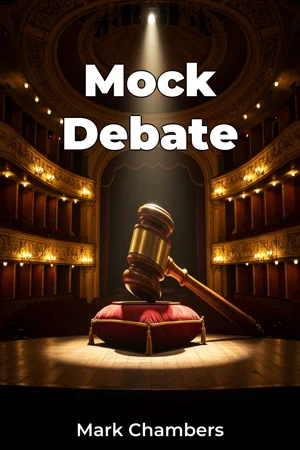
Can structured mockery actually enhance political discourse? This book, *Mock Debate*, delves into the surprising and often overlooked role of humor in shaping public opinion and influencing political outcomes. It investigates how carefully crafted comedic interventions, far from being mere distractions, can serve as powerful tools for social commentary, critique, and even persuasion. The central topics explored are the mechanics of humor in political settings, the historical precedent of satire as a tool for change, and the ethical implications of using mockery in public discourse. These themes are vital because they shed light on the subtle ways in which power is negotiated and challenged in contemporary society. The book draws on historical examples, from ancient Greece to modern-day political satire, to demonstrate how humor has always been intertwined with political expression. It examines the theories of humor, including incongruity, superiority, and relief theories, to understand why certain jokes resonate and others fall flat. Readers will not require any specific knowledge of political science or comedy theory, as all necessary concepts will be thoroughly explained. The argument at the heart of *Mock Debate* is that structured mockery, when employed thoughtfully and ethically, can be a valuable asset in fostering critical engagement with political ideas. It argues that humor can cut through the noise of traditional rhetoric, exposing hypocrisy and prompting audiences to reconsider their own biases and beliefs. This argument is significant because it challenges the conventional view of political discourse as a solely serious and rational endeavor, suggesting that emotional and comedic elements can be equally important. The book begins by introducing the core concepts of humor theory and their application to political contexts. It then moves into a historical overview of satire and political comedy, tracing its evolution and impact across different eras. The subsequent chapters focus on specific techniques of structured mockery, such as parody, irony, and caricature, analyzing their effectiveness in different situations. A dedicated section examines the ethical considerations of political humor, including the potential for harm and the responsibility of humorists. Finally, the book culminates in a discussion of the practical applications of these principles, offering guidelines for individuals and organizations seeking to use humor to promote social and political change, as well as how to analyze the use of humor by others . The evidence presented in support of these arguments includes rhetorical analysis of speeches and debates, case studies of successful and unsuccessful political satire, and studies from the field of communications regarding the effects of humor on audience perception. This includes examining the impact of late-night television, online memes, and viral videos on election cycles. *Mock Debate* also connects to other fields, such as sociology (examining group dynamics and social norms), psychology (analyzing cognitive biases and emotional responses), and media studies (understanding the role of media in shaping public opinion). These interdisciplinary connections add depth and nuance to the analysis. The book's unique approach lies in its focus on the *structure* of mockery, moving beyond simply identifying humorous content to analyze the underlying rhetorical and psychological mechanisms that make it effective. This provides a more systematic and actionable framework for understanding and utilizing humor in political discourse. The writing style is analytical and evidence-based but remains accessible to non-expert readers. The tone is objective and critical, avoiding partisan bias and focusing on the underlying principles and dynamics. *Mock Debate* is aimed at students of political science, communications, and sociology, as well as anyone interested in understanding the power of humor in shaping our world. The exploration of political humor falls squarely within the expectations and conventions of social science and political science books. The scope is broad, covering a range of historical periods and geographical contexts, but it is limited to the study of structured mockery as a deliberate form of communication, excluding unintentional or incidental humor. The information within can be applied to analyzing political speeches, creating persuasive messages, and understanding the dynamics of social movements. The book acknowledges that the use of humor in politics is not without controversy. It addresses concerns about the potential for mockery to be used to dehumanize or silence opposing viewpoints, and it offers guidelines for responsible and ethical engagement.
Can structured mockery actually enhance political discourse? This book, *Mock Debate*, delves into the surprising and often overlooked role of humor in shaping public opinion and influencing political outcomes. It investigates how carefully crafted comedic interventions, far from being mere distractions, can serve as powerful tools for social commentary, critique, and even persuasion. The central topics explored are the mechanics of humor in political settings, the historical precedent of satire as a tool for change, and the ethical implications of using mockery in public discourse. These themes are vital because they shed light on the subtle ways in which power is negotiated and challenged in contemporary society. The book draws on historical examples, from ancient Greece to modern-day political satire, to demonstrate how humor has always been intertwined with political expression. It examines the theories of humor, including incongruity, superiority, and relief theories, to understand why certain jokes resonate and others fall flat. Readers will not require any specific knowledge of political science or comedy theory, as all necessary concepts will be thoroughly explained. The argument at the heart of *Mock Debate* is that structured mockery, when employed thoughtfully and ethically, can be a valuable asset in fostering critical engagement with political ideas. It argues that humor can cut through the noise of traditional rhetoric, exposing hypocrisy and prompting audiences to reconsider their own biases and beliefs. This argument is significant because it challenges the conventional view of political discourse as a solely serious and rational endeavor, suggesting that emotional and comedic elements can be equally important. The book begins by introducing the core concepts of humor theory and their application to political contexts. It then moves into a historical overview of satire and political comedy, tracing its evolution and impact across different eras. The subsequent chapters focus on specific techniques of structured mockery, such as parody, irony, and caricature, analyzing their effectiveness in different situations. A dedicated section examines the ethical considerations of political humor, including the potential for harm and the responsibility of humorists. Finally, the book culminates in a discussion of the practical applications of these principles, offering guidelines for individuals and organizations seeking to use humor to promote social and political change, as well as how to analyze the use of humor by others . The evidence presented in support of these arguments includes rhetorical analysis of speeches and debates, case studies of successful and unsuccessful political satire, and studies from the field of communications regarding the effects of humor on audience perception. This includes examining the impact of late-night television, online memes, and viral videos on election cycles. *Mock Debate* also connects to other fields, such as sociology (examining group dynamics and social norms), psychology (analyzing cognitive biases and emotional responses), and media studies (understanding the role of media in shaping public opinion). These interdisciplinary connections add depth and nuance to the analysis. The book's unique approach lies in its focus on the *structure* of mockery, moving beyond simply identifying humorous content to analyze the underlying rhetorical and psychological mechanisms that make it effective. This provides a more systematic and actionable framework for understanding and utilizing humor in political discourse. The writing style is analytical and evidence-based but remains accessible to non-expert readers. The tone is objective and critical, avoiding partisan bias and focusing on the underlying principles and dynamics. *Mock Debate* is aimed at students of political science, communications, and sociology, as well as anyone interested in understanding the power of humor in shaping our world. The exploration of political humor falls squarely within the expectations and conventions of social science and political science books. The scope is broad, covering a range of historical periods and geographical contexts, but it is limited to the study of structured mockery as a deliberate form of communication, excluding unintentional or incidental humor. The information within can be applied to analyzing political speeches, creating persuasive messages, and understanding the dynamics of social movements. The book acknowledges that the use of humor in politics is not without controversy. It addresses concerns about the potential for mockery to be used to dehumanize or silence opposing viewpoints, and it offers guidelines for responsible and ethical engagement.
"Mock Debate" explores the fascinating intersection of humor and politics, revealing how structured mockery can significantly influence political discourse. It argues that comedic interventions serve as potent tools for social commentary, challenging conventional views of political engagement. The book highlights that effective political humor isn't just about getting laughs; it's about exposing hypocrisy and prompting audiences to question their own beliefs. Did you know humor theories help us understand why certain jokes resonate while others don't? The book progresses from introducing humor theory and its application to political contexts, to providing a historical overview of satire. Subsequent chapters analyze specific techniques like parody and irony, and examine the ethical considerations of political humor, including the potential for harm. Through rhetorical analysis and case studies, the book demonstrates how structured mockery, when employed thoughtfully, can foster critical engagement with political ideas, and even shape election cycles. What sets "Mock Debate" apart is its focus on the *structure* of mockery, analyzing the underlying rhetorical and psychological mechanisms that make it effective. This book provides a systematic framework for understanding and utilizing humor in political discourse, offering guidelines for responsible and ethical engagement. Ultimately, the book challenges us to reconsider the role of humor in shaping our world.
Book Details
ISBN
9788235240743
Publisher
Publifye AS
Your Licenses
You don't own any licenses for this book
Purchase a license below to unlock this book and download the EPUB.
Purchase License
Select a tier to unlock this book
Need bulk licensing?
Contact us for enterprise agreements.