
About This Book
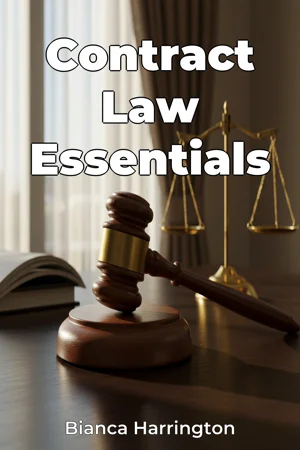
Are you confident in your understanding of contract law and its potential impact on your business dealings? "Contract Law Essentials" provides a comprehensive exploration of the core principles that govern contractual agreements, focusing on enforceability, breaches, liabilities, and their practical applications in the business world. This book addresses the critical need for business professionals, managers, and students to navigate the complexities of contract law effectively. This book delves into two central topics: the fundamental elements required for a legally binding contract and the ramifications of failing to uphold contractual obligations. Understanding these topics is paramount for mitigating risk, ensuring regulatory compliance, and fostering successful business relationships. Without a firm grasp of these principles, businesses risk entering into unenforceable agreements, facing costly litigation, or suffering significant financial losses due to breaches of contract. "Contract Law Essentials" begins by laying the groundwork with an examination of the historical and legal context of contract law, tracing its evolution from early common law principles to modern statutory frameworks like the Uniform Commercial Code (UCC). It also briefly covers the requisite elements of contract formation, such as offer, acceptance, and consideration, providing the necessary foundation for understanding more complex issues. The central argument of this book is that a proactive, informed approach to contract law is essential for thriving in today's competitive business landscape. By understanding the nuances of contract formation, interpretation, and enforcement, businesses can protect their interests, minimize legal disputes, and maximize the value of their agreements. This argument is presented through a structured progression of topics. The book is organized into three distinct parts. Part 1 introduces the foundational concepts of contract law, including the elements of a valid contract, different types of contracts (e.g., unilateral, bilateral, express, implied), and the principles of contract interpretation. Part 2 delves into the issues of contract performance, breach, and remedies, including discussions of specific performance, monetary damages, and equitable relief. Part 3 examines real-world applications of contract law in various business contexts, such as sales contracts, employment agreements, and intellectual property licenses. The book culminates with practical guidance on drafting and negotiating contracts to minimize risk and maximize enforceability. The arguments and analysis presented in this book are supported by a synthesis of legal precedents, statutory provisions, and scholarly commentary drawn from academic journals and legal databases. Examples of landmark court cases illustrate key principles and provide context for understanding how contract law is applied in practice. "Contract Law Essentials" also connects to other fields of study, including economics, ethics, and organizational behavior. The economic implications of contract law are explored in terms of efficiency and wealth creation, while the ethical considerations of contractual obligations are examined through the lens of fairness and good faith. The impact of contract law on organizational structure and decision-making is also discussed. What sets this book apart is its focus on providing practical, actionable insights for business professionals. Rather than simply presenting legal theory, it offers concrete strategies for drafting, negotiating, and enforcing contracts in a way that aligns with business objectives. The tone is professional and informative, aiming to provide clarity and guidance on complex legal issues. The writing style is accessible and jargon-free, making the material understandable to readers with varying levels of legal knowledge. The target audience includes business students, managers, entrepreneurs, and anyone involved in negotiating or administering contracts. It is particularly valuable for those seeking a practical guide to understanding and applying contract law principles in their daily work. As a work in the business management genre, this book stresses actionable intelligence and practicality. "Contract Law Essentials" intentionally limits its scope to the core principles of contract law applicable across various industries, and does not delve into industry-specific regulations or niche areas of contract law. The information in this book can be applied in numerous practical ways, from drafting more effective contracts to resolving disputes more efficiently and proactively managing contractual risk. Finally, this book addresses ongoing debates in contract law, such as the enforceability of online agreements and the role of good faith in contractual performance. By acknowledging these debates, the book provides a balanced and nuanced perspective on the complexities of contract law.
Are you confident in your understanding of contract law and its potential impact on your business dealings? "Contract Law Essentials" provides a comprehensive exploration of the core principles that govern contractual agreements, focusing on enforceability, breaches, liabilities, and their practical applications in the business world. This book addresses the critical need for business professionals, managers, and students to navigate the complexities of contract law effectively. This book delves into two central topics: the fundamental elements required for a legally binding contract and the ramifications of failing to uphold contractual obligations. Understanding these topics is paramount for mitigating risk, ensuring regulatory compliance, and fostering successful business relationships. Without a firm grasp of these principles, businesses risk entering into unenforceable agreements, facing costly litigation, or suffering significant financial losses due to breaches of contract. "Contract Law Essentials" begins by laying the groundwork with an examination of the historical and legal context of contract law, tracing its evolution from early common law principles to modern statutory frameworks like the Uniform Commercial Code (UCC). It also briefly covers the requisite elements of contract formation, such as offer, acceptance, and consideration, providing the necessary foundation for understanding more complex issues. The central argument of this book is that a proactive, informed approach to contract law is essential for thriving in today's competitive business landscape. By understanding the nuances of contract formation, interpretation, and enforcement, businesses can protect their interests, minimize legal disputes, and maximize the value of their agreements. This argument is presented through a structured progression of topics. The book is organized into three distinct parts. Part 1 introduces the foundational concepts of contract law, including the elements of a valid contract, different types of contracts (e.g., unilateral, bilateral, express, implied), and the principles of contract interpretation. Part 2 delves into the issues of contract performance, breach, and remedies, including discussions of specific performance, monetary damages, and equitable relief. Part 3 examines real-world applications of contract law in various business contexts, such as sales contracts, employment agreements, and intellectual property licenses. The book culminates with practical guidance on drafting and negotiating contracts to minimize risk and maximize enforceability. The arguments and analysis presented in this book are supported by a synthesis of legal precedents, statutory provisions, and scholarly commentary drawn from academic journals and legal databases. Examples of landmark court cases illustrate key principles and provide context for understanding how contract law is applied in practice. "Contract Law Essentials" also connects to other fields of study, including economics, ethics, and organizational behavior. The economic implications of contract law are explored in terms of efficiency and wealth creation, while the ethical considerations of contractual obligations are examined through the lens of fairness and good faith. The impact of contract law on organizational structure and decision-making is also discussed. What sets this book apart is its focus on providing practical, actionable insights for business professionals. Rather than simply presenting legal theory, it offers concrete strategies for drafting, negotiating, and enforcing contracts in a way that aligns with business objectives. The tone is professional and informative, aiming to provide clarity and guidance on complex legal issues. The writing style is accessible and jargon-free, making the material understandable to readers with varying levels of legal knowledge. The target audience includes business students, managers, entrepreneurs, and anyone involved in negotiating or administering contracts. It is particularly valuable for those seeking a practical guide to understanding and applying contract law principles in their daily work. As a work in the business management genre, this book stresses actionable intelligence and practicality. "Contract Law Essentials" intentionally limits its scope to the core principles of contract law applicable across various industries, and does not delve into industry-specific regulations or niche areas of contract law. The information in this book can be applied in numerous practical ways, from drafting more effective contracts to resolving disputes more efficiently and proactively managing contractual risk. Finally, this book addresses ongoing debates in contract law, such as the enforceability of online agreements and the role of good faith in contractual performance. By acknowledging these debates, the book provides a balanced and nuanced perspective on the complexities of contract law.
"Contract Law Essentials" offers a vital understanding of contract law for business professionals, managers, and students. The book focuses on the core principles governing contractual agreements, emphasizing enforceability and the repercussions of breaches. By exploring the legal and historical context, including the Uniform Commercial Code (UCC), readers gain insight into how these laws evolved and their modern applications. It addresses the need for businesses to mitigate risk and ensure regulatory compliance to foster successful business relationships. The book's unique value lies in providing actionable strategies for drafting, negotiating, and enforcing contracts tailored to business objectives. It showcases how a proactive approach to contract law is essential in today's competitive business environment. Did you know that a lack of understanding can lead to unenforceable agreements and costly litigation? Also, understanding the elements of contract formation such as offer, acceptance, and consideration is key to avoiding disputes. Organized into three parts, the book progresses from foundational concepts and principles of contract interpretation, to performance, breach, remedies, and real-world applications. By limiting its scope to core principles, it avoids industry-specific regulations, focusing instead on practical intelligence applicable across various industries, making it an invaluable resource for anyone seeking to navigate the complexities of business contracts.
Book Details
ISBN
9788235240668
Publisher
Publifye AS
Your Licenses
You don't own any licenses for this book
Purchase a license below to unlock this book and download the EPUB.
Purchase License
Select a tier to unlock this book
Need bulk licensing?
Contact us for enterprise agreements.