
About This Book
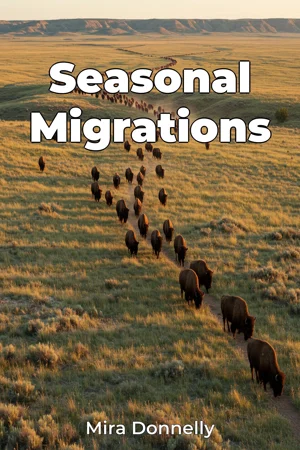
How did ancient peoples adapt and thrive across vast landscapes without the modern conveniences we take for granted? "Seasonal Migrations" examines the intricate relationship between indigenous movements, climate patterns, resource availability, and deeply ingrained cultural traditions that shaped their existence. This book explores the dynamic interplay of these factors, revealing a sophisticated understanding of the natural world and a profound ability to adapt to its rhythms. The core of "Seasonal Migrations" revolves around three principal themes: the impact of climactic shifts on migratory routes, the vital role of food resources in determining settlement patterns, and the preservation and transmission of cultural knowledge that guided these processes over generations. These themes are crucial because they offer insight into how societies organized themselves and interacted with their environments before written records became commonplace. Understanding these dynamics provides context for interpreting archaeological findings, oral histories, and contemporary indigenous practices. To appreciate the profound implications of indigenous migrations, one must consider the broader context of early human history and environmental science. The book presumes a basic familiarity with anthropological concepts and geographical principles. Prior knowledge of climate patterns, common foods, and indigenous social structures will deepen the understanding of the material. "Seasonal Migrations" argues that indigenous groups did not wander aimlessly but rather followed carefully orchestrated migratory patterns that ensured the survival and maintenance of their cultural identities. These migrations reflect deliberate strategies informed by centuries of accumulated knowledge and observation. This argument is significant because it challenges conventional views of indigenous peoples as passive inhabitants of their environments, demonstrating instead their active agency and deep ecological wisdom. The book begins by laying the foundation of understanding climate patterns and how they influenced resource distribution. It then proceeds with three major sections. The first section analyzes specific case studies of indigenous migrations across varied geographical regions, focusing on how groups adapted to different climates and found sustainable food sources. The second explores the cultural and social dimensions of these migrations, examining how traditions, rituals, and kinship systems were maintained and transmitted during these journeys. The third assesses the long-term impact of these migratory patterns on the environment and the sustainability of indigenous lifeways. The book culminates by considering the lessons that can be learned from these historical migrations in the context of contemporary environmental challenges and cultural preservation efforts. To support its arguments, "Seasonal Migrations" relies on a range of evidence, including archaeological data, ethnographic studies, and oral histories collected from various indigenous communities. The analysis incorporates climate reconstructions and ecological studies to provide a holistic view of the environmental factors influencing migration patterns. The book draws connections between disciplines such as anthropology, ecology, and climatology. These interdisciplinary links reinforce the book's argument by showing how human behavior is inextricably linked to environmental conditions and cultural practices. A unique aspect of "Seasonal Migrations" is its emphasis on indigenous perspectives and traditional ecological knowledge. By prioritizing indigenous voices and knowledge systems, the book offers an alternative to conventional historical narratives that often overlook or marginalize these perspectives. The tone of "Seasonal Migrations" is academic yet accessible, aiming to present complex information in a clear and engaging manner. The writing style is descriptive, incorporating storytelling elements to bring the experiences of indigenous peoples to life. The target audience includes students, researchers, and general readers interested in indigenous studies, environmental history, and anthropology. The book would be valuable to anyone seeking a deeper understanding of how human societies adapt to environmental change and how cultural resilience can be maintained across generations. As a work of history and social science, "Seasonal Migrations" adheres to the conventions of scholarly research, including rigorous documentation, clear argumentation, and critical analysis of sources. The book focuses primarily on pre-Columbian migrations in North and South America, with some comparative examples from other regions. This scope allows for in-depth analysis while acknowledging the limitations of not covering all indigenous migratory patterns worldwide. The insights gained from "Seasonal Migrations" can be applied practically to contemporary issues such as climate change adaptation, sustainable resource management, and the promotion of cultural diversity. Understanding how indigenous peoples have successfully adapted to environmental changes in the past can inform strategies for addressing current and future challenges. While the book seeks to present a balanced and nuanced view of indigenous migrations, there are ongoing debates regarding the interpretation of archaeological evidence and the accuracy of oral histories. "Seasonal Migrations" acknowledges these debates and offers its own perspective based on a comprehensive analysis of the available data.
How did ancient peoples adapt and thrive across vast landscapes without the modern conveniences we take for granted? "Seasonal Migrations" examines the intricate relationship between indigenous movements, climate patterns, resource availability, and deeply ingrained cultural traditions that shaped their existence. This book explores the dynamic interplay of these factors, revealing a sophisticated understanding of the natural world and a profound ability to adapt to its rhythms. The core of "Seasonal Migrations" revolves around three principal themes: the impact of climactic shifts on migratory routes, the vital role of food resources in determining settlement patterns, and the preservation and transmission of cultural knowledge that guided these processes over generations. These themes are crucial because they offer insight into how societies organized themselves and interacted with their environments before written records became commonplace. Understanding these dynamics provides context for interpreting archaeological findings, oral histories, and contemporary indigenous practices. To appreciate the profound implications of indigenous migrations, one must consider the broader context of early human history and environmental science. The book presumes a basic familiarity with anthropological concepts and geographical principles. Prior knowledge of climate patterns, common foods, and indigenous social structures will deepen the understanding of the material. "Seasonal Migrations" argues that indigenous groups did not wander aimlessly but rather followed carefully orchestrated migratory patterns that ensured the survival and maintenance of their cultural identities. These migrations reflect deliberate strategies informed by centuries of accumulated knowledge and observation. This argument is significant because it challenges conventional views of indigenous peoples as passive inhabitants of their environments, demonstrating instead their active agency and deep ecological wisdom. The book begins by laying the foundation of understanding climate patterns and how they influenced resource distribution. It then proceeds with three major sections. The first section analyzes specific case studies of indigenous migrations across varied geographical regions, focusing on how groups adapted to different climates and found sustainable food sources. The second explores the cultural and social dimensions of these migrations, examining how traditions, rituals, and kinship systems were maintained and transmitted during these journeys. The third assesses the long-term impact of these migratory patterns on the environment and the sustainability of indigenous lifeways. The book culminates by considering the lessons that can be learned from these historical migrations in the context of contemporary environmental challenges and cultural preservation efforts. To support its arguments, "Seasonal Migrations" relies on a range of evidence, including archaeological data, ethnographic studies, and oral histories collected from various indigenous communities. The analysis incorporates climate reconstructions and ecological studies to provide a holistic view of the environmental factors influencing migration patterns. The book draws connections between disciplines such as anthropology, ecology, and climatology. These interdisciplinary links reinforce the book's argument by showing how human behavior is inextricably linked to environmental conditions and cultural practices. A unique aspect of "Seasonal Migrations" is its emphasis on indigenous perspectives and traditional ecological knowledge. By prioritizing indigenous voices and knowledge systems, the book offers an alternative to conventional historical narratives that often overlook or marginalize these perspectives. The tone of "Seasonal Migrations" is academic yet accessible, aiming to present complex information in a clear and engaging manner. The writing style is descriptive, incorporating storytelling elements to bring the experiences of indigenous peoples to life. The target audience includes students, researchers, and general readers interested in indigenous studies, environmental history, and anthropology. The book would be valuable to anyone seeking a deeper understanding of how human societies adapt to environmental change and how cultural resilience can be maintained across generations. As a work of history and social science, "Seasonal Migrations" adheres to the conventions of scholarly research, including rigorous documentation, clear argumentation, and critical analysis of sources. The book focuses primarily on pre-Columbian migrations in North and South America, with some comparative examples from other regions. This scope allows for in-depth analysis while acknowledging the limitations of not covering all indigenous migratory patterns worldwide. The insights gained from "Seasonal Migrations" can be applied practically to contemporary issues such as climate change adaptation, sustainable resource management, and the promotion of cultural diversity. Understanding how indigenous peoples have successfully adapted to environmental changes in the past can inform strategies for addressing current and future challenges. While the book seeks to present a balanced and nuanced view of indigenous migrations, there are ongoing debates regarding the interpretation of archaeological evidence and the accuracy of oral histories. "Seasonal Migrations" acknowledges these debates and offers its own perspective based on a comprehensive analysis of the available data.
"Seasonal Migrations" explores the remarkable journeys of indigenous peoples, revealing how they thrived across vast landscapes by aligning their lives with climate patterns and resource availability. The book highlights how these migrations weren't random wanderings but carefully orchestrated movements informed by centuries of accumulated knowledge, challenging conventional views of indigenous peoples as passive inhabitants. It emphasizes the preservation and transmission of cultural knowledge, showcasing how traditions, rituals, and kinship systems were maintained across generations. The book argues that understanding these historical migrations offers valuable lessons for contemporary challenges like climate change adaptation and sustainable resource management. Through archaeological data, oral histories, and ethnographic studies, "Seasonal Migrations" pieces together a holistic view of the environmental factors influencing migration patterns. It reveals how indigenous groups adapted to different climates and secured sustainable food sources, providing a unique lens on pre-Columbian migrations in North and South America. The book begins by establishing a foundation of understanding climate patterns and resource distribution, then progresses to analyzing case studies, exploring cultural dimensions, and assessing long-term environmental impacts. By prioritizing indigenous voices and traditional ecological knowledge, "Seasonal Migrations" provides an alternative to conventional historical narratives, making it valuable for students, researchers, and anyone interested in indigenous studies and environmental history.
Book Details
ISBN
9788235240552
Publisher
Publifye AS
Your Licenses
You don't own any licenses for this book
Purchase a license below to unlock this book and download the EPUB.
Purchase License
Select a tier to unlock this book
Need bulk licensing?
Contact us for enterprise agreements.