
About This Book
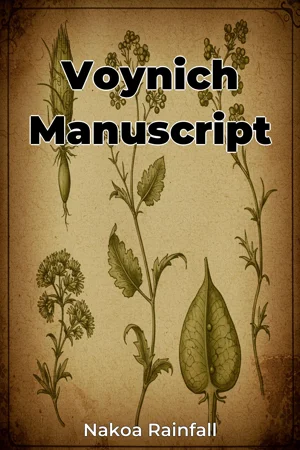
What secrets are locked within a book written in an unknown language, filled with enigmatic illustrations, defying understanding for over half a millennium? "Voynich Manuscript" embarks on a journey to unravel the mysteries surrounding this 15th-century codex, a text that has baffled cryptographers, linguists, and historians alike. This book delves into the heart of the Voynich Manuscript, exploring its peculiar script, its bizarre botanical depictions, and the myriad attempts to decipher its true meaning. We will examine the historical context of its creation, the linguistic patterns hidden within its pages, and the cutting-edge computational methods being employed in the quest for understanding. The significance of the Voynich Manuscript lies not only in its unsolved nature but also in what its potential decryption could reveal about medieval knowledge, scientific thought, or even a forgotten language. Understanding the manuscript could offer valuable insights into the intellectual landscape of the 15th century, shedding light on areas such as early botany, medicine, or cryptography. The book provides a thorough background on the manuscript's known history, from its rediscovery in the early 20th century to the various theories surrounding its origins and purpose. The reader will gain familiarity with key concepts in cryptography, historical linguistics, and statistical analysis, enabling a deeper appreciation of the challenges involved in deciphering the text. The central argument of "Voynich Manuscript" is that while a definitive decryption remains elusive, a multi-faceted approach, combining rigorous linguistic analysis, advanced computational techniques, and a contextual understanding of medieval science and culture, offers the best path toward unlocking its secrets. The book posits that even without a complete translation, valuable information can be gleaned regarding the manuscript's structure, possible authorship, and intended audience. The book begins by introducing the physical characteristics of the manuscript: its parchment, inks, and the unique features of its script and illustrations. It then pivots to a detailed examination of linguistic analyses, exploring attempts to identify the language family to which the script might belong, assessing the statistical properties of the text, and evaluating various proposed decryption keys. Subsequent chapters will explore the botanical illustrations, comparing them to known medieval herbals and considering their potential significance in understanding the manuscript's content. The book then delves into computational linguistics and pattern recognition techniques, exploring how algorithms can be used to identify repeating patterns, classify words, and even generate potential translations. The culmination of the book presents a synthesis of these different approaches, offering a nuanced perspective on the manuscript's possible origins and purpose, while acknowledging the limitations of current knowledge. The evidence presented in "Voynich Manuscript" draws upon a diverse range of sources. It includes detailed linguistic analyses performed by leading cryptographers, statistical analyses of the text's letter frequencies and word patterns, and comparative studies of the illustrations with known medieval botanical and astronomical texts. The book also incorporates the results of recent computational studies, utilizing machine learning algorithms and natural language processing techniques to analyze the manuscript's structure and content. The book connects to several interdisciplinary fields, including linguistics, history, computer science, and art history. The linguistic aspect explores the challenges of deciphering unknown scripts and reconstructing lost languages. The historical aspect provides context on the scientific and cultural landscape of the 15th century. The computer science aspect showcases the application of advanced algorithms to solve complex puzzles. The art history aspect provides insights into potential artistic and cultural influences on the manuscript's illustrations. This book adopts a fact-based tone, presenting information in a clear, accessible manner while maintaining scholarly rigor. It is aimed at a general audience interested in puzzles, cryptography, history, and linguistics, as well as academics and researchers working in related fields. The book recognizes the inherent uncertainties surrounding the manuscript and emphasizes the importance of critical thinking and evidence-based reasoning. While it aims to provide a comprehensive overview of the manuscript and the attempts to decipher it, it acknowledges the limitations of current knowledge and the ongoing nature of research in this area. The information presented can be applied practically by readers interested in cryptography, historical research, or the application of computational methods to solve complex problems. Furthermore, the book addresses the controversies surrounding the Voynich Manuscript, presenting different viewpoints and assessing the strengths and weaknesses of various competing theories.
What secrets are locked within a book written in an unknown language, filled with enigmatic illustrations, defying understanding for over half a millennium? "Voynich Manuscript" embarks on a journey to unravel the mysteries surrounding this 15th-century codex, a text that has baffled cryptographers, linguists, and historians alike. This book delves into the heart of the Voynich Manuscript, exploring its peculiar script, its bizarre botanical depictions, and the myriad attempts to decipher its true meaning. We will examine the historical context of its creation, the linguistic patterns hidden within its pages, and the cutting-edge computational methods being employed in the quest for understanding. The significance of the Voynich Manuscript lies not only in its unsolved nature but also in what its potential decryption could reveal about medieval knowledge, scientific thought, or even a forgotten language. Understanding the manuscript could offer valuable insights into the intellectual landscape of the 15th century, shedding light on areas such as early botany, medicine, or cryptography. The book provides a thorough background on the manuscript's known history, from its rediscovery in the early 20th century to the various theories surrounding its origins and purpose. The reader will gain familiarity with key concepts in cryptography, historical linguistics, and statistical analysis, enabling a deeper appreciation of the challenges involved in deciphering the text. The central argument of "Voynich Manuscript" is that while a definitive decryption remains elusive, a multi-faceted approach, combining rigorous linguistic analysis, advanced computational techniques, and a contextual understanding of medieval science and culture, offers the best path toward unlocking its secrets. The book posits that even without a complete translation, valuable information can be gleaned regarding the manuscript's structure, possible authorship, and intended audience. The book begins by introducing the physical characteristics of the manuscript: its parchment, inks, and the unique features of its script and illustrations. It then pivots to a detailed examination of linguistic analyses, exploring attempts to identify the language family to which the script might belong, assessing the statistical properties of the text, and evaluating various proposed decryption keys. Subsequent chapters will explore the botanical illustrations, comparing them to known medieval herbals and considering their potential significance in understanding the manuscript's content. The book then delves into computational linguistics and pattern recognition techniques, exploring how algorithms can be used to identify repeating patterns, classify words, and even generate potential translations. The culmination of the book presents a synthesis of these different approaches, offering a nuanced perspective on the manuscript's possible origins and purpose, while acknowledging the limitations of current knowledge. The evidence presented in "Voynich Manuscript" draws upon a diverse range of sources. It includes detailed linguistic analyses performed by leading cryptographers, statistical analyses of the text's letter frequencies and word patterns, and comparative studies of the illustrations with known medieval botanical and astronomical texts. The book also incorporates the results of recent computational studies, utilizing machine learning algorithms and natural language processing techniques to analyze the manuscript's structure and content. The book connects to several interdisciplinary fields, including linguistics, history, computer science, and art history. The linguistic aspect explores the challenges of deciphering unknown scripts and reconstructing lost languages. The historical aspect provides context on the scientific and cultural landscape of the 15th century. The computer science aspect showcases the application of advanced algorithms to solve complex puzzles. The art history aspect provides insights into potential artistic and cultural influences on the manuscript's illustrations. This book adopts a fact-based tone, presenting information in a clear, accessible manner while maintaining scholarly rigor. It is aimed at a general audience interested in puzzles, cryptography, history, and linguistics, as well as academics and researchers working in related fields. The book recognizes the inherent uncertainties surrounding the manuscript and emphasizes the importance of critical thinking and evidence-based reasoning. While it aims to provide a comprehensive overview of the manuscript and the attempts to decipher it, it acknowledges the limitations of current knowledge and the ongoing nature of research in this area. The information presented can be applied practically by readers interested in cryptography, historical research, or the application of computational methods to solve complex problems. Furthermore, the book addresses the controversies surrounding the Voynich Manuscript, presenting different viewpoints and assessing the strengths and weaknesses of various competing theories.
"Voynich Manuscript" explores the enduring enigma of a 15th-century book written in an unknown language and filled with bizarre illustrations. This historical puzzle has baffled cryptographers, linguists, and historians for centuries. The book investigates the manuscript's unique script, its strange botanical depictions, and the various attempts to decipher its true meaning, offering insights into medieval science and culture. The book explores how the manuscript's potential decryption could unlock secrets about lost languages or scientific thought. The book adopts a multi-faceted approach, combining linguistic analysis, computational techniques, and historical context. It begins by examining the physical characteristics of the manuscript, such as its parchment and inks. It then moves into linguistic analyses, exploring attempts to identify the language family and evaluating decryption keys. Later chapters delve into the botanical illustrations, comparing them to known medieval herbals. Finally, the book explores computational linguistics and pattern recognition techniques, using algorithms to identify patterns and generate potential translations. Through a fact-based lens, the book presents a nuanced perspective on the manuscript's possible origins and purpose. Even without a complete translation, valuable information can be gleaned regarding the manuscript's structure, authorship, and intended audience. By addressing controversies and presenting different viewpoints, the book offers a comprehensive overview of the manuscript and the ongoing research surrounding it.
Book Details
ISBN
9788235240484
Publisher
Publifye AS
Your Licenses
You don't own any licenses for this book
Purchase a license below to unlock this book and download the EPUB.
Purchase License
Select a tier to unlock this book
Need bulk licensing?
Contact us for enterprise agreements.