
About This Book
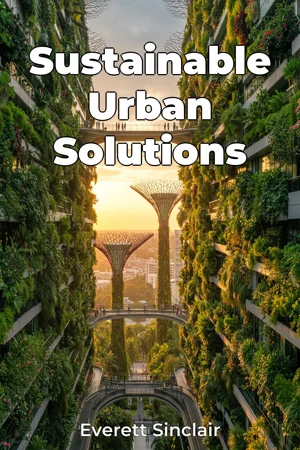
Can urban centers truly become epicenters of sustainability, leading the charge against environmental challenges? "Sustainable Urban Solutions" explores this question, examining innovative approaches to urban design and infrastructure that prioritize environmental responsibility. This book delves into the critical role of green technologies and urban planning strategies in addressing contemporary ecological concerns, focusing on practical and scalable solutions for cities worldwide. The book concentrates on two primary areas: the integration of nature into urban environments and the development of sustainable infrastructure. The incorporation of green spaces, exemplified by Singapore's vertical gardens and rooftop farms, offers myriad benefits from improved air quality and biodiversity to enhanced community well-being. Simultaneously, the adoption of sustainable infrastructure, such as Copenhagen's comprehensive bicycle network and advanced waste management systems, significantly reduces carbon footprints and promotes resource efficiency. These topics are crucial because cities, as major consumers of resources and contributors to pollution, must transform to secure a sustainable future. The context for these innovations lies in the growing awareness of climate change, resource depletion, and the increasing urbanization of the global population. Understanding principles of urban ecology, environmental engineering, and policy-making is beneficial, though the book is written to be accessible to a broad audience. The central argument of "Sustainable Urban Solutions" is that by strategically integrating green technologies and sustainable infrastructure, cities can transition from being environmental liabilities to becoming engines of ecological health and resilience. This argument is vital because it challenges the conventional wisdom of urban development and provides a roadmap for creating cities that not only survive but thrive in an environmentally conscious manner. The book begins by introducing the core concepts of sustainable urbanism and outlining the environmental challenges facing cities today. It then dedicates chapters to specific areas such as green infrastructure, sustainable transportation, waste management, and energy efficiency. For instance, the chapter on green infrastructure examines case studies of cities implementing innovative green spaces, detailing their design, implementation, and impact. A chapter on sustainable transportation analyzes different modes of transport and their environmental footprints, advocating for policies that promote walking, cycling, and public transit. The culmination of the argument demonstrates how these individual solutions can be integrated to create holistic, sustainable urban systems. Furthermore, it explores pathways of engagement for urban residents to participate in their local governments' sustainability initiatives, and offers a section dedicated to policy-making to help guide urban administrators toward sustainable practices. The evidence presented is drawn from diverse sources, including case studies of successful sustainable initiatives, scientific research on the environmental impacts of urban development, and policy analyses. Data sources include reports from organizations like the United Nations Environment Programme, the World Bank, and academic research institutions. Interdisciplinary connections are explored, linking urban planning with fields such as ecology, sociology, and economics. The book illustrates the interdependencies between urban design and ecological health, the social impacts of green spaces on community cohesion, and the economic benefits of sustainable investments. "Sustainable Urban Solutions" provides a pragmatic perspective, focusing on actionable strategies and real-world examples. Instead of focusing on theoretical concepts, this book emphasizes practical solutions that can be implemented in cities of varying sizes and contexts. Written in a clear, accessible style, the book is intended for urban planners, policymakers, environmental professionals, students, and anyone interested in creating more sustainable cities. It provides valuable insights and practical tools for understanding and addressing the environmental challenges facing urban centers. The scope of the book encompasses a wide range of sustainable urban solutions, but it primarily focuses on strategies applicable to medium to large cities. It acknowledges that smaller towns and rural areas face different challenges and require tailored approaches. The information presented in the book can be applied practically by readers through advocating for sustainable policies, implementing green technologies in their homes and communities, and engaging in informed discussions about urban development. While the book advocates for sustainable solutions, it also acknowledges ongoing debates about the costs and trade-offs associated with their implementation. It addresses concerns about the economic feasibility of green technologies and the potential impacts of sustainable policies on different communities.
Can urban centers truly become epicenters of sustainability, leading the charge against environmental challenges? "Sustainable Urban Solutions" explores this question, examining innovative approaches to urban design and infrastructure that prioritize environmental responsibility. This book delves into the critical role of green technologies and urban planning strategies in addressing contemporary ecological concerns, focusing on practical and scalable solutions for cities worldwide. The book concentrates on two primary areas: the integration of nature into urban environments and the development of sustainable infrastructure. The incorporation of green spaces, exemplified by Singapore's vertical gardens and rooftop farms, offers myriad benefits from improved air quality and biodiversity to enhanced community well-being. Simultaneously, the adoption of sustainable infrastructure, such as Copenhagen's comprehensive bicycle network and advanced waste management systems, significantly reduces carbon footprints and promotes resource efficiency. These topics are crucial because cities, as major consumers of resources and contributors to pollution, must transform to secure a sustainable future. The context for these innovations lies in the growing awareness of climate change, resource depletion, and the increasing urbanization of the global population. Understanding principles of urban ecology, environmental engineering, and policy-making is beneficial, though the book is written to be accessible to a broad audience. The central argument of "Sustainable Urban Solutions" is that by strategically integrating green technologies and sustainable infrastructure, cities can transition from being environmental liabilities to becoming engines of ecological health and resilience. This argument is vital because it challenges the conventional wisdom of urban development and provides a roadmap for creating cities that not only survive but thrive in an environmentally conscious manner. The book begins by introducing the core concepts of sustainable urbanism and outlining the environmental challenges facing cities today. It then dedicates chapters to specific areas such as green infrastructure, sustainable transportation, waste management, and energy efficiency. For instance, the chapter on green infrastructure examines case studies of cities implementing innovative green spaces, detailing their design, implementation, and impact. A chapter on sustainable transportation analyzes different modes of transport and their environmental footprints, advocating for policies that promote walking, cycling, and public transit. The culmination of the argument demonstrates how these individual solutions can be integrated to create holistic, sustainable urban systems. Furthermore, it explores pathways of engagement for urban residents to participate in their local governments' sustainability initiatives, and offers a section dedicated to policy-making to help guide urban administrators toward sustainable practices. The evidence presented is drawn from diverse sources, including case studies of successful sustainable initiatives, scientific research on the environmental impacts of urban development, and policy analyses. Data sources include reports from organizations like the United Nations Environment Programme, the World Bank, and academic research institutions. Interdisciplinary connections are explored, linking urban planning with fields such as ecology, sociology, and economics. The book illustrates the interdependencies between urban design and ecological health, the social impacts of green spaces on community cohesion, and the economic benefits of sustainable investments. "Sustainable Urban Solutions" provides a pragmatic perspective, focusing on actionable strategies and real-world examples. Instead of focusing on theoretical concepts, this book emphasizes practical solutions that can be implemented in cities of varying sizes and contexts. Written in a clear, accessible style, the book is intended for urban planners, policymakers, environmental professionals, students, and anyone interested in creating more sustainable cities. It provides valuable insights and practical tools for understanding and addressing the environmental challenges facing urban centers. The scope of the book encompasses a wide range of sustainable urban solutions, but it primarily focuses on strategies applicable to medium to large cities. It acknowledges that smaller towns and rural areas face different challenges and require tailored approaches. The information presented in the book can be applied practically by readers through advocating for sustainable policies, implementing green technologies in their homes and communities, and engaging in informed discussions about urban development. While the book advocates for sustainable solutions, it also acknowledges ongoing debates about the costs and trade-offs associated with their implementation. It addresses concerns about the economic feasibility of green technologies and the potential impacts of sustainable policies on different communities.
"Sustainable Urban Solutions" explores how cities can transform into models of environmental responsibility through innovative urban design and infrastructure. It highlights the critical role of green technologies and strategic urban planning in addressing ecological concerns. Discover how integrating nature, like Singapore's vertical gardens, enhances air quality and biodiversity, and how sustainable infrastructure, such as Copenhagen's bicycle network, reduces carbon footprints. This book emphasizes practical, scalable solutions, demonstrating how cities can shift from environmental liabilities to engines of ecological health. It begins by introducing sustainable urbanism concepts and outlining current urban environmental challenges. Subsequent chapters delve into specific areas like green infrastructure, sustainable transportation, and waste management, showcasing case studies and analyzing environmental footprints. The book demonstrates how these individual efforts can be integrated to create holistic, sustainable urban systems. Ultimately, "Sustainable Urban Solutions" provides insights and tools for urban planners, policymakers, and anyone interested in creating more sustainable cities. It advocates for practical strategies applicable to medium to large cities, encouraging readers to promote sustainable policies and engage in informed discussions about urban development.
Book Details
ISBN
9788235240330
Publisher
Publifye AS
Your Licenses
You don't own any licenses for this book
Purchase a license below to unlock this book and download the EPUB.
Purchase License
Select a tier to unlock this book
Need bulk licensing?
Contact us for enterprise agreements.