
About This Book
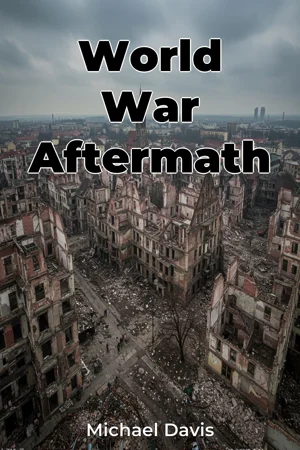
How did the ashes of global conflict sow the seeds of the modern world? "World War Aftermath" delves into the profound and multifaceted consequences of World War I and World War II, examining their lasting impact on global stability across economic, political, and social spheres. These cataclysmic events reshaped not only national borders and political ideologies, but also the very fabric of international relations and societal norms. Understanding these consequences is crucial for navigating the complexities of today's interconnected world. This book explores three key thematic areas: the economic restructuring that followed each war, the political realignments and the emergence of new global powers, and the social transformations that redefined cultural landscapes and individual identities. It argues that the aftermath of these wars established the groundwork for the international systems and societal structures that continue to shape global dynamics. The narrative begins by detailing the immediate post-war economic devastation, including hyperinflation, debt crises, and the collapse of pre-war trade networks. It then analyzes the implementation of recovery plans such as the Marshall Plan and their long-term effects on economic interdependence and global trade. The second major section analyzes the shifts in the global political order, focusing on the rise of the United States and the Soviet Union as superpowers, the formation of the United Nations, and the decolonization movements that swept across Africa and Asia. It examines the ideological battles of the Cold War and their impact on international relations, proxy conflicts, and the nuclear arms race. It also looks at how new political and economic institutions emerged and transformed global governance. The third part addresses the societal changes, including shifts in gender roles, the rise of consumer culture, and the evolution of civil rights movements. We investigate the cultural shifts brought about by war and displacement, including changes in art, literature, and popular media. Drawing upon archival research, economic data, and sociological studies, this book presents a comprehensive analysis of the period. It uses primary source material and statistical analysis to provide evidence for its arguments. "World War Aftermath" connects to several academic disciplines, including international relations, economics, political science, and sociology, offering a holistic understanding of the post-war world. It analyzes the political economy of reconstruction efforts, the sociological impact of war on family structures, and the international relations that shaped the Cold War global order. Distinctively, this book provides an integrated analysis of these three areas, demonstrating their interconnectedness and their combined effect on shaping modern global dynamics. It reveals how economic policies influenced political alignments and social transformations, and vice versa. This book aims to reach scholars, students, policymakers, and anyone interested in understanding the roots of contemporary global challenges. It provides valuable context to current international relations to facilitate informed discussion and debate on topics such as global governance and trade. The book acknowledges the complexity of historical causation and avoids simplistic narratives. It recognizes that there are many factors that influence global stability and focuses on the specific impact of the two World Wars. "World War Aftermath" contributes to debates on the effectiveness of international institutions and the long-term consequences of war, fostering deeper insights into conflict resolution, international cooperation, and the shaping of a more stable and prosperous future.
How did the ashes of global conflict sow the seeds of the modern world? "World War Aftermath" delves into the profound and multifaceted consequences of World War I and World War II, examining their lasting impact on global stability across economic, political, and social spheres. These cataclysmic events reshaped not only national borders and political ideologies, but also the very fabric of international relations and societal norms. Understanding these consequences is crucial for navigating the complexities of today's interconnected world. This book explores three key thematic areas: the economic restructuring that followed each war, the political realignments and the emergence of new global powers, and the social transformations that redefined cultural landscapes and individual identities. It argues that the aftermath of these wars established the groundwork for the international systems and societal structures that continue to shape global dynamics. The narrative begins by detailing the immediate post-war economic devastation, including hyperinflation, debt crises, and the collapse of pre-war trade networks. It then analyzes the implementation of recovery plans such as the Marshall Plan and their long-term effects on economic interdependence and global trade. The second major section analyzes the shifts in the global political order, focusing on the rise of the United States and the Soviet Union as superpowers, the formation of the United Nations, and the decolonization movements that swept across Africa and Asia. It examines the ideological battles of the Cold War and their impact on international relations, proxy conflicts, and the nuclear arms race. It also looks at how new political and economic institutions emerged and transformed global governance. The third part addresses the societal changes, including shifts in gender roles, the rise of consumer culture, and the evolution of civil rights movements. We investigate the cultural shifts brought about by war and displacement, including changes in art, literature, and popular media. Drawing upon archival research, economic data, and sociological studies, this book presents a comprehensive analysis of the period. It uses primary source material and statistical analysis to provide evidence for its arguments. "World War Aftermath" connects to several academic disciplines, including international relations, economics, political science, and sociology, offering a holistic understanding of the post-war world. It analyzes the political economy of reconstruction efforts, the sociological impact of war on family structures, and the international relations that shaped the Cold War global order. Distinctively, this book provides an integrated analysis of these three areas, demonstrating their interconnectedness and their combined effect on shaping modern global dynamics. It reveals how economic policies influenced political alignments and social transformations, and vice versa. This book aims to reach scholars, students, policymakers, and anyone interested in understanding the roots of contemporary global challenges. It provides valuable context to current international relations to facilitate informed discussion and debate on topics such as global governance and trade. The book acknowledges the complexity of historical causation and avoids simplistic narratives. It recognizes that there are many factors that influence global stability and focuses on the specific impact of the two World Wars. "World War Aftermath" contributes to debates on the effectiveness of international institutions and the long-term consequences of war, fostering deeper insights into conflict resolution, international cooperation, and the shaping of a more stable and prosperous future.
"World War Aftermath" explores the wide-ranging consequences of World War I and World War II, examining their enduring impact on global stability across economic, political, and social domains. The book argues that these conflicts laid the groundwork for the international systems and societal structures that continue to shape global dynamics, providing a crucial lens for understanding today's interconnected world. One intriguing aspect is the analysis of how post-war recovery plans, like the Marshall Plan, fostered economic interdependence and reshaped global trade networks. Another highlight is the examination of how the wars spurred decolonization movements and reshaped the political landscape, leading to the rise of new global powers and the ideological battles of the Cold War. The book progresses through three key thematic areas: economic restructuring, political realignments, and social transformations. It begins by detailing the immediate post-war economic devastation and then analyzes the shifts in the global political order, focusing on the rise of superpowers and the formation of the United Nations. Finally, it addresses societal changes, including shifts in gender roles and the rise of consumer culture. By integrating these three areas, "World War Aftermath" offers a comprehensive analysis, demonstrating how economic policies influenced political alignments and social transformations, and vice versa, contributing to debates on the effectiveness of international institutions and the long-term consequences of war.
Book Details
ISBN
9788235240262
Publisher
Publifye AS
Your Licenses
You don't own any licenses for this book
Purchase a license below to unlock this book and download the EPUB.
Purchase License
Select a tier to unlock this book
Need bulk licensing?
Contact us for enterprise agreements.