
About This Book
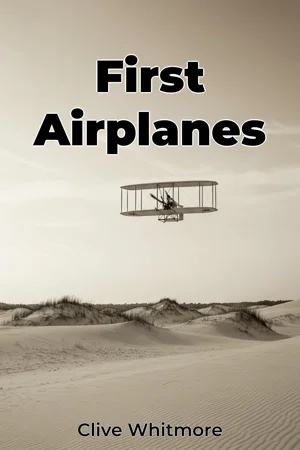
What if the dream of human flight could be realized through meticulous experimentation and unwavering dedication? "First Airplanes" explores the remarkable journey of Wilbur and Orville Wright, chronicling their relentless pursuit to conquer the skies and forever alter the landscape of transportation. This book delves into the core elements of their success: the scientific principles they uncovered, the innovative engineering solutions they devised, and the historical context that shaped their extraordinary achievement. Central to our narrative are three pivotal themes. First, we examine the Wright brothers' systematic approach to aerodynamics, detailing their wind tunnel experiments and the data they meticulously collected and analyzed. Second, we explore their unique understanding of flight control, specifically their invention of wing warping and the development of a functional rudder system. Finally, we contextualize their work within the broader historical framework of the late 19th and early 20th centuries, a period marked by burgeoning technological advancements and an intense global race to achieve heavier-than-air flight. Understanding these elements is crucial to appreciating the Wrights' unique contributions and the significance of their accomplishment. The central argument of "First Airplanes" is that the Wright brothers' success was not merely a stroke of luck or innate genius, but rather the result of a deliberate, scientific, and iterative process of design, testing, and refinement. This book demonstrates how their commitment to empirical observation, combined with their mechanical ingenuity, enabled them to overcome the numerous challenges that had stymied other aviation pioneers. By examining their methods and innovations, we offer a fresh perspective on the nature of invention and the power of systematic problem-solving. The book unfolds by first introducing the historical environment and prevailing theories of flight that existed before the Wright brothers' serious endeavors. It then transitions into a detailed account of their early experiments with kites and gliders, emphasizing their methodical approach to understanding lift, drag, and control. A significant portion of the book focuses on their construction and use of a wind tunnel, which allowed them to rigorously test various wing designs and airfoil shapes. The narrative then culminates in a detailed examination of their successful flights at Kitty Hawk, North Carolina, analyzing the mechanical and aerodynamic features of the 1903 Wright Flyer. Finally, the book explores the immediate impact of their invention on military and commercial aviation, as well as the legal battles they faced to defend their patents. "First Airplanes" relies heavily on primary source materials, including the Wright brothers' personal papers, diaries, correspondence, and technical drawings. We also draw upon contemporary accounts from witnesses, newspaper reports, and scientific publications to provide a comprehensive and accurate portrayal of their work. The book further incorporates photographs and illustrations to visually demonstrate the evolution of their designs and the mechanics of their flying machines. The book intersects with several other fields of study, including the history of science and technology, engineering, and business. Their story is a case study in innovation management, illustrating how a small, family-run enterprise could successfully compete in a rapidly evolving technological landscape. Furthermore, their work has implications for contemporary fields such as robotics and autonomous vehicles. "First Airplanes" is written in a clear, accessible style intended for a broad audience, including history enthusiasts, aviation aficionados, and anyone interested in the process of invention and technological innovation. The book aims to provide a comprehensive and authoritative account of the Wright brothers' achievements while avoiding overly technical jargon or complex mathematical equations. While the book covers the essential technical aspects of their inventions, the focus remains on the human story behind the machines, emphasizing their dedication, perseverance, and intellectual curiosity. This book specifically focuses on the Wright brothers' pioneering work in the early years of aviation, concluding with the establishment of their airplane company. While we acknowledge the contributions of other aviation pioneers, our primary focus is on providing a detailed and comprehensive account of the Wright brothers' unique contributions and the methods they employed to achieve sustained, controlled flight. "First Airplanes" offers readers a clear understanding of how methodical experimentation and unwavering focus transformed a seemingly impossible dream into reality, changing the course of history and paving the way for the modern age of aviation.
What if the dream of human flight could be realized through meticulous experimentation and unwavering dedication? "First Airplanes" explores the remarkable journey of Wilbur and Orville Wright, chronicling their relentless pursuit to conquer the skies and forever alter the landscape of transportation. This book delves into the core elements of their success: the scientific principles they uncovered, the innovative engineering solutions they devised, and the historical context that shaped their extraordinary achievement. Central to our narrative are three pivotal themes. First, we examine the Wright brothers' systematic approach to aerodynamics, detailing their wind tunnel experiments and the data they meticulously collected and analyzed. Second, we explore their unique understanding of flight control, specifically their invention of wing warping and the development of a functional rudder system. Finally, we contextualize their work within the broader historical framework of the late 19th and early 20th centuries, a period marked by burgeoning technological advancements and an intense global race to achieve heavier-than-air flight. Understanding these elements is crucial to appreciating the Wrights' unique contributions and the significance of their accomplishment. The central argument of "First Airplanes" is that the Wright brothers' success was not merely a stroke of luck or innate genius, but rather the result of a deliberate, scientific, and iterative process of design, testing, and refinement. This book demonstrates how their commitment to empirical observation, combined with their mechanical ingenuity, enabled them to overcome the numerous challenges that had stymied other aviation pioneers. By examining their methods and innovations, we offer a fresh perspective on the nature of invention and the power of systematic problem-solving. The book unfolds by first introducing the historical environment and prevailing theories of flight that existed before the Wright brothers' serious endeavors. It then transitions into a detailed account of their early experiments with kites and gliders, emphasizing their methodical approach to understanding lift, drag, and control. A significant portion of the book focuses on their construction and use of a wind tunnel, which allowed them to rigorously test various wing designs and airfoil shapes. The narrative then culminates in a detailed examination of their successful flights at Kitty Hawk, North Carolina, analyzing the mechanical and aerodynamic features of the 1903 Wright Flyer. Finally, the book explores the immediate impact of their invention on military and commercial aviation, as well as the legal battles they faced to defend their patents. "First Airplanes" relies heavily on primary source materials, including the Wright brothers' personal papers, diaries, correspondence, and technical drawings. We also draw upon contemporary accounts from witnesses, newspaper reports, and scientific publications to provide a comprehensive and accurate portrayal of their work. The book further incorporates photographs and illustrations to visually demonstrate the evolution of their designs and the mechanics of their flying machines. The book intersects with several other fields of study, including the history of science and technology, engineering, and business. Their story is a case study in innovation management, illustrating how a small, family-run enterprise could successfully compete in a rapidly evolving technological landscape. Furthermore, their work has implications for contemporary fields such as robotics and autonomous vehicles. "First Airplanes" is written in a clear, accessible style intended for a broad audience, including history enthusiasts, aviation aficionados, and anyone interested in the process of invention and technological innovation. The book aims to provide a comprehensive and authoritative account of the Wright brothers' achievements while avoiding overly technical jargon or complex mathematical equations. While the book covers the essential technical aspects of their inventions, the focus remains on the human story behind the machines, emphasizing their dedication, perseverance, and intellectual curiosity. This book specifically focuses on the Wright brothers' pioneering work in the early years of aviation, concluding with the establishment of their airplane company. While we acknowledge the contributions of other aviation pioneers, our primary focus is on providing a detailed and comprehensive account of the Wright brothers' unique contributions and the methods they employed to achieve sustained, controlled flight. "First Airplanes" offers readers a clear understanding of how methodical experimentation and unwavering focus transformed a seemingly impossible dream into reality, changing the course of history and paving the way for the modern age of aviation.
"First Airplanes" chronicles the Wright brothers' journey to achieve human flight, emphasizing their systematic approach to invention. This biography dives into their meticulous wind tunnel experiments and innovative solutions for flight control, like wing warping, which were pivotal in overcoming challenges that stumped other pioneers. The book highlights how their dedication to empirical observation and mechanical ingenuity led to their groundbreaking success at Kitty Hawk. The book unfolds chronologically, starting with the historical context and prevailing flight theories before the Wrights. It details their early experiments with kites and gliders, showcasing their methodical understanding of aerodynamics. Progressing through the construction of their wind tunnel and culminating in the analysis of the 1903 Wright Flyer, the narrative explores the impact of their invention on military and commercial aviation. By examining the Wright brothers' methods, "First Airplanes" offers a fresh perspective on the nature of invention and the power of systematic problem-solving. Readers gain insight into how their commitment to scientific principles and perseverance transformed the dream of flight into a reality, forever changing transportation and technological innovation.
Book Details
ISBN
9788235239754
Publisher
Publifye AS
Your Licenses
You don't own any licenses for this book
Purchase a license below to unlock this book and download the EPUB.
Purchase License
Select a tier to unlock this book
Need bulk licensing?
Contact us for enterprise agreements.