
About This Book
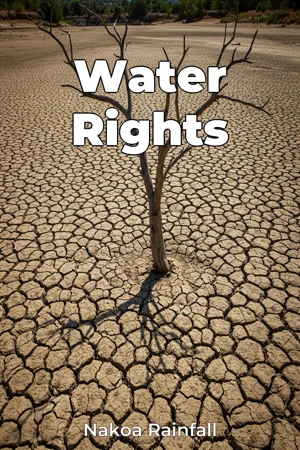
Can access to water truly define civilizations, or tear them apart? "Water Rights" delves into the contentious history of water disputes throughout the Americas, examining the environmental repercussions, prolonged legal battles, and significant consequences for agriculture and industry. These conflicts highlight a fundamental tension between human needs, economic development, and ecological preservation, demanding a comprehensive understanding of the complex interplay of factors at play. This book explores the key topics of water allocation, environmental justice, and legal frameworks governing water resources. Water allocation, often a zero-sum game, pits different users against each other, revealing deep-seated inequalities and vulnerabilities. Environmental justice considers how water-related harms disproportionately impact marginalized communities, amplifying existing social and economic disparities. Finally, the book investigates the patchwork of laws and regulations, both national and international, established to manage these vital resources and resolve conflicts. To fully grasp the dynamics of these disputes, a firm understanding of hydrological cycles, historical settlement patterns, and basic legal principles is essential. The book provides this context, explaining how climate change further exacerbates water scarcity, making efficient and equitable water management more critical than ever before. The central argument of "Water Rights" is that water disputes in the Americas are not merely technical challenges, but are fundamentally intertwined with issues of power, equity, and sustainability. Understanding the historical context and legal frameworks surrounding these disputes is crucial for creating effective and just solutions for the future. The book unfolds in three major sections. First, the introduction lays the groundwork by defining key terms, outlining the scientific and social context of water scarcity, and presenting a comprehensive overview of water law principles. The second section presents case studies of high-profile water disputes across the Americas, from the Colorado River Basin in the United States to the Atacama Desert in Chile. These case studies illustrate the diverse range of actors involved, the legal and political strategies employed, and the environmental and social impacts of these conflicts. The final section culminates in a synthesis of the lessons learned from these case studies, proposing policy recommendations and strategies for more sustainable and equitable water management. The analysis presented relies on a diverse array of evidence. This includes legal documents, government reports, scientific studies, historical archives, and interviews with stakeholders. "Water Rights" draws connections to diverse fields such as environmental science, law, political science, and sociology, enriching the book's analysis. It demonstrates how legal frameworks are shaped by political interests, environmental impacts are experienced differently across social groups, and technological solutions must be contextually appropriate. This book offers a unique perspective by integrating historical analysis, legal scholarship, and environmental justice principles. It avoids simplistic solutions, instead emphasizing the importance of understanding the multifaceted nature of water disputes. Written in an accessible yet academically rigorous style, "Water Rights" is primarily aimed at students, policymakers, environmental professionals, and anyone interested in understanding the complex challenges of water management in the Americas. It will be valuable to those seeking a comprehensive and nuanced understanding of water rights and their implications. As a work of non-fiction history and environmental studies, "Water Rights" adheres to the conventions of rigorous research, accurate documentation, and objective analysis. While covering a broad geographic area, the book acknowledges the limitations of its scope. The information in "Water Rights" has significant real-world applications, including informing policy decisions, guiding sustainable development projects, and promoting community engagement in water management. The book engages with ongoing debates about water rights, such as the role of market-based solutions, the recognition of indigenous water rights, and the balance between conservation and economic development. By presenting diverse perspectives and rigorously analyzing available evidence, this book aims to contribute to a more informed and productive discussion about the future of water resources in the Americas.
Can access to water truly define civilizations, or tear them apart? "Water Rights" delves into the contentious history of water disputes throughout the Americas, examining the environmental repercussions, prolonged legal battles, and significant consequences for agriculture and industry. These conflicts highlight a fundamental tension between human needs, economic development, and ecological preservation, demanding a comprehensive understanding of the complex interplay of factors at play. This book explores the key topics of water allocation, environmental justice, and legal frameworks governing water resources. Water allocation, often a zero-sum game, pits different users against each other, revealing deep-seated inequalities and vulnerabilities. Environmental justice considers how water-related harms disproportionately impact marginalized communities, amplifying existing social and economic disparities. Finally, the book investigates the patchwork of laws and regulations, both national and international, established to manage these vital resources and resolve conflicts. To fully grasp the dynamics of these disputes, a firm understanding of hydrological cycles, historical settlement patterns, and basic legal principles is essential. The book provides this context, explaining how climate change further exacerbates water scarcity, making efficient and equitable water management more critical than ever before. The central argument of "Water Rights" is that water disputes in the Americas are not merely technical challenges, but are fundamentally intertwined with issues of power, equity, and sustainability. Understanding the historical context and legal frameworks surrounding these disputes is crucial for creating effective and just solutions for the future. The book unfolds in three major sections. First, the introduction lays the groundwork by defining key terms, outlining the scientific and social context of water scarcity, and presenting a comprehensive overview of water law principles. The second section presents case studies of high-profile water disputes across the Americas, from the Colorado River Basin in the United States to the Atacama Desert in Chile. These case studies illustrate the diverse range of actors involved, the legal and political strategies employed, and the environmental and social impacts of these conflicts. The final section culminates in a synthesis of the lessons learned from these case studies, proposing policy recommendations and strategies for more sustainable and equitable water management. The analysis presented relies on a diverse array of evidence. This includes legal documents, government reports, scientific studies, historical archives, and interviews with stakeholders. "Water Rights" draws connections to diverse fields such as environmental science, law, political science, and sociology, enriching the book's analysis. It demonstrates how legal frameworks are shaped by political interests, environmental impacts are experienced differently across social groups, and technological solutions must be contextually appropriate. This book offers a unique perspective by integrating historical analysis, legal scholarship, and environmental justice principles. It avoids simplistic solutions, instead emphasizing the importance of understanding the multifaceted nature of water disputes. Written in an accessible yet academically rigorous style, "Water Rights" is primarily aimed at students, policymakers, environmental professionals, and anyone interested in understanding the complex challenges of water management in the Americas. It will be valuable to those seeking a comprehensive and nuanced understanding of water rights and their implications. As a work of non-fiction history and environmental studies, "Water Rights" adheres to the conventions of rigorous research, accurate documentation, and objective analysis. While covering a broad geographic area, the book acknowledges the limitations of its scope. The information in "Water Rights" has significant real-world applications, including informing policy decisions, guiding sustainable development projects, and promoting community engagement in water management. The book engages with ongoing debates about water rights, such as the role of market-based solutions, the recognition of indigenous water rights, and the balance between conservation and economic development. By presenting diverse perspectives and rigorously analyzing available evidence, this book aims to contribute to a more informed and productive discussion about the future of water resources in the Americas.
"Water Rights" explores the complex history of water disputes across the Americas, highlighting the tension between human needs, economic development, and ecological preservation. These disputes often pit different users against each other in a zero-sum game, revealing inequalities and vulnerabilities. The book examines how these conflicts disproportionately affect marginalized communities, raising critical issues of environmental justice. Understanding these disputes requires grasping hydrological cycles, legal principles, and the impacts of climate change, all of which exacerbate water scarcity. The book unfolds in three parts: an introduction to key terms and water law, case studies of water disputes from regions like the Colorado River Basin and the Atacama Desert, and a synthesis of lessons learned with policy recommendations. By integrating historical analysis, legal scholarship, and environmental justice principles, "Water Rights" provides a nuanced perspective, demonstrating how legal frameworks are shaped by political interests and environmental impacts vary across social groups. It avoids simplistic solutions, emphasizing the multifaceted nature of water allocation and its importance for sustainability.
Book Details
ISBN
9788235239693
Publisher
Publifye AS
Your Licenses
You don't own any licenses for this book
Purchase a license below to unlock this book and download the EPUB.
Purchase License
Select a tier to unlock this book
Need bulk licensing?
Contact us for enterprise agreements.