
About This Book
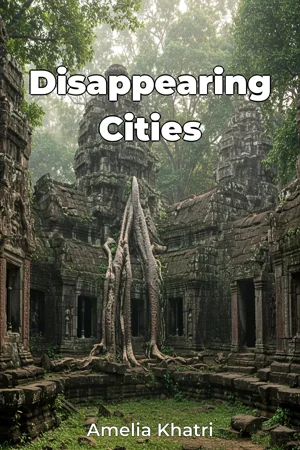
What compels thriving cities to vanish from the map, leaving behind only ruins and unanswered questions? 'Disappearing Cities' delves into the mysteries surrounding abandoned urban centers across the globe, examining the archaeological evidence and exploring the complex reasons behind their demise. This book is important because understanding these collapses offers crucial insights into the fragility of civilizations and the factors that influence long-term societal sustainability. We begin by establishing a foundational understanding of urban development in various historical contexts, focusing on the social, economic, and environmental factors that fostered their initial growth. This includes examining the role of trade networks, agricultural practices, technological advancements, and political structures in shaping these early metropolises. No prior academic knowledge is required, as essential concepts are clearly explained. The central argument of 'Disappearing Cities' is that no single cause explains the abandonment of these urban centers. Rather, a confluence of factors – environmental changes, resource depletion, social upheaval, economic decline, and external pressures such as warfare or disease – typically interacted to render these cities uninhabitable or unsustainable. Understanding these complex, multifaceted interactions is crucial for interpreting the past and informing future planning and policy. The book unfolds in three major sections. First, it introduces key concepts related to urban abandonment, establishing a framework for understanding the various drivers of collapse. Second, it presents detailed case studies of specific cities, drawn from different geographical regions and historical periods. These include sites such as Angkor in Cambodia, Copán in Honduras, and Great Zimbabwe in southern Africa. Each case study explores the unique circumstances surrounding the city’s rise and fall, drawing on archaeological evidence, historical records, and environmental data. Third, the book synthesizes these case studies to identify common patterns and develop a nuanced understanding of the dynamics of urban abandonment. This section culminates in a discussion of the lessons learned from past collapses and their relevance to contemporary urban challenges. The evidence presented in 'Disappearing Cities' is primarily drawn from archaeological excavations, including the analysis of material culture, settlement patterns, and environmental proxies. The book also incorporates insights from historical texts, epigraphic evidence, and paleoclimatic data to provide a comprehensive picture of each city's trajectory. Methodologies include spatial analysis, isotopic analysis, and comparative historical analysis. This book connects to various fields of study, including archaeology, anthropology, environmental science, and history. The interdisciplinary approach allows for a more holistic understanding of the complex factors that contributed to urban abandonment. The book stands out due to its comparative approach and its emphasis on the interplay of multiple factors in driving urban collapse. The tone is academic but accessible, presenting complex information in a clear and engaging manner. The writing style blends rigorous analysis with compelling narrative, making the book both informative and enjoyable to read. The intended audience includes students and scholars of archaeology, history, and urban studies, as well as general readers with an interest in ancient civilizations and the dynamics of societal change. This book would be valuable to them because it offers a comprehensive and nuanced understanding of a complex and fascinating topic. The text emphasizes fact-based analysis and avoids sensationalism, adhering to the conventions of academic non-fiction. The scope of the book is global, encompassing a wide range of urban centers from different historical periods and geographical regions. However, it does not attempt to provide an exhaustive account of every abandoned city in the world, focusing instead on a selection of well-documented case studies that illustrate key themes and patterns. The information in 'Disappearing Cities’ can be applied practically to contemporary urban planning and policy. By understanding the factors that contributed to past urban collapses, we can develop more sustainable and resilient urban environments. The book addresses ongoing debates in the field, such as the relative importance of environmental factors versus social and political factors in driving societal change. It presents a balanced perspective, recognizing the complexity of these issues and the need for nuanced interpretations.
What compels thriving cities to vanish from the map, leaving behind only ruins and unanswered questions? 'Disappearing Cities' delves into the mysteries surrounding abandoned urban centers across the globe, examining the archaeological evidence and exploring the complex reasons behind their demise. This book is important because understanding these collapses offers crucial insights into the fragility of civilizations and the factors that influence long-term societal sustainability. We begin by establishing a foundational understanding of urban development in various historical contexts, focusing on the social, economic, and environmental factors that fostered their initial growth. This includes examining the role of trade networks, agricultural practices, technological advancements, and political structures in shaping these early metropolises. No prior academic knowledge is required, as essential concepts are clearly explained. The central argument of 'Disappearing Cities' is that no single cause explains the abandonment of these urban centers. Rather, a confluence of factors – environmental changes, resource depletion, social upheaval, economic decline, and external pressures such as warfare or disease – typically interacted to render these cities uninhabitable or unsustainable. Understanding these complex, multifaceted interactions is crucial for interpreting the past and informing future planning and policy. The book unfolds in three major sections. First, it introduces key concepts related to urban abandonment, establishing a framework for understanding the various drivers of collapse. Second, it presents detailed case studies of specific cities, drawn from different geographical regions and historical periods. These include sites such as Angkor in Cambodia, Copán in Honduras, and Great Zimbabwe in southern Africa. Each case study explores the unique circumstances surrounding the city’s rise and fall, drawing on archaeological evidence, historical records, and environmental data. Third, the book synthesizes these case studies to identify common patterns and develop a nuanced understanding of the dynamics of urban abandonment. This section culminates in a discussion of the lessons learned from past collapses and their relevance to contemporary urban challenges. The evidence presented in 'Disappearing Cities' is primarily drawn from archaeological excavations, including the analysis of material culture, settlement patterns, and environmental proxies. The book also incorporates insights from historical texts, epigraphic evidence, and paleoclimatic data to provide a comprehensive picture of each city's trajectory. Methodologies include spatial analysis, isotopic analysis, and comparative historical analysis. This book connects to various fields of study, including archaeology, anthropology, environmental science, and history. The interdisciplinary approach allows for a more holistic understanding of the complex factors that contributed to urban abandonment. The book stands out due to its comparative approach and its emphasis on the interplay of multiple factors in driving urban collapse. The tone is academic but accessible, presenting complex information in a clear and engaging manner. The writing style blends rigorous analysis with compelling narrative, making the book both informative and enjoyable to read. The intended audience includes students and scholars of archaeology, history, and urban studies, as well as general readers with an interest in ancient civilizations and the dynamics of societal change. This book would be valuable to them because it offers a comprehensive and nuanced understanding of a complex and fascinating topic. The text emphasizes fact-based analysis and avoids sensationalism, adhering to the conventions of academic non-fiction. The scope of the book is global, encompassing a wide range of urban centers from different historical periods and geographical regions. However, it does not attempt to provide an exhaustive account of every abandoned city in the world, focusing instead on a selection of well-documented case studies that illustrate key themes and patterns. The information in 'Disappearing Cities’ can be applied practically to contemporary urban planning and policy. By understanding the factors that contributed to past urban collapses, we can develop more sustainable and resilient urban environments. The book addresses ongoing debates in the field, such as the relative importance of environmental factors versus social and political factors in driving societal change. It presents a balanced perspective, recognizing the complexity of these issues and the need for nuanced interpretations.
What causes thriving cities to vanish, leaving behind ruins and mysteries? "Disappearing Cities" explores abandoned urban centers globally, seeking to understand why these once-great places were deserted. The book emphasizes that urban abandonment rarely stems from a single cause; instead, it’s usually a combination of environmental shifts, resource depletion, social unrest, and external pressures. For example, understanding the collapse of cities like Angkor and Copán offers insights into societal sustainability and the fragility of even the most advanced civilizations. The book begins by laying a foundation of urban development, examining social, economic, and environmental factors. It then presents detailed case studies from various regions and historical periods, drawing on archaeological findings, historical records, and environmental data to explore unique circumstances. The book's structure allows for a comprehensive exploration of each city’s trajectory, culminating in a discussion of the lessons learned from past collapses and their relevance to today's urban challenges. Finally, "Disappearing Cities" synthesizes these case studies to identify common patterns, offering a nuanced understanding of urban abandonment. The book’s comparative approach and emphasis on the interplay of multiple factors make it a valuable resource for anyone interested in world history, ancient civilizations, and the dynamics of societal change. By understanding historical collapses, we can better address contemporary urban challenges and promote more sustainable urban development.
Book Details
ISBN
9788235239600
Publisher
Publifye AS
Your Licenses
You don't own any licenses for this book
Purchase a license below to unlock this book and download the EPUB.
Purchase License
Select a tier to unlock this book
Need bulk licensing?
Contact us for enterprise agreements.