
About This Book
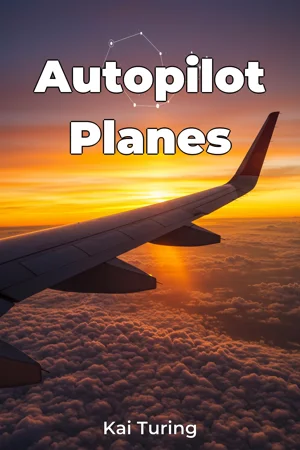
Ever wondered how airplanes can fly thousands of miles, often through challenging weather conditions, with minimal human input? "Autopilot Planes" unveils the intricate workings of these autonomous flight systems, exploring the convergence of autopilot technology, artificial intelligence, and satellite navigation that makes modern air travel possible. This book delves into the core question of how machines have learned to fly, navigate, and land aircraft with increasing precision and reliability. The book focuses on three key areas: the evolution of autopilot systems from their electromechanical origins to today's sophisticated digital implementations; the integration of artificial intelligence for enhanced decision-making during flight; and the crucial role of satellite navigation, particularly GPS, in maintaining accurate positioning and course correction. These elements are vital because they represent the technological foundations of increasingly autonomous air travel, offering improvements in safety, efficiency, and operational capability. To fully appreciate the complexity of these systems, "Autopilot Planes" provides necessary background on basic aerodynamics, flight control principles, and the history of automated flight. Readers will gain insights into early autopilots developed in the first half of the 20th century that simply stabilized the aircraft, along with the advancements in computer technology and sensor systems that have propelled the field forward. The central argument of this book is that the synergy between autopilot systems, AI, and satellite navigation has revolutionized aviation, leading to a paradigm shift where machines actively manage and optimize flight operations. Understanding this technology is paramount for anyone interested in the future of transportation, aviation engineering, or the broader implications of artificial intelligence in safety-critical applications. "Autopilot Planes" is structured to guide the reader through a logical progression of topics. It starts with an introduction to fundamental concepts, offering clear explanations of aircraft dynamics, control surfaces, and basic navigation techniques. It proceeds to examine the development of autopilot systems, discussing major milestones and the underlying engineering principles. Specific chapters are dedicated to exploring the application of AI in flight management, examining how machine learning algorithms optimize fuel consumption, predict turbulence, and assist pilots in emergency situations. The book also analyzes the dependency on global navigation satellite systems (GNSS), detailing the architecture of GPS and alternative satellite constellations, and addressing the challenges of signal integrity and interference. It culminates with a discussion on the future of autonomous flight. The arguments presented in "Autopilot Planes" are supported by detailed technical specifications, case studies of real-world implementations, and analysis of flight data from various sources. Expert interviews with aviation engineers and pilots provide valuable insights into the practical challenges and benefits of these technologies. The book draws upon research from academic publications, industry reports, and government regulatory agencies, offering a comprehensive and well-documented overview of the field. This book connects to several disciplines, including computer science (specifically AI and machine learning), electrical engineering (sensor technologies and control systems), and aerospace engineering (aerodynamics and flight dynamics). These interdisciplinary connections highlight the collaborative nature of modern aviation technology and enhance the book's overall argument by showcasing the broad range of expertise required to develop and maintain such intricate systems. "Autopilot Planes" offers a data-driven approach to understanding autonomous flight, avoiding speculative claims and focusing on validated scientific principles and engineering practices. The tone is informative and accessible, designed for readers with a general technical background or a strong interest in aviation. The target audience includes aviation enthusiasts, students in aerospace engineering or related fields, pilots, and anyone curious about the technology behind modern air travel. This book offers valuable insights into the inner workings of autopilot systems and their implications for the future of aviation. In line with the conventions of non-fiction technology writing, "Autopilot Planes" provides clear explanations of complex concepts, supported by diagrams, illustrations, and real-world examples. It balances technical depth with accessibility, making it suitable for a broad readership. The scope of the book is focused on commercial aviation, excluding military applications or drone technology. This intentional limitation allows for a more in-depth analysis of the specific challenges and opportunities in the civilian air transport sector. The information provided in "Autopilot Planes" has numerous real-world applications. Pilots can gain a deeper understanding of the systems they rely on, engineers can benefit from the detailed technical explanations, and policymakers can use the book to inform decisions about aviation safety and regulation. Ongoing debates in the field regarding the level of automation and the role of human pilots are addressed, presenting different perspectives and encouraging critical thinking about the future of air travel.
Ever wondered how airplanes can fly thousands of miles, often through challenging weather conditions, with minimal human input? "Autopilot Planes" unveils the intricate workings of these autonomous flight systems, exploring the convergence of autopilot technology, artificial intelligence, and satellite navigation that makes modern air travel possible. This book delves into the core question of how machines have learned to fly, navigate, and land aircraft with increasing precision and reliability. The book focuses on three key areas: the evolution of autopilot systems from their electromechanical origins to today's sophisticated digital implementations; the integration of artificial intelligence for enhanced decision-making during flight; and the crucial role of satellite navigation, particularly GPS, in maintaining accurate positioning and course correction. These elements are vital because they represent the technological foundations of increasingly autonomous air travel, offering improvements in safety, efficiency, and operational capability. To fully appreciate the complexity of these systems, "Autopilot Planes" provides necessary background on basic aerodynamics, flight control principles, and the history of automated flight. Readers will gain insights into early autopilots developed in the first half of the 20th century that simply stabilized the aircraft, along with the advancements in computer technology and sensor systems that have propelled the field forward. The central argument of this book is that the synergy between autopilot systems, AI, and satellite navigation has revolutionized aviation, leading to a paradigm shift where machines actively manage and optimize flight operations. Understanding this technology is paramount for anyone interested in the future of transportation, aviation engineering, or the broader implications of artificial intelligence in safety-critical applications. "Autopilot Planes" is structured to guide the reader through a logical progression of topics. It starts with an introduction to fundamental concepts, offering clear explanations of aircraft dynamics, control surfaces, and basic navigation techniques. It proceeds to examine the development of autopilot systems, discussing major milestones and the underlying engineering principles. Specific chapters are dedicated to exploring the application of AI in flight management, examining how machine learning algorithms optimize fuel consumption, predict turbulence, and assist pilots in emergency situations. The book also analyzes the dependency on global navigation satellite systems (GNSS), detailing the architecture of GPS and alternative satellite constellations, and addressing the challenges of signal integrity and interference. It culminates with a discussion on the future of autonomous flight. The arguments presented in "Autopilot Planes" are supported by detailed technical specifications, case studies of real-world implementations, and analysis of flight data from various sources. Expert interviews with aviation engineers and pilots provide valuable insights into the practical challenges and benefits of these technologies. The book draws upon research from academic publications, industry reports, and government regulatory agencies, offering a comprehensive and well-documented overview of the field. This book connects to several disciplines, including computer science (specifically AI and machine learning), electrical engineering (sensor technologies and control systems), and aerospace engineering (aerodynamics and flight dynamics). These interdisciplinary connections highlight the collaborative nature of modern aviation technology and enhance the book's overall argument by showcasing the broad range of expertise required to develop and maintain such intricate systems. "Autopilot Planes" offers a data-driven approach to understanding autonomous flight, avoiding speculative claims and focusing on validated scientific principles and engineering practices. The tone is informative and accessible, designed for readers with a general technical background or a strong interest in aviation. The target audience includes aviation enthusiasts, students in aerospace engineering or related fields, pilots, and anyone curious about the technology behind modern air travel. This book offers valuable insights into the inner workings of autopilot systems and their implications for the future of aviation. In line with the conventions of non-fiction technology writing, "Autopilot Planes" provides clear explanations of complex concepts, supported by diagrams, illustrations, and real-world examples. It balances technical depth with accessibility, making it suitable for a broad readership. The scope of the book is focused on commercial aviation, excluding military applications or drone technology. This intentional limitation allows for a more in-depth analysis of the specific challenges and opportunities in the civilian air transport sector. The information provided in "Autopilot Planes" has numerous real-world applications. Pilots can gain a deeper understanding of the systems they rely on, engineers can benefit from the detailed technical explanations, and policymakers can use the book to inform decisions about aviation safety and regulation. Ongoing debates in the field regarding the level of automation and the role of human pilots are addressed, presenting different perspectives and encouraging critical thinking about the future of air travel.
"Autopilot Planes" explores how airplanes achieve autonomous flight, diving into the integration of autopilot systems, artificial intelligence (AI), and satellite navigation. It reveals how these technologies have converged to revolutionize modern air travel. Intriguingly, early autopilots primarily focused on stabilizing the aircraft, a far cry from today's systems that actively manage and optimize entire flight operations. Another fascinating aspect is the use of machine learning algorithms to predict turbulence and optimize fuel consumption, showcasing the potential of AI in aviation. The book examines the evolution of autopilot technology, from electromechanical origins to sophisticated digital implementations, highlighting the crucial role of satellite navigation systems like GPS. By providing essential background on aerodynamics and flight control principles, it makes complex concepts accessible. Each chapter builds upon the previous one, starting with fundamental concepts and progressing to advanced topics such as AI in flight management and the challenges of GNSS signal integrity. "Autopilot Planes" offers a comprehensive and data-driven overview of autonomous flight, supported by real-world case studies and expert insights. It details how computer science, electrical engineering, and aerospace engineering intersect to create these intricate systems. This approach makes it a valuable resource for aviation enthusiasts, students, engineers, and anyone curious about the future of aviation technology.
Book Details
ISBN
9788235239525
Publisher
Publifye AS
Your Licenses
You don't own any licenses for this book
Purchase a license below to unlock this book and download the EPUB.
Purchase License
Select a tier to unlock this book
Need bulk licensing?
Contact us for enterprise agreements.