
About This Book
Imagine a world where tires intelligently adapt to every curve, slick surface, and sudden stop, optimizing grip and safety in real-time. *Smart Tires* delves into the innovative realm of adaptive tire technology, exploring the mechanical engineering and technological advancements driving this revolution in automotive safety and performance. This book examines how these "smart" tires are engineered to respond dynamically to varying road conditions, promising not only enhanced safety but also improved fuel efficiency and driving experience. This book focuses on three primary areas: the engineering principles behind adaptive tire design, the sensor and control systems that enable real-time adjustments, and the practical implications of this technology for the future of transportation. Understanding the mechanics of tire construction, material science, and the physics of road friction forms the bedrock of adaptive tire development. The integration of sophisticated sensor networks and real-time control algorithms allows tires to "sense" their environment and adjust their characteristics accordingly. Finally, the large-scale adoption of smart tires raises important questions about cost, infrastructure, and regulatory frameworks, all of which are explored in detail. The development of adaptive tire technology builds upon decades of research in materials science, mechatronics, and control systems. A foundational understanding of basic vehicle dynamics and tire behavior is helpful but not essential, as the book provides clear explanations of these concepts. The central argument of *Smart Tires* is that adaptive tire technology represents a paradigm shift in automotive engineering, moving beyond passive safety systems to active, intelligent components that continuously optimize performance. This shift is crucial in an era of increasing vehicle automation and the growing demand for safer and more sustainable transportation solutions. The book is structured to guide the reader through a comprehensive understanding of "smart" tires. It begins by introducing the core concepts of tire mechanics, sensor technology, and control algorithms. It then delves into the specific design and functionality of various adaptive tire systems, drawing on case studies and experimental data to illustrate key principles. Major points explored include: a) Examination of different types of adaptive mechanisms, such as variable tread patterns, adjustable tire pressure systems, and shape-changing tire geometries. b) Analysis of the sensors used to detect road conditions, including moisture levels, surface friction, and tire load and wear. c) Discussion of the control algorithms that process sensor data and actuate adaptive mechanisms in real-time. The book culminates with an analysis of the broader implications of smart tires for the automotive industry, transportation infrastructure, and environmental sustainability. Practical applications and future developments are also explored. The analysis presented is supported by a wealth of data from laboratory experiments, simulations, and real-world testing. The book draws upon a range of sources, including academic research papers, industry reports, and patent filings, to provide a comprehensive and balanced perspective. Finite element analysis, computational fluid dynamics, and machine learning techniques are also discussed as they relate to smart tire design and performance prediction. *Smart Tires* also connects to other fields, including advanced materials science (development of new polymers and composites), computer science (algorithm design and data analysis), and environmental science (impact of tire wear on air and water quality). These interdisciplinary connections highlight the multifaceted nature of adaptive tire technology and its potential to contribute to broader societal goals. This book offers a unique perspective by focusing on the integration of mechanical engineering principles with advanced sensor and control technologies. It emphasizes a systems-level approach, considering the tire not as an isolated component but as an integral part of the vehicle and the overall transportation ecosystem. The tone is factual and analytical, presenting information in a clear, concise, and objective manner. The writing style is accessible to readers with a technical background while avoiding excessive jargon. The target audience includes engineering students, automotive professionals, researchers, and anyone interested in the future of transportation technology. The book provides valuable insights for engineers involved in tire design, vehicle dynamics, and control systems, as well as for policymakers and industry leaders seeking to understand the potential of adaptive tire technology. As a work in the genres of mechanical engineering and technology, *Smart Tires* adheres to the conventions of technical accuracy, thoroughness, and objectivity. It presents information in a structured and logical manner, using diagrams, illustrations, and equations to enhance understanding. The scope of the book is limited to the technical and engineering aspects of adaptive tire technology. While it touches upon the economic and societal implications of this technology, it does not delve into detailed business or policy analyses. The information presented can be applied practically by engineers and researchers involved in the design and development of adaptive tire systems. Automakers and suppliers can use the book to inform their product development strategies and investment decisions. One ongoing debate in the field is the trade-off between the benefits of adaptive tire technology and the increased complexity and cost. The book addresses this debate by providing a balanced assessment of the potential advantages and disadvantages of smart tires, considering factors such as performance, safety, cost, and environmental impact.
Imagine a world where tires intelligently adapt to every curve, slick surface, and sudden stop, optimizing grip and safety in real-time. *Smart Tires* delves into the innovative realm of adaptive tire technology, exploring the mechanical engineering and technological advancements driving this revolution in automotive safety and performance. This book examines how these "smart" tires are engineered to respond dynamically to varying road conditions, promising not only enhanced safety but also improved fuel efficiency and driving experience. This book focuses on three primary areas: the engineering principles behind adaptive tire design, the sensor and control systems that enable real-time adjustments, and the practical implications of this technology for the future of transportation. Understanding the mechanics of tire construction, material science, and the physics of road friction forms the bedrock of adaptive tire development. The integration of sophisticated sensor networks and real-time control algorithms allows tires to "sense" their environment and adjust their characteristics accordingly. Finally, the large-scale adoption of smart tires raises important questions about cost, infrastructure, and regulatory frameworks, all of which are explored in detail. The development of adaptive tire technology builds upon decades of research in materials science, mechatronics, and control systems. A foundational understanding of basic vehicle dynamics and tire behavior is helpful but not essential, as the book provides clear explanations of these concepts. The central argument of *Smart Tires* is that adaptive tire technology represents a paradigm shift in automotive engineering, moving beyond passive safety systems to active, intelligent components that continuously optimize performance. This shift is crucial in an era of increasing vehicle automation and the growing demand for safer and more sustainable transportation solutions. The book is structured to guide the reader through a comprehensive understanding of "smart" tires. It begins by introducing the core concepts of tire mechanics, sensor technology, and control algorithms. It then delves into the specific design and functionality of various adaptive tire systems, drawing on case studies and experimental data to illustrate key principles. Major points explored include: a) Examination of different types of adaptive mechanisms, such as variable tread patterns, adjustable tire pressure systems, and shape-changing tire geometries. b) Analysis of the sensors used to detect road conditions, including moisture levels, surface friction, and tire load and wear. c) Discussion of the control algorithms that process sensor data and actuate adaptive mechanisms in real-time. The book culminates with an analysis of the broader implications of smart tires for the automotive industry, transportation infrastructure, and environmental sustainability. Practical applications and future developments are also explored. The analysis presented is supported by a wealth of data from laboratory experiments, simulations, and real-world testing. The book draws upon a range of sources, including academic research papers, industry reports, and patent filings, to provide a comprehensive and balanced perspective. Finite element analysis, computational fluid dynamics, and machine learning techniques are also discussed as they relate to smart tire design and performance prediction. *Smart Tires* also connects to other fields, including advanced materials science (development of new polymers and composites), computer science (algorithm design and data analysis), and environmental science (impact of tire wear on air and water quality). These interdisciplinary connections highlight the multifaceted nature of adaptive tire technology and its potential to contribute to broader societal goals. This book offers a unique perspective by focusing on the integration of mechanical engineering principles with advanced sensor and control technologies. It emphasizes a systems-level approach, considering the tire not as an isolated component but as an integral part of the vehicle and the overall transportation ecosystem. The tone is factual and analytical, presenting information in a clear, concise, and objective manner. The writing style is accessible to readers with a technical background while avoiding excessive jargon. The target audience includes engineering students, automotive professionals, researchers, and anyone interested in the future of transportation technology. The book provides valuable insights for engineers involved in tire design, vehicle dynamics, and control systems, as well as for policymakers and industry leaders seeking to understand the potential of adaptive tire technology. As a work in the genres of mechanical engineering and technology, *Smart Tires* adheres to the conventions of technical accuracy, thoroughness, and objectivity. It presents information in a structured and logical manner, using diagrams, illustrations, and equations to enhance understanding. The scope of the book is limited to the technical and engineering aspects of adaptive tire technology. While it touches upon the economic and societal implications of this technology, it does not delve into detailed business or policy analyses. The information presented can be applied practically by engineers and researchers involved in the design and development of adaptive tire systems. Automakers and suppliers can use the book to inform their product development strategies and investment decisions. One ongoing debate in the field is the trade-off between the benefits of adaptive tire technology and the increased complexity and cost. The book addresses this debate by providing a balanced assessment of the potential advantages and disadvantages of smart tires, considering factors such as performance, safety, cost, and environmental impact.
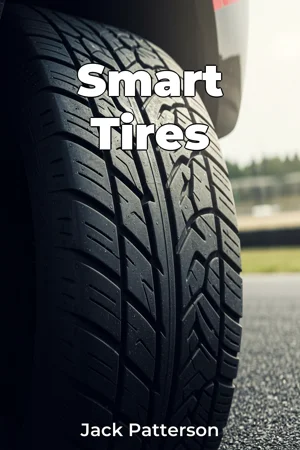
*Smart Tires* explores the cutting-edge field of adaptive tire technology, where tires intelligently respond to varying road conditions. This book delves into the mechanical engineering and technological advancements that allow tires to optimize grip and safety in real-time. Imagine tires that can adjust their tread patterns based on moisture levels or alter pressure for optimal fuel efficiency. This book uniquely emphasizes a systems-level approach, viewing the tire as an integral part of the vehicle and transportation ecosystem. The book examines the engineering principles behind adaptive tire design, the sensor and control systems that enable real-time adjustments, and the implications of this technology for transportation's future. It begins with tire mechanics, sensor technology, and control algorithms, then explores adaptive tire systems using case studies and experimental data. It also analyzes the sensors used to detect road conditions and the control algorithms that process sensor data and actuate adaptive mechanisms. The book progresses through the design and functionality of various systems, culminating in an analysis of smart tires' broader implications for the automotive industry and environmental sustainability.
Book Details
ISBN
9788235239389
Publisher
Publifye AS
Your Licenses
You don't own any licenses for this book
Purchase a license below to unlock this book and download the EPUB.
Purchase License
Select a tier to unlock this book
Need bulk licensing?
Contact us for enterprise agreements.