
About This Book
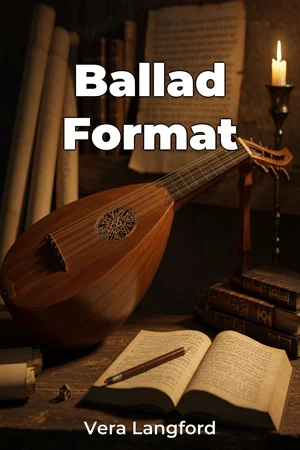
How have ballads, simple songs passed down through generations, shaped our understanding of history? "Ballad Format" explores the factual designs employed in ballads created to record and transmit events in oral traditions. This book examines the interplay between historical accuracy and musical structure, a vital relationship often overlooked in both historical and musicological studies. Understanding this dynamic provides key insights into how societies preserved and interpreted their past before widespread literacy. This book focuses on three main areas: the structural elements of ballads, the techniques used to ensure memorability and transmission, and the evolution of ballad forms across different cultures. These topics are significant because they reveal the deliberate strategies employed to encode and preserve historical narratives within a musical framework. This challenges the notion of ballads as merely entertainment, positioning them instead as carefully crafted historical documents. To fully appreciate the book’s content, some familiarity with basic music theory and historical research methods will be beneficial, though not strictly required. The book provides essential background information on oral traditions and the role of music in pre-literate societies. The central argument of "Ballad Format" is that the formal structure of ballads is not arbitrary but is inextricably linked to their function as historical records. The book demonstrates how specific melodic patterns, rhythmic devices, and narrative structures were intentionally designed to aid in memorization, transmission, and the preservation of historical detail. This argument is important because it challenges traditional views of ballads as simply folk songs and elevates their status to vital historical artifacts. The book is structured in three sections. The first section introduces the core concepts of ballad structure and its relationship to oral transmission, establishing a framework for analyzing ballad forms. The second section delves into specific techniques employed to enhance memorability, such as repetition, rhyme, and alliteration. It investigates how these elements contribute to the durability of historical narratives. This section analyzes case studies from various cultures, including examples from medieval Europe, traditional Africa, and indigenous America, to illustrate diverse approaches to ballad composition. The third section synthesizes these findings to provide a comprehensive understanding of how ballad format functions as a system for recording and preserving historical events, examining the practical implications and offering a methodology for analyzing ballads as historical sources. The book relies on a combination of textual analysis, musicological examination, and historical research. Ballad texts are analyzed for narrative structure and historical accuracy, while musical elements are examined for their impact on memorability and transmission. Drawing on ethnomusicological studies and archival records, the book presents a comprehensive picture of ballad composition and function in oral cultures. Unique data sources include transcriptions of orally transmitted ballads, historical accounts of ballad performances, and comparative analyses of ballad forms across different cultures. "Ballad Format" connects to other fields of study, particularly anthropology, linguistics, and history. Anthropological perspectives inform the understanding of cultural contexts and the role of oral traditions in shaping social memory. Linguistic analyses shed light on the language used in ballads and its impact on message preservation. Connections to history provide a critical framework for evaluating the accuracy and reliability of historical narratives presented in ballads. This book distinguishes itself through its integrated approach, combining musicological and historical analysis to reveal the intricate relationship between ballad form and historical preservation. By analyzing the factual design of ballads, the book offers new insights into how societies have used music to encode and transmit their past. The tone is academic and factual, but accessible, aiming to engage both scholars and general readers interested in history and music. The book targets historians, ethnomusicologists, folklorists, and anyone interested in the intersection of music and history. It offers valuable insights into the role of ballads in preserving and transmitting historical knowledge. As a historical and musicological study, "Ballad Format" adheres to the conventions of academic research, presenting evidence-based arguments and rigorous analysis. The scope of the book is limited to the factual design of ballads and their function as historical records, not providing a comprehensive history of the ballad itself. The information presented in the book can be applied to various contexts, including historical research, music education, and cultural preservation. It provides a methodology for analyzing ballads as historical sources and offers insights into the role of music in shaping cultural identity. The book addresses ongoing debates about the accuracy and reliability of oral traditions, acknowledging the potential for distortion and embellishment while arguing that ballads, when analyzed critically, can provide valuable historical insights.
How have ballads, simple songs passed down through generations, shaped our understanding of history? "Ballad Format" explores the factual designs employed in ballads created to record and transmit events in oral traditions. This book examines the interplay between historical accuracy and musical structure, a vital relationship often overlooked in both historical and musicological studies. Understanding this dynamic provides key insights into how societies preserved and interpreted their past before widespread literacy. This book focuses on three main areas: the structural elements of ballads, the techniques used to ensure memorability and transmission, and the evolution of ballad forms across different cultures. These topics are significant because they reveal the deliberate strategies employed to encode and preserve historical narratives within a musical framework. This challenges the notion of ballads as merely entertainment, positioning them instead as carefully crafted historical documents. To fully appreciate the book’s content, some familiarity with basic music theory and historical research methods will be beneficial, though not strictly required. The book provides essential background information on oral traditions and the role of music in pre-literate societies. The central argument of "Ballad Format" is that the formal structure of ballads is not arbitrary but is inextricably linked to their function as historical records. The book demonstrates how specific melodic patterns, rhythmic devices, and narrative structures were intentionally designed to aid in memorization, transmission, and the preservation of historical detail. This argument is important because it challenges traditional views of ballads as simply folk songs and elevates their status to vital historical artifacts. The book is structured in three sections. The first section introduces the core concepts of ballad structure and its relationship to oral transmission, establishing a framework for analyzing ballad forms. The second section delves into specific techniques employed to enhance memorability, such as repetition, rhyme, and alliteration. It investigates how these elements contribute to the durability of historical narratives. This section analyzes case studies from various cultures, including examples from medieval Europe, traditional Africa, and indigenous America, to illustrate diverse approaches to ballad composition. The third section synthesizes these findings to provide a comprehensive understanding of how ballad format functions as a system for recording and preserving historical events, examining the practical implications and offering a methodology for analyzing ballads as historical sources. The book relies on a combination of textual analysis, musicological examination, and historical research. Ballad texts are analyzed for narrative structure and historical accuracy, while musical elements are examined for their impact on memorability and transmission. Drawing on ethnomusicological studies and archival records, the book presents a comprehensive picture of ballad composition and function in oral cultures. Unique data sources include transcriptions of orally transmitted ballads, historical accounts of ballad performances, and comparative analyses of ballad forms across different cultures. "Ballad Format" connects to other fields of study, particularly anthropology, linguistics, and history. Anthropological perspectives inform the understanding of cultural contexts and the role of oral traditions in shaping social memory. Linguistic analyses shed light on the language used in ballads and its impact on message preservation. Connections to history provide a critical framework for evaluating the accuracy and reliability of historical narratives presented in ballads. This book distinguishes itself through its integrated approach, combining musicological and historical analysis to reveal the intricate relationship between ballad form and historical preservation. By analyzing the factual design of ballads, the book offers new insights into how societies have used music to encode and transmit their past. The tone is academic and factual, but accessible, aiming to engage both scholars and general readers interested in history and music. The book targets historians, ethnomusicologists, folklorists, and anyone interested in the intersection of music and history. It offers valuable insights into the role of ballads in preserving and transmitting historical knowledge. As a historical and musicological study, "Ballad Format" adheres to the conventions of academic research, presenting evidence-based arguments and rigorous analysis. The scope of the book is limited to the factual design of ballads and their function as historical records, not providing a comprehensive history of the ballad itself. The information presented in the book can be applied to various contexts, including historical research, music education, and cultural preservation. It provides a methodology for analyzing ballads as historical sources and offers insights into the role of music in shaping cultural identity. The book addresses ongoing debates about the accuracy and reliability of oral traditions, acknowledging the potential for distortion and embellishment while arguing that ballads, when analyzed critically, can provide valuable historical insights.
"Ballad Format" explores how ballads, often seen as simple folk songs, actually served as vital tools for preserving historical narratives in oral traditions. It examines the deliberate factual designs embedded within these musical forms, revealing how societies encoded and transmitted their past. The book delves into the structural elements of ballads and the techniques used to ensure memorability, challenging the notion that these songs were mere entertainment. Discover how specific melodic patterns and rhythmic devices aided in the preservation of historical detail, turning ballads into carefully crafted historical documents. The book progresses through three key sections: establishing the core concepts of ballad structure, investigating memorability techniques like rhyme and repetition, and synthesizing these findings to understand how ballads function as historical records. By analyzing ballad texts and musical elements, the book demonstrates how oral traditions shaped social memory. Case studies from diverse cultures, including medieval Europe and indigenous America, illustrate varied approaches to ballad composition. Ultimately, "Ballad Format" offers a unique integrated approach, combining musicology and historical analysis to reveal the intricate link between ballad form and historical preservation. It demonstrates how analyzing the musical framework of ballads provides new insights into how societies used music to encode and transmit their past while also offering a methodology for analyzing ballads as historical sources.
Book Details
ISBN
9788235239365
Publisher
Publifye AS
Your Licenses
You don't own any licenses for this book
Purchase a license below to unlock this book and download the EPUB.
Purchase License
Select a tier to unlock this book
Need bulk licensing?
Contact us for enterprise agreements.