
About This Book
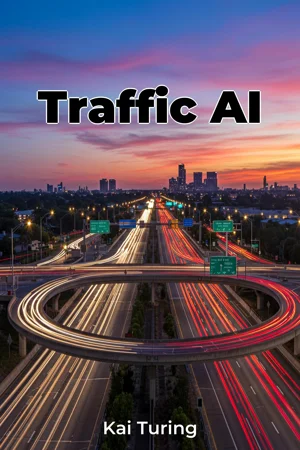
Are cities on the verge of solving their enduring traffic problems, thanks to Artificial Intelligence? "Traffic AI" explores the revolution underway in urban mobility, examining how AI is being deployed to optimize traffic flow and transform the commuting experience. This book delves into the core technologies, the significant applications, and the future potential of AI-driven traffic management. We will explore two key areas: intelligent traffic signal control and predictive traffic modeling. Intelligent traffic signal control uses real-time data to dynamically adjust signal timings, reducing congestion and improving travel times. Predictive traffic modeling leverages machine learning to forecast traffic patterns, enabling proactive interventions and optimized resource allocation. These topics are critical because they represent a shift from reactive to proactive traffic management, offering the potential to alleviate urban congestion, reduce emissions, and improve overall quality of life. The effective use of AI in traffic management requires understanding its historical context and technological foundations. The book will cover the evolution of traffic control systems from simple mechanical timers to sophisticated computer-controlled networks and further to the current AI-powered systems. We will also outline the basics of machine learning, data analytics, and sensor technologies necessary to fully grasp the workings of AI traffic solutions. The central argument of "Traffic AI" is that AI is not merely an incremental improvement but a fundamental paradigm shift in traffic management. It allows for dynamic adaptation to changing conditions and opens the door for unprecedented levels of efficiency and sustainability. This argument is of paramount importance because it challenges traditional approaches and highlights the transformative potential of AI in reshaping urban environments. The book is structured to guide the reader through a comprehensive understanding of this evolving field. First, the fundamental concepts of AI and traffic management are introduced. Then, the book delves into the core applications of AI, focusing on topics such as adaptive traffic signal control, predictive modeling, and autonomous vehicle integration. We dedicate chapters to case studies from cities around the world, showcasing successful implementations and lessons learned. The book culminates with a discussion of future trends, potential challenges, and ethical considerations surrounding AI in transportation. The arguments presented in "Traffic AI" are supported by a wide range of evidence, including real-world case studies, simulation results, and data from traffic sensors and connected vehicles. Original research and analysis are incorporated, drawing from academic publications, government reports, and industry white papers, providing a robust and fact-based account of the field. "Traffic AI" exists at the intersection of several disciplines, most notably computer science, civil engineering, and urban planning. The integration of computer science provides the technological foundation for AI, civil engineering contributes expertise in traffic flow and infrastructure, and urban planning offers insights into the social and environmental implications of transportation systems. These interdisciplinary connections enrich the book's analysis and provide a more holistic perspective. This book provides a unique perspective by focusing on the practical implementation challenges and opportunities of AI in traffic management. It moves beyond theoretical discussions to address the real-world complexities of deploying AI systems in diverse urban environments. The tone is professional and informative, aiming to present complex technical concepts in an accessible manner. The writing style balances technical rigor with clarity to ensure that the information is both accurate and understandable to a broad audience. The target audience includes transportation planners, traffic engineers, policymakers, and anyone interested in the intersection of AI and urban mobility. The book will be particularly valuable to professionals seeking to implement AI solutions in their cities or organizations and for students and researchers. As a work in the 'Technology, AI and Semantics' genre, "Traffic AI" is designed to provide a comprehensive and up-to-date overview of the field, adhering to standards of scientific accuracy, objectivity, and clear presentation. The scope of "Traffic AI" encompasses a broad range of AI applications in traffic management, from microscopic control of traffic signals to macroscopic modeling of regional transportation networks. The book intentionally limits its scope to focus on surface transportation, excluding air and maritime traffic, to allow for a more in-depth treatment of urban mobility challenges. The insights presented in "Traffic AI" can be applied by transportation professionals to optimize traffic flow, reduce congestion, and improve the efficiency of transportation systems. Policymakers can use this knowledge to inform decisions about infrastructure investments and regulatory frameworks. "Traffic AI" also addresses the ongoing debates surrounding the use of AI in transportation, including concerns about data privacy, algorithmic bias, and the potential displacement of human workers. The book will explore these controversies and offer balanced perspectives.
Are cities on the verge of solving their enduring traffic problems, thanks to Artificial Intelligence? "Traffic AI" explores the revolution underway in urban mobility, examining how AI is being deployed to optimize traffic flow and transform the commuting experience. This book delves into the core technologies, the significant applications, and the future potential of AI-driven traffic management. We will explore two key areas: intelligent traffic signal control and predictive traffic modeling. Intelligent traffic signal control uses real-time data to dynamically adjust signal timings, reducing congestion and improving travel times. Predictive traffic modeling leverages machine learning to forecast traffic patterns, enabling proactive interventions and optimized resource allocation. These topics are critical because they represent a shift from reactive to proactive traffic management, offering the potential to alleviate urban congestion, reduce emissions, and improve overall quality of life. The effective use of AI in traffic management requires understanding its historical context and technological foundations. The book will cover the evolution of traffic control systems from simple mechanical timers to sophisticated computer-controlled networks and further to the current AI-powered systems. We will also outline the basics of machine learning, data analytics, and sensor technologies necessary to fully grasp the workings of AI traffic solutions. The central argument of "Traffic AI" is that AI is not merely an incremental improvement but a fundamental paradigm shift in traffic management. It allows for dynamic adaptation to changing conditions and opens the door for unprecedented levels of efficiency and sustainability. This argument is of paramount importance because it challenges traditional approaches and highlights the transformative potential of AI in reshaping urban environments. The book is structured to guide the reader through a comprehensive understanding of this evolving field. First, the fundamental concepts of AI and traffic management are introduced. Then, the book delves into the core applications of AI, focusing on topics such as adaptive traffic signal control, predictive modeling, and autonomous vehicle integration. We dedicate chapters to case studies from cities around the world, showcasing successful implementations and lessons learned. The book culminates with a discussion of future trends, potential challenges, and ethical considerations surrounding AI in transportation. The arguments presented in "Traffic AI" are supported by a wide range of evidence, including real-world case studies, simulation results, and data from traffic sensors and connected vehicles. Original research and analysis are incorporated, drawing from academic publications, government reports, and industry white papers, providing a robust and fact-based account of the field. "Traffic AI" exists at the intersection of several disciplines, most notably computer science, civil engineering, and urban planning. The integration of computer science provides the technological foundation for AI, civil engineering contributes expertise in traffic flow and infrastructure, and urban planning offers insights into the social and environmental implications of transportation systems. These interdisciplinary connections enrich the book's analysis and provide a more holistic perspective. This book provides a unique perspective by focusing on the practical implementation challenges and opportunities of AI in traffic management. It moves beyond theoretical discussions to address the real-world complexities of deploying AI systems in diverse urban environments. The tone is professional and informative, aiming to present complex technical concepts in an accessible manner. The writing style balances technical rigor with clarity to ensure that the information is both accurate and understandable to a broad audience. The target audience includes transportation planners, traffic engineers, policymakers, and anyone interested in the intersection of AI and urban mobility. The book will be particularly valuable to professionals seeking to implement AI solutions in their cities or organizations and for students and researchers. As a work in the 'Technology, AI and Semantics' genre, "Traffic AI" is designed to provide a comprehensive and up-to-date overview of the field, adhering to standards of scientific accuracy, objectivity, and clear presentation. The scope of "Traffic AI" encompasses a broad range of AI applications in traffic management, from microscopic control of traffic signals to macroscopic modeling of regional transportation networks. The book intentionally limits its scope to focus on surface transportation, excluding air and maritime traffic, to allow for a more in-depth treatment of urban mobility challenges. The insights presented in "Traffic AI" can be applied by transportation professionals to optimize traffic flow, reduce congestion, and improve the efficiency of transportation systems. Policymakers can use this knowledge to inform decisions about infrastructure investments and regulatory frameworks. "Traffic AI" also addresses the ongoing debates surrounding the use of AI in transportation, including concerns about data privacy, algorithmic bias, and the potential displacement of human workers. The book will explore these controversies and offer balanced perspectives.
"Traffic AI" explores how Artificial Intelligence is revolutionizing urban mobility and traffic management. It highlights the shift from reactive to proactive strategies using intelligent traffic signal control, which dynamically adjusts signal timings based on real-time data, and predictive traffic modeling, leveraging machine learning to forecast traffic patterns. These applications promise to alleviate urban congestion, reduce emissions, and improve overall quality of life, offering a glimpse into the smart cities of the future. The book uniquely focuses on practical implementation challenges and opportunities, moving beyond theoretical discussions to address real-world complexities. It begins by introducing fundamental concepts of AI and traffic management, then delves into applications such as adaptive traffic signal control and autonomous vehicle integration. Case studies from around the world showcase successful implementations and lessons learned, culminating in a discussion of future trends and ethical considerations, making it a comprehensive guide for transportation planners, traffic engineers, and policymakers.
Book Details
ISBN
9788235239143
Publisher
Publifye AS
Your Licenses
You don't own any licenses for this book
Purchase a license below to unlock this book and download the EPUB.
Purchase License
Select a tier to unlock this book
Need bulk licensing?
Contact us for enterprise agreements.