
About This Book
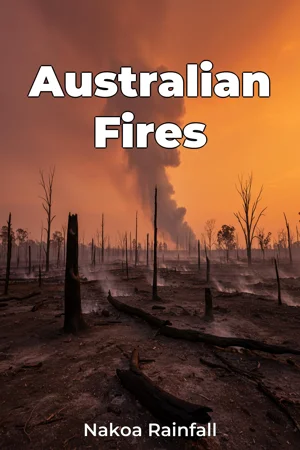
Can Australia’s fiery history illuminate a safer future? *Australian Fires* delves into the complex story of bushfires in Australia, examining their profound environmental impact, the evolution of government responses, and the shifting landscape of fire management policies. This exploration is crucial because understanding the past is essential to mitigating the increasing risks posed by climate change and human activity. This book addresses three key topics: the historical timeline of significant Australian bushfires and their ecological consequences; an analysis of governmental and community responses to these disasters; and an in-depth look at how fire management policies have adapted over time. These threads are interwoven, illustrating how ecological understanding, political action, and policy implementation intersect to shape Australia's relationship with fire. The historical context is crucial. Aboriginal Australians practiced fire-stick farming for millennia, shaping the continent’s ecosystems. Colonisation disrupted these practices, leading to altered fire regimes and increased fuel loads. Understanding this historical backdrop is paramount to interpreting contemporary fire challenges. The central argument of *Australian Fires* is that a comprehensive understanding of past fire events, coupled with critical analysis of societal responses and policy adaptations, is vital for developing effective and sustainable fire management strategies in the face of a changing climate. This book contends that only by learning from past mistakes and embracing innovative approaches can Australia hope to protect its environment and communities from the devastating impacts of future bushfires. This book begins by introducing the fundamental concepts of fire ecology and the history of fire in Australia. It then develops these ideas through three major sections. The first section details the chronology of notable bushfires, analyzing their causes, intensity, and resulting environmental damage. The second section examines the evolving role of government, from initial reactive measures to more proactive prevention and preparedness strategies. The third section evaluates the changes in fire management policies, considering the influence of scientific research, community engagement, and technological advancements. The book culminates by offering practical recommendations for improving fire management practices and fostering greater community resilience. The evidence presented includes historical records, scientific studies, government reports, and firsthand accounts from affected communities and firefighters. Unique data sources include analysis of long-term fire patterns using satellite imagery and detailed reconstructions of past fire events using dendrochronology. This book connects to several other fields. It draws on environmental science to understand fire ecology, political science to analyze government policy, and sociology to examine community responses to disasters. These interdisciplinary connections strengthen the arguments by providing a holistic perspective on the complex challenges of fire management. *Australian Fires* offers a unique perspective by integrating historical analysis with contemporary scientific understanding and policy evaluation. It avoids sensationalism and focuses on presenting factual information in a clear and accessible manner. The tone is informative and analytical, aimed at providing a balanced and objective account of the issues. The writing style is clear and concise, designed to engage a broad audience. The target audience includes students, researchers, policymakers, environmental professionals, and anyone interested in learning more about the science, history, and management of bushfires in Australia. This book would be valuable to them because it offers a comprehensive and nuanced understanding of a critical environmental issue. As a work of non-fiction in the fields of environment and history, *Australian Fires* adheres to the conventions of accuracy, objectivity, and evidence-based analysis. The scope of this book encompasses the history of bushfires in Australia, focusing on those events that have had significant environmental, social, or economic consequences. The book's limitations include its primary focus on the Australian context, although relevant international comparisons are made where applicable. The information in this book can be applied to improve fire management practices, inform policy decisions, and foster greater community awareness and preparedness. The book addresses ongoing debates surrounding prescribed burning, climate change impacts, and the role of Indigenous knowledge in contemporary fire management. These controversies are examined in a balanced and objective manner, presenting different perspectives and highlighting areas of ongoing research and discussion.
Can Australia’s fiery history illuminate a safer future? *Australian Fires* delves into the complex story of bushfires in Australia, examining their profound environmental impact, the evolution of government responses, and the shifting landscape of fire management policies. This exploration is crucial because understanding the past is essential to mitigating the increasing risks posed by climate change and human activity. This book addresses three key topics: the historical timeline of significant Australian bushfires and their ecological consequences; an analysis of governmental and community responses to these disasters; and an in-depth look at how fire management policies have adapted over time. These threads are interwoven, illustrating how ecological understanding, political action, and policy implementation intersect to shape Australia's relationship with fire. The historical context is crucial. Aboriginal Australians practiced fire-stick farming for millennia, shaping the continent’s ecosystems. Colonisation disrupted these practices, leading to altered fire regimes and increased fuel loads. Understanding this historical backdrop is paramount to interpreting contemporary fire challenges. The central argument of *Australian Fires* is that a comprehensive understanding of past fire events, coupled with critical analysis of societal responses and policy adaptations, is vital for developing effective and sustainable fire management strategies in the face of a changing climate. This book contends that only by learning from past mistakes and embracing innovative approaches can Australia hope to protect its environment and communities from the devastating impacts of future bushfires. This book begins by introducing the fundamental concepts of fire ecology and the history of fire in Australia. It then develops these ideas through three major sections. The first section details the chronology of notable bushfires, analyzing their causes, intensity, and resulting environmental damage. The second section examines the evolving role of government, from initial reactive measures to more proactive prevention and preparedness strategies. The third section evaluates the changes in fire management policies, considering the influence of scientific research, community engagement, and technological advancements. The book culminates by offering practical recommendations for improving fire management practices and fostering greater community resilience. The evidence presented includes historical records, scientific studies, government reports, and firsthand accounts from affected communities and firefighters. Unique data sources include analysis of long-term fire patterns using satellite imagery and detailed reconstructions of past fire events using dendrochronology. This book connects to several other fields. It draws on environmental science to understand fire ecology, political science to analyze government policy, and sociology to examine community responses to disasters. These interdisciplinary connections strengthen the arguments by providing a holistic perspective on the complex challenges of fire management. *Australian Fires* offers a unique perspective by integrating historical analysis with contemporary scientific understanding and policy evaluation. It avoids sensationalism and focuses on presenting factual information in a clear and accessible manner. The tone is informative and analytical, aimed at providing a balanced and objective account of the issues. The writing style is clear and concise, designed to engage a broad audience. The target audience includes students, researchers, policymakers, environmental professionals, and anyone interested in learning more about the science, history, and management of bushfires in Australia. This book would be valuable to them because it offers a comprehensive and nuanced understanding of a critical environmental issue. As a work of non-fiction in the fields of environment and history, *Australian Fires* adheres to the conventions of accuracy, objectivity, and evidence-based analysis. The scope of this book encompasses the history of bushfires in Australia, focusing on those events that have had significant environmental, social, or economic consequences. The book's limitations include its primary focus on the Australian context, although relevant international comparisons are made where applicable. The information in this book can be applied to improve fire management practices, inform policy decisions, and foster greater community awareness and preparedness. The book addresses ongoing debates surrounding prescribed burning, climate change impacts, and the role of Indigenous knowledge in contemporary fire management. These controversies are examined in a balanced and objective manner, presenting different perspectives and highlighting areas of ongoing research and discussion.
*Australian Fires* explores the intricate history of bushfires in Australia, emphasizing the critical need to understand past events for effective future fire management. The book charts the evolution of fire management policies, highlighting how government responses have shifted from reactive measures to more proactive strategies. By examining the ecological consequences of historical fires and analyzing societal responses, the book argues for a comprehensive approach to mitigating the increasing risks exacerbated by climate change. The book uniquely integrates historical analysis with contemporary scientific understanding, drawing on environmental science, political science, and sociology to provide a holistic perspective. It reveals how disrupting Aboriginal fire-stick farming practices after colonization led to altered fire regimes and increased fuel loads, fundamentally changing the landscape. The book progresses chronologically, detailing significant bushfires, examining government roles, and evaluating policy changes, using historical records, scientific studies, and community accounts. Ultimately, the book offers practical recommendations for improving fire management practices and fostering community resilience. It delves into debates surrounding prescribed burning, climate change impacts, and the crucial role of Indigenous knowledge, presenting a balanced view that aims to inform policymakers, environmental professionals, and anyone interested in Australia's fiery history and its implications for the future.
Book Details
ISBN
9788235239112
Publisher
Publifye AS
Your Licenses
You don't own any licenses for this book
Purchase a license below to unlock this book and download the EPUB.
Purchase License
Select a tier to unlock this book
Need bulk licensing?
Contact us for enterprise agreements.