
About This Book
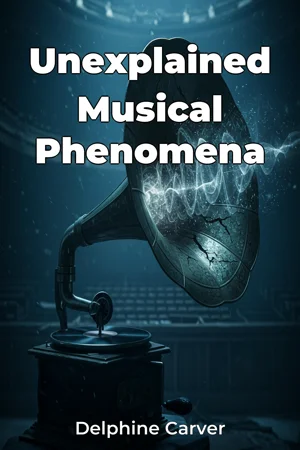
Have you ever heard a melody that seemed to resonate with future events, or a sound that inexplicably triggered widespread unease? "Unexplained Musical Phenomena" delves into the perplexing world where music transcends its conventional boundaries, venturing into the realms of the uncanny and the unexplained. This book explores musical mysteries, examining instances of songs that appear to predict the future and sounds that induce inexplicable madness in listeners. These anomalies challenge our understanding of music's power and its potential connection to the intangible. We will examine two primary facets of these mysteries: predictive music and psychoacoustic anomalies. Predictive music refers to compositions or songs that, through uncanny coincidence or unknown means, seem to foreshadow future events. Psychoacoustic anomalies involve sounds that cause unusual psychological or physiological effects, often widespread and without a clear physical explanation. The investigation of these phenomena is important because it prompts us to reconsider the limits of our current scientific and artistic understanding, and to speculate on deeper connections between human consciousness, music, and time itself. To understand these mysteries, the book will draw upon diverse fields including musicology, acoustics, psychology, and parapsychology. We will examine historical accounts, scientific studies, and anecdotal evidence, recognizing the inherent challenges of researching subjective and often unverifiable phenomena. The central argument of "Unexplained Musical Phenomena" is that while many purported musical anomalies can be attributed to coincidence, misinterpretation, or mass hysteria, a residue of unexplained cases remains. These unresolved instances suggest the potential for unrecognized properties of music that interact with human perception and perhaps even the fabric of reality in ways we do not yet understand. The book begins with an introduction to the core concepts, establishing a foundation in music theory, psychoacoustics, and the psychology of perception. It then proceeds through distinct sections. First, we will investigate instances of predictive music, analyzing specific songs and comparing them to the events they allegedly foreshadowed. Second, explorations of psychoacoustic anomalies will involve examining cases of mass hysteria triggered by specific sounds, delving into the science of how sound affects the brain and nervous system, and considering theories of infrasound and other potential physical causes. Finally, the book synthesizes these findings, evaluating the plausibility of various explanations, and proposing avenues for future research. The evidence presented within this book draws from various sources. This includes historical archives of documented mass hysteria events, analyses of musical compositions, scientific studies on the effects of sound frequencies on the human brain, and collections of anecdotal accounts gathered from individuals who claim to have experienced these phenomena. The exploration of unexplained musical phenomena offers unexpected connections to other areas of study, such as psychology, sociology, and even theoretical physics. Psychological studies offer insights into the power of suggestion and mass hysteria, while sociological perspectives can shed light on how cultural context influences the interpretation of unusual events. Theories in physics, such as quantum entanglement, may provide a framework for understanding how music could potentially interact with time or consciousness in non-local ways, albeit speculatively. A unique aspect of "Unexplained Musical Phenomena" is its balanced and critical approach. Rather than sensationalizing unsubstantiated claims, the book carefully distinguishes between well-documented cases and unsubstantiated reports, applying rigorous analysis to each instance. Written in a style accessible to a broad audience, "Unexplained Musical Phenomena" aims to inform and intrigue. It avoids technical jargon where possible while maintaining scientific rigor when discussing complex concepts. The target audience comprises music lovers, paranormal enthusiasts, psychology students, and anyone curious about the intersection of music, mystery, and the unexplained. The book is valuable because it offers a comprehensive overview of a topic that is often relegated to sensationalized media, providing a more nuanced and evidence-based perspective. As a work of non-fiction, this book adheres to the principles of factual accuracy and objective analysis. While exploring speculative theories, it clearly differentiates between established facts and hypotheses. The scope of "Unexplained Musical Phenomena" is intentionally broad, encompassing a range of musical anomalies from different cultures and time periods. However, it primarily focuses on cases with some degree of documentation or corroborating evidence. Readers might consider how the insights from this book can inform their understanding of the power of music in everyday life. It encourages readers to be more mindful of the effects of music on their emotions and mental states. The field of unexplained musical phenomena is not without its controversies. One ongoing debate revolves around the validity of anecdotal evidence and the challenges of separating genuine anomalies from misinterpretations or hoaxes. The book addresses these controversies by presenting diverse perspectives and carefully evaluating the available evidence.
Have you ever heard a melody that seemed to resonate with future events, or a sound that inexplicably triggered widespread unease? "Unexplained Musical Phenomena" delves into the perplexing world where music transcends its conventional boundaries, venturing into the realms of the uncanny and the unexplained. This book explores musical mysteries, examining instances of songs that appear to predict the future and sounds that induce inexplicable madness in listeners. These anomalies challenge our understanding of music's power and its potential connection to the intangible. We will examine two primary facets of these mysteries: predictive music and psychoacoustic anomalies. Predictive music refers to compositions or songs that, through uncanny coincidence or unknown means, seem to foreshadow future events. Psychoacoustic anomalies involve sounds that cause unusual psychological or physiological effects, often widespread and without a clear physical explanation. The investigation of these phenomena is important because it prompts us to reconsider the limits of our current scientific and artistic understanding, and to speculate on deeper connections between human consciousness, music, and time itself. To understand these mysteries, the book will draw upon diverse fields including musicology, acoustics, psychology, and parapsychology. We will examine historical accounts, scientific studies, and anecdotal evidence, recognizing the inherent challenges of researching subjective and often unverifiable phenomena. The central argument of "Unexplained Musical Phenomena" is that while many purported musical anomalies can be attributed to coincidence, misinterpretation, or mass hysteria, a residue of unexplained cases remains. These unresolved instances suggest the potential for unrecognized properties of music that interact with human perception and perhaps even the fabric of reality in ways we do not yet understand. The book begins with an introduction to the core concepts, establishing a foundation in music theory, psychoacoustics, and the psychology of perception. It then proceeds through distinct sections. First, we will investigate instances of predictive music, analyzing specific songs and comparing them to the events they allegedly foreshadowed. Second, explorations of psychoacoustic anomalies will involve examining cases of mass hysteria triggered by specific sounds, delving into the science of how sound affects the brain and nervous system, and considering theories of infrasound and other potential physical causes. Finally, the book synthesizes these findings, evaluating the plausibility of various explanations, and proposing avenues for future research. The evidence presented within this book draws from various sources. This includes historical archives of documented mass hysteria events, analyses of musical compositions, scientific studies on the effects of sound frequencies on the human brain, and collections of anecdotal accounts gathered from individuals who claim to have experienced these phenomena. The exploration of unexplained musical phenomena offers unexpected connections to other areas of study, such as psychology, sociology, and even theoretical physics. Psychological studies offer insights into the power of suggestion and mass hysteria, while sociological perspectives can shed light on how cultural context influences the interpretation of unusual events. Theories in physics, such as quantum entanglement, may provide a framework for understanding how music could potentially interact with time or consciousness in non-local ways, albeit speculatively. A unique aspect of "Unexplained Musical Phenomena" is its balanced and critical approach. Rather than sensationalizing unsubstantiated claims, the book carefully distinguishes between well-documented cases and unsubstantiated reports, applying rigorous analysis to each instance. Written in a style accessible to a broad audience, "Unexplained Musical Phenomena" aims to inform and intrigue. It avoids technical jargon where possible while maintaining scientific rigor when discussing complex concepts. The target audience comprises music lovers, paranormal enthusiasts, psychology students, and anyone curious about the intersection of music, mystery, and the unexplained. The book is valuable because it offers a comprehensive overview of a topic that is often relegated to sensationalized media, providing a more nuanced and evidence-based perspective. As a work of non-fiction, this book adheres to the principles of factual accuracy and objective analysis. While exploring speculative theories, it clearly differentiates between established facts and hypotheses. The scope of "Unexplained Musical Phenomena" is intentionally broad, encompassing a range of musical anomalies from different cultures and time periods. However, it primarily focuses on cases with some degree of documentation or corroborating evidence. Readers might consider how the insights from this book can inform their understanding of the power of music in everyday life. It encourages readers to be more mindful of the effects of music on their emotions and mental states. The field of unexplained musical phenomena is not without its controversies. One ongoing debate revolves around the validity of anecdotal evidence and the challenges of separating genuine anomalies from misinterpretations or hoaxes. The book addresses these controversies by presenting diverse perspectives and carefully evaluating the available evidence.
"Unexplained Musical Phenomena" explores the captivating intersection of music, spirituality, and the unexplained. It investigates instances where music seems to transcend conventional understanding, delving into mysteries like songs predicting future events and sounds triggering mass hysteria. The book examines how certain melodies appear to resonate with future occurrences, a phenomenon known as predictive music, and explores psychoacoustic anomalies, where sounds induce unusual psychological effects. The book approaches these musical mysteries through a multidisciplinary lens, drawing from musicology, acoustics, psychology, and even parapsychology. It presents historical accounts, scientific studies, and anecdotal evidence, acknowledging the challenges of researching subjective phenomena. While acknowledging that many cases may stem from coincidence or misinterpretation, the book argues that some unexplained instances suggest music possesses unrecognized properties that interact with human perception. Beginning with core concepts in music theory and psychoacoustics, the book progresses through distinct sections. It investigates predictive music by analyzing specific songs and psychoacoustic anomalies by examining cases of mass hysteria triggered by sound. This exploration offers a balanced perspective, distinguishing between well-documented cases and unsubstantiated reports, making it valuable for music lovers, paranormal enthusiasts, and anyone curious about the boundaries of music's power.
Book Details
ISBN
9788235238924
Publisher
Publifye AS
Your Licenses
You don't own any licenses for this book
Purchase a license below to unlock this book and download the EPUB.
Purchase License
Select a tier to unlock this book
Need bulk licensing?
Contact us for enterprise agreements.