
About This Book
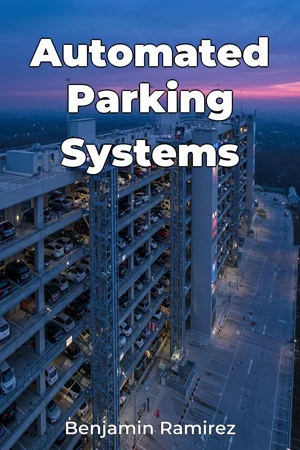
In an increasingly urbanized world where land is a premium and parking spaces are scarce, can technology provide a viable solution to optimize space and ease congestion? *Automated Parking Systems* delves into the innovative realm of robotic parking, exploring its potential to revolutionize urban planning and automotive storage. This book thoroughly examines the architecture, technology, and broader implications of automated parking systems (APS). These systems represent a significant advancement in the way we manage and interact with parking infrastructure, offering a compelling alternative to traditional parking garages. The book centers on three core themes: the engineering principles underpinning APS, the architectural design considerations vital for their integration into urban environments, and the economic and environmental impacts of widespread APS adoption. These themes are crucial because they address the multifaceted challenges of modern urban development, where efficient land use, sustainable practices, and technological innovation are paramount. This book provides a comprehensive background on the evolution of parking solutions, beginning from basic surface lots to multi-story garages, and leading to the current emergence of fully automated systems. It assumes a basic understanding of engineering principles and architectural concepts, but avoids overly technical jargon to remain accessible to a wide audience. The central argument presented throughout *Automated Parking Systems* is that APS represent a technologically feasible and economically viable solution for optimizing space, reducing traffic congestion, and promoting sustainable urban development. This argument is significant because it challenges conventional approaches to parking infrastructure and proposes a forward-thinking alternative that aligns with the goals of smart city initiatives. The book is structured to systematically introduce, develop, and apply the concepts surrounding APS. It begins with an introduction to the fundamental principles of operation and design. Successive chapters delve into specific aspects, such as the different types of APS technologies (e.g., puzzle, tower, and platform systems), the integration of sensors and control systems, and the optimization algorithms that govern the movement of vehicles. Furthermore, the book addresses the architectural considerations for integrating APS into various building types, from residential complexes to commercial centers. It concludes by providing a discussion of real-world case studies, economic feasibility analyses, and potential future developments in the field. The evidence presented in this book is drawn from a variety of sources, including engineering reports, architectural plans, economic studies, and environmental impact assessments. It includes data from operational APS installations around the world, providing a concrete basis for evaluating their performance and effectiveness. Methodologies include simulations, case studies, and comparative analyses to illustrate the advantages and disadvantages of different APS approaches. *Automated Parking Systems* also connects to several other fields, enhancing its argument by exploring its broader relevance. It intersects with urban planning by providing a tool to improve land utilization and reduce the environmental impact of parking. It also connects with environmental science by measuring the reduction in carbon emissions realized through decreased vehicle circulation. Finally, it has connections with economics by presenting cost-benefit analyses of APS implementation compared to conventional parking solutions. A unique aspect of this book is its blend of engineering precision with architectural vision, providing a holistic perspective on APS. It moves beyond purely technical descriptions to address the aesthetic and functional integration of these systems into urban landscapes. The tone and writing style are professional and informative, aiming to convey complex information in a clear and accessible manner. While grounded in technical detail, the book avoids excessive jargon and uses real-world examples and case studies to illustrate its points. The target audience includes architects, engineers, urban planners, developers, policymakers, and anyone interested in the future of urban infrastructure. This book is valuable to them because it provides a comprehensive and evidence-based overview of APS, offering practical insights for planning, design, and implementation. As a non-fiction work in the 'Architecture General, Technology, Architecture' genres, the book adheres to the conventions of empirical research, factual accuracy, and clear presentation of information. It delivers a blend of technical detail and practical guidance, making it a key resource for professionals. The scope of the book is comprehensive, covering a wide range of APS technologies, design considerations, and applications. However, it intentionally limits its focus to the technical and practical aspects of APS, while not including matters of policy beyond what is impacted by city planning and architectural design. Readers can apply the information in this book to a variety of real-world situations, such as evaluating the feasibility of APS for a specific project, designing an APS-integrated building, or formulating urban planning policies that promote the adoption of sustainable parking solutions. While APS offer numerous benefits, some controversies exist regarding their cost, maintenance requirements, and potential impact on employment. This book addresses these debates by presenting a balanced assessment of the advantages and disadvantages of APS, providing readers with the information needed to form their own informed opinions.
In an increasingly urbanized world where land is a premium and parking spaces are scarce, can technology provide a viable solution to optimize space and ease congestion? *Automated Parking Systems* delves into the innovative realm of robotic parking, exploring its potential to revolutionize urban planning and automotive storage. This book thoroughly examines the architecture, technology, and broader implications of automated parking systems (APS). These systems represent a significant advancement in the way we manage and interact with parking infrastructure, offering a compelling alternative to traditional parking garages. The book centers on three core themes: the engineering principles underpinning APS, the architectural design considerations vital for their integration into urban environments, and the economic and environmental impacts of widespread APS adoption. These themes are crucial because they address the multifaceted challenges of modern urban development, where efficient land use, sustainable practices, and technological innovation are paramount. This book provides a comprehensive background on the evolution of parking solutions, beginning from basic surface lots to multi-story garages, and leading to the current emergence of fully automated systems. It assumes a basic understanding of engineering principles and architectural concepts, but avoids overly technical jargon to remain accessible to a wide audience. The central argument presented throughout *Automated Parking Systems* is that APS represent a technologically feasible and economically viable solution for optimizing space, reducing traffic congestion, and promoting sustainable urban development. This argument is significant because it challenges conventional approaches to parking infrastructure and proposes a forward-thinking alternative that aligns with the goals of smart city initiatives. The book is structured to systematically introduce, develop, and apply the concepts surrounding APS. It begins with an introduction to the fundamental principles of operation and design. Successive chapters delve into specific aspects, such as the different types of APS technologies (e.g., puzzle, tower, and platform systems), the integration of sensors and control systems, and the optimization algorithms that govern the movement of vehicles. Furthermore, the book addresses the architectural considerations for integrating APS into various building types, from residential complexes to commercial centers. It concludes by providing a discussion of real-world case studies, economic feasibility analyses, and potential future developments in the field. The evidence presented in this book is drawn from a variety of sources, including engineering reports, architectural plans, economic studies, and environmental impact assessments. It includes data from operational APS installations around the world, providing a concrete basis for evaluating their performance and effectiveness. Methodologies include simulations, case studies, and comparative analyses to illustrate the advantages and disadvantages of different APS approaches. *Automated Parking Systems* also connects to several other fields, enhancing its argument by exploring its broader relevance. It intersects with urban planning by providing a tool to improve land utilization and reduce the environmental impact of parking. It also connects with environmental science by measuring the reduction in carbon emissions realized through decreased vehicle circulation. Finally, it has connections with economics by presenting cost-benefit analyses of APS implementation compared to conventional parking solutions. A unique aspect of this book is its blend of engineering precision with architectural vision, providing a holistic perspective on APS. It moves beyond purely technical descriptions to address the aesthetic and functional integration of these systems into urban landscapes. The tone and writing style are professional and informative, aiming to convey complex information in a clear and accessible manner. While grounded in technical detail, the book avoids excessive jargon and uses real-world examples and case studies to illustrate its points. The target audience includes architects, engineers, urban planners, developers, policymakers, and anyone interested in the future of urban infrastructure. This book is valuable to them because it provides a comprehensive and evidence-based overview of APS, offering practical insights for planning, design, and implementation. As a non-fiction work in the 'Architecture General, Technology, Architecture' genres, the book adheres to the conventions of empirical research, factual accuracy, and clear presentation of information. It delivers a blend of technical detail and practical guidance, making it a key resource for professionals. The scope of the book is comprehensive, covering a wide range of APS technologies, design considerations, and applications. However, it intentionally limits its focus to the technical and practical aspects of APS, while not including matters of policy beyond what is impacted by city planning and architectural design. Readers can apply the information in this book to a variety of real-world situations, such as evaluating the feasibility of APS for a specific project, designing an APS-integrated building, or formulating urban planning policies that promote the adoption of sustainable parking solutions. While APS offer numerous benefits, some controversies exist regarding their cost, maintenance requirements, and potential impact on employment. This book addresses these debates by presenting a balanced assessment of the advantages and disadvantages of APS, providing readers with the information needed to form their own informed opinions.
"Automated Parking Systems" explores the potential of robotic parking to revolutionize urban landscapes and address parking scarcity. It examines automated parking systems (APS) as a technologically advanced solution, offering optimized space utilization compared to traditional parking garages. One intriguing fact is that APS can significantly reduce the space required for parking, potentially freeing up valuable land for other urban development purposes. The book also highlights how APS contribute to smart city initiatives by reducing traffic congestion and promoting sustainable practices. The book argues that APS are both technologically feasible and economically viable, presenting them as a forward-thinking alternative for urban planners and architects. It begins by introducing the fundamental principles of APS operation and design. Later chapters delve into specific technologies, integration of sensors and control systems, and architectural considerations for various building types. The book progresses to analyze real-world case studies and economic feasibility, offering a comprehensive view of APS. This book uniquely blends engineering precision with architectural vision, providing a holistic perspective on APS. It moves beyond technical descriptions to address the aesthetic and functional integration of these systems into urban environments. By providing a comprehensive and evidence-based overview of APS, the book offers practical insights for planning, design, and implementation, making it a key resource for professionals interested in architecture, technology, and urban development.
Book Details
ISBN
9788235238917
Publisher
Publifye AS
Your Licenses
You don't own any licenses for this book
Purchase a license below to unlock this book and download the EPUB.
Purchase License
Select a tier to unlock this book
Need bulk licensing?
Contact us for enterprise agreements.