
About This Book
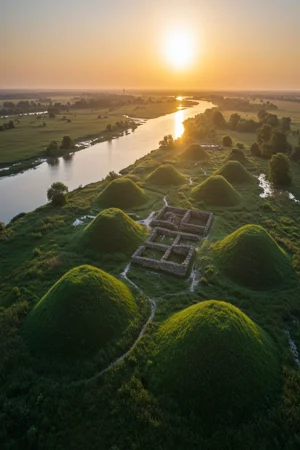
What happened to the vibrant indigenous settlements that once thrived along the rivers of North America? "Lost River Settlements" delves into the mystery of these abandoned communities, revealing the intricate interplay between trade networks, fishing practices, seasonal flooding, and the resilience of indigenous cultures. This book explores how these factors collectively shaped the rise and eventual decline of these riverine societies, offering a nuanced perspective on their past and a valuable framework for understanding human adaptation to environmental challenges. The significance of studying these lost settlements lies in their ability to illuminate broader patterns of cultural change, environmental adaptation, and intergroup relations in pre-colonial North America. By examining the archaeological record, oral histories, and environmental data, we can gain a deeper appreciation for the ingenuity and adaptability of indigenous populations. Furthermore, understanding the factors that led to the abandonment of these settlements provides crucial lessons for contemporary societies facing similar environmental and social pressures. This book argues that the success and ultimate abandonment of these river settlements were directly linked to a complex system of resource management, trade alliances, and adaptation strategies designed to mitigate the risks associated with seasonal flooding and fluctuating resource availability. The ability to navigate these challenges determined the long-term viability of these communities. We contend that shifts in climate patterns, resource depletion from unregulated trade, and social disruptions significantly impacted their established way of life, ultimately leading to their decline. "Lost River Settlements" is structured to provide a comprehensive exploration of this topic, beginning with an introduction to the key geographical regions and cultures under investigation. The book then unfolds through three major sections. The first section examines the ecological context of riverine settlement, detailing the importance of fishing, agriculture adapted for floodplains, and the river systems as transportation corridors. The second section analyzes the social and economic structures of these communities, focusing on trade networks, kinship systems, and governance. The final section explores the factors contributing to the abandonment of these settlements, including climate change, resource depletion, and external pressures from expanding colonial powers and neighboring groups. This section culminates in a discussion of the long-term ecological and social consequences of these abandonments. The evidence presented in this book draws upon a range of sources, including archaeological excavations, analysis of material culture, paleoenvironmental reconstructions, and interpretations of indigenous oral histories. Particular attention is given to the analysis of settlement patterns, ceramic styles, and faunal remains to reconstruct past subsistence strategies and trade networks. Furthermore, the book integrates data from climate archives, such as tree rings and pollen records, to understand the environmental pressures faced by these communities. The study of "Lost River Settlements" also connects to broader fields such as environmental history, anthropology, and climate science. By examining the interactions between human societies and their environment over long time scales, the book contributes to a more nuanced understanding of the complex dynamics shaping cultural change and social resilience. Understanding the connection between culture and the environment will help us understand the cultural adaptations and resilience of these indigenous communities. This book adopts a narrative non-fiction approach, weaving together archaeological findings, environmental data, and oral traditions to create a compelling and accessible account of these lost river settlements. The writing style is intended to be engaging yet rigorous, appealing to a broad audience interested in indigenous history, environmental studies, and archaeology. The target audience for this book includes students, researchers, and general readers interested in indigenous history, environmental archaeology, and North American prehistory. It would be valuable for courses in anthropology, archaeology, environmental studies, and Native American studies. The book offers new data and perspectives, challenging existing narratives and providing a more nuanced understanding of the past. While the book focuses primarily on river settlements in specific regions of North America, its findings have broader implications for understanding human-environment interactions in other parts of the world. It’s important to acknowledge that oral traditions have limitations due to the loss of historical accuracy over time. The information presented in this book can be applied to contemporary challenges related to climate change, resource management, and indigenous rights. By understanding the past, we can gain valuable insights into how to build more sustainable and equitable futures for all. The book addresses the ongoing debates surrounding the impact of colonialism on indigenous cultures, offering a critical perspective on the historical forces that have shaped contemporary realities.
What happened to the vibrant indigenous settlements that once thrived along the rivers of North America? "Lost River Settlements" delves into the mystery of these abandoned communities, revealing the intricate interplay between trade networks, fishing practices, seasonal flooding, and the resilience of indigenous cultures. This book explores how these factors collectively shaped the rise and eventual decline of these riverine societies, offering a nuanced perspective on their past and a valuable framework for understanding human adaptation to environmental challenges. The significance of studying these lost settlements lies in their ability to illuminate broader patterns of cultural change, environmental adaptation, and intergroup relations in pre-colonial North America. By examining the archaeological record, oral histories, and environmental data, we can gain a deeper appreciation for the ingenuity and adaptability of indigenous populations. Furthermore, understanding the factors that led to the abandonment of these settlements provides crucial lessons for contemporary societies facing similar environmental and social pressures. This book argues that the success and ultimate abandonment of these river settlements were directly linked to a complex system of resource management, trade alliances, and adaptation strategies designed to mitigate the risks associated with seasonal flooding and fluctuating resource availability. The ability to navigate these challenges determined the long-term viability of these communities. We contend that shifts in climate patterns, resource depletion from unregulated trade, and social disruptions significantly impacted their established way of life, ultimately leading to their decline. "Lost River Settlements" is structured to provide a comprehensive exploration of this topic, beginning with an introduction to the key geographical regions and cultures under investigation. The book then unfolds through three major sections. The first section examines the ecological context of riverine settlement, detailing the importance of fishing, agriculture adapted for floodplains, and the river systems as transportation corridors. The second section analyzes the social and economic structures of these communities, focusing on trade networks, kinship systems, and governance. The final section explores the factors contributing to the abandonment of these settlements, including climate change, resource depletion, and external pressures from expanding colonial powers and neighboring groups. This section culminates in a discussion of the long-term ecological and social consequences of these abandonments. The evidence presented in this book draws upon a range of sources, including archaeological excavations, analysis of material culture, paleoenvironmental reconstructions, and interpretations of indigenous oral histories. Particular attention is given to the analysis of settlement patterns, ceramic styles, and faunal remains to reconstruct past subsistence strategies and trade networks. Furthermore, the book integrates data from climate archives, such as tree rings and pollen records, to understand the environmental pressures faced by these communities. The study of "Lost River Settlements" also connects to broader fields such as environmental history, anthropology, and climate science. By examining the interactions between human societies and their environment over long time scales, the book contributes to a more nuanced understanding of the complex dynamics shaping cultural change and social resilience. Understanding the connection between culture and the environment will help us understand the cultural adaptations and resilience of these indigenous communities. This book adopts a narrative non-fiction approach, weaving together archaeological findings, environmental data, and oral traditions to create a compelling and accessible account of these lost river settlements. The writing style is intended to be engaging yet rigorous, appealing to a broad audience interested in indigenous history, environmental studies, and archaeology. The target audience for this book includes students, researchers, and general readers interested in indigenous history, environmental archaeology, and North American prehistory. It would be valuable for courses in anthropology, archaeology, environmental studies, and Native American studies. The book offers new data and perspectives, challenging existing narratives and providing a more nuanced understanding of the past. While the book focuses primarily on river settlements in specific regions of North America, its findings have broader implications for understanding human-environment interactions in other parts of the world. It’s important to acknowledge that oral traditions have limitations due to the loss of historical accuracy over time. The information presented in this book can be applied to contemporary challenges related to climate change, resource management, and indigenous rights. By understanding the past, we can gain valuable insights into how to build more sustainable and equitable futures for all. The book addresses the ongoing debates surrounding the impact of colonialism on indigenous cultures, offering a critical perspective on the historical forces that have shaped contemporary realities.
"Lost River Settlements" explores the mysteries surrounding abandoned indigenous settlements along North American rivers, revealing the complex interplay between environmental factors, trade networks, and social resilience. These riverine societies adapted ingeniously to seasonal flooding and fluctuating resources. The book examines how shifts in climate patterns and resource depletion impacted established ways of life. The book analyzes archaeological records, oral histories, and environmental data to understand cultural change and environmental adaptation. Understanding the rise and fall of these settlements provides lessons for addressing contemporary environmental and social pressures. The narrative unfolds across sections, examining ecological contexts, social structures, and factors contributing to abandonment, using archaeological findings and environmental data to build a compelling account.
Book Details
ISBN
9788235238696
Publisher
Publifye AS
Your Licenses
You don't own any licenses for this book
Purchase a license below to unlock this book and download the EPUB.
Purchase License
Select a tier to unlock this book
Need bulk licensing?
Contact us for enterprise agreements.