
About This Book
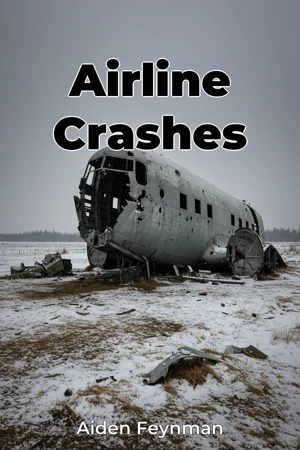
How have landmark airline disasters reshaped the trajectory of aviation safety in the United States? This book, *Airline Crashes*, delves into the history of major U.S. airline disasters, meticulously examining their causes, the subsequent improvements in safety protocols, and the lasting impact on aviation regulations. It is important to understand how these events have transformed the industry and how they continue to shape modern air travel. The history of aviation safety is intertwined with tragedy, demanding a rigorous analysis of the technological, regulatory, and human factors that contribute to both failure and progress. We explore two central topics: first, the detailed reconstruction of pivotal crashes, focusing on the investigative processes and the identification of root causes, from mechanical failures to pilot error and systemic issues. Second, we analyze the evolution of aviation regulations and safety technologies implemented in response to these disasters, assessing their effectiveness and identifying remaining vulnerabilities. The book will operate within the broader context of technological advancement and regulatory oversight in the 20th and 21st centuries. Readers should come prepared to engage with concepts of engineering, risk assessment, and public policy. No specialized technical knowledge is required, as all necessary information will be clearly explained. The central argument of *Airline Crashes* is that major airline disasters have served as critical catalysts for advancements in aviation safety and regulation. While these events are tragic, they have forced the industry and regulatory bodies to confront systemic weaknesses, leading to significant improvements that have saved countless lives. The book will be structured chronologically, beginning with an introduction to the early days of commercial aviation and the initial regulatory frameworks. It will then proceed with in-depth case studies of major crashes, such as the Tenerife airport disaster, the crash of United Airlines Flight 232 in Sioux City, and other significant accidents, dissecting the events leading up to the incidents and the immediate aftermath. Each case study will be followed by an analysis of the regulatory and technological changes spurred by the disaster. The book culminates in a discussion of contemporary aviation safety challenges and future directions, projecting how lessons learned from past tragedies can inform ongoing efforts to enhance air travel safety. The evidence presented will draw upon official accident investigation reports from the National Transportation Safety Board (NTSB) and other relevant agencies, as well as archival data, technical manuals, and expert interviews. The book also references academic studies and industry publications to provide a comprehensive and nuanced understanding of each event. The book connects to several other fields, including engineering (analyzing mechanical failures and technological solutions), public policy (examining the role of government regulation in shaping safety standards), and psychology (understanding the impact of human factors, such as pilot error and crew resource management). These interdisciplinary connections enrich the analysis and provide a holistic view of aviation safety. What sets this book apart is its integrated approach, combining detailed technical analysis with a broader historical and regulatory perspective. By focusing on the direct consequences of each crash and tracing the subsequent evolution of safety measures, the book offers a unique insight into the complex interplay between tragedy and progress in aviation. The writing style will be factual and analytical, aiming to present complex information in a clear and accessible manner. The tone will be respectful of the lives lost and the gravity of the subject matter, while maintaining a rigorous and objective approach. The target audience includes aviation enthusiasts, students of history and technology, policymakers, and anyone interested in understanding the evolution of air travel safety. The book will be valuable to those seeking a deeper understanding of the factors that contribute to airline disasters and the measures taken to prevent them. In line with the conventions of the history genre, the book will provide a factual account grounded in thorough research and verifiable sources. It’s scope is limited to commercial aviation disasters that have directly influenced U.S. aviation regulations and safety practices, focusing on crashes that led to significant changes in policy or technology. The information presented has real-world applications for aviation professionals, regulators, and anyone involved in the design, operation, and oversight of air travel. Understanding the lessons of the past is crucial for informing present and future safety efforts. Although the book offers recommendations, it acknowledges ongoing debates regarding the balance between safety regulations, cost-effectiveness, and operational efficiency, presenting different perspectives on these complex issues.
How have landmark airline disasters reshaped the trajectory of aviation safety in the United States? This book, *Airline Crashes*, delves into the history of major U.S. airline disasters, meticulously examining their causes, the subsequent improvements in safety protocols, and the lasting impact on aviation regulations. It is important to understand how these events have transformed the industry and how they continue to shape modern air travel. The history of aviation safety is intertwined with tragedy, demanding a rigorous analysis of the technological, regulatory, and human factors that contribute to both failure and progress. We explore two central topics: first, the detailed reconstruction of pivotal crashes, focusing on the investigative processes and the identification of root causes, from mechanical failures to pilot error and systemic issues. Second, we analyze the evolution of aviation regulations and safety technologies implemented in response to these disasters, assessing their effectiveness and identifying remaining vulnerabilities. The book will operate within the broader context of technological advancement and regulatory oversight in the 20th and 21st centuries. Readers should come prepared to engage with concepts of engineering, risk assessment, and public policy. No specialized technical knowledge is required, as all necessary information will be clearly explained. The central argument of *Airline Crashes* is that major airline disasters have served as critical catalysts for advancements in aviation safety and regulation. While these events are tragic, they have forced the industry and regulatory bodies to confront systemic weaknesses, leading to significant improvements that have saved countless lives. The book will be structured chronologically, beginning with an introduction to the early days of commercial aviation and the initial regulatory frameworks. It will then proceed with in-depth case studies of major crashes, such as the Tenerife airport disaster, the crash of United Airlines Flight 232 in Sioux City, and other significant accidents, dissecting the events leading up to the incidents and the immediate aftermath. Each case study will be followed by an analysis of the regulatory and technological changes spurred by the disaster. The book culminates in a discussion of contemporary aviation safety challenges and future directions, projecting how lessons learned from past tragedies can inform ongoing efforts to enhance air travel safety. The evidence presented will draw upon official accident investigation reports from the National Transportation Safety Board (NTSB) and other relevant agencies, as well as archival data, technical manuals, and expert interviews. The book also references academic studies and industry publications to provide a comprehensive and nuanced understanding of each event. The book connects to several other fields, including engineering (analyzing mechanical failures and technological solutions), public policy (examining the role of government regulation in shaping safety standards), and psychology (understanding the impact of human factors, such as pilot error and crew resource management). These interdisciplinary connections enrich the analysis and provide a holistic view of aviation safety. What sets this book apart is its integrated approach, combining detailed technical analysis with a broader historical and regulatory perspective. By focusing on the direct consequences of each crash and tracing the subsequent evolution of safety measures, the book offers a unique insight into the complex interplay between tragedy and progress in aviation. The writing style will be factual and analytical, aiming to present complex information in a clear and accessible manner. The tone will be respectful of the lives lost and the gravity of the subject matter, while maintaining a rigorous and objective approach. The target audience includes aviation enthusiasts, students of history and technology, policymakers, and anyone interested in understanding the evolution of air travel safety. The book will be valuable to those seeking a deeper understanding of the factors that contribute to airline disasters and the measures taken to prevent them. In line with the conventions of the history genre, the book will provide a factual account grounded in thorough research and verifiable sources. It’s scope is limited to commercial aviation disasters that have directly influenced U.S. aviation regulations and safety practices, focusing on crashes that led to significant changes in policy or technology. The information presented has real-world applications for aviation professionals, regulators, and anyone involved in the design, operation, and oversight of air travel. Understanding the lessons of the past is crucial for informing present and future safety efforts. Although the book offers recommendations, it acknowledges ongoing debates regarding the balance between safety regulations, cost-effectiveness, and operational efficiency, presenting different perspectives on these complex issues.
"Airline Crashes" meticulously examines major U.S. airline disasters and their profound influence on aviation safety. By dissecting events like the Tenerife airport disaster and the United Airlines Flight 232 "Sioux City crash," the book reveals how accident investigation reports and subsequent regulatory changes have reshaped air travel. It highlights the critical role of the NTSB in identifying root causes, ranging from mechanical failures to pilot error, and how these findings spurred advancements in aviation regulations and technology. The book uniquely integrates technical analysis with historical and regulatory perspectives, demonstrating how tragedies have served as catalysts for progress. It explores the evolution of aviation safety across the 20th and 21st centuries, emphasizing the interplay between technological advancement and regulatory oversight. The analysis progresses chronologically, beginning with the early days of commercial aviation and then presenting in-depth case studies, each followed by an examination of the resulting regulatory and technological shifts, ultimately addressing contemporary challenges and future directions in aviation safety.
Book Details
ISBN
9788235238689
Publisher
Publifye AS
Your Licenses
You don't own any licenses for this book
Purchase a license below to unlock this book and download the EPUB.
Purchase License
Select a tier to unlock this book
Need bulk licensing?
Contact us for enterprise agreements.