
About This Book
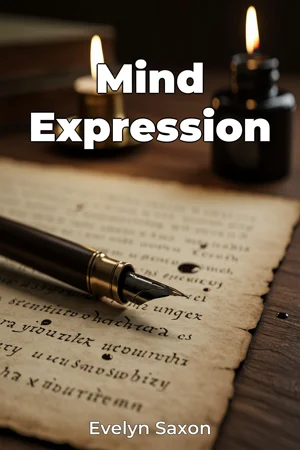
How do our minds truly reveal themselves—not just in grand pronouncements, but in the subtle nuances of everyday communication and introspective reflection? "Mind Expression" delves into the evolving nature of human thought through the lens of correspondence and essay formats, exploring how these mediums capture and shape our understanding of ourselves and the world. This book examines the intrinsic connection between thought, language, and expression, and offers an insightful journey into the depths of human consciousness. Two central concepts underpin this exploration: the dynamism of human perspectives and the formative power of communication mediums. The book investigates how individual viewpoints shift over time, influenced by personal experiences, societal changes, and intellectual growth. Furthermore, it examines how the chosen mode of expression—be it a private letter, a public essay, or a philosophical discourse—affects the articulation and reception of these perspectives. These topics are crucial because they provide a framework for understanding not only individual evolution but also the broader shifts in cultural and intellectual history. "Mind Expression" navigates a landscape shaped by historical movements in philosophy, literature, and social thought. A general understanding of rhetorical devices, philosophical arguments, and literary analysis will enhance the reader’s experience, though not strictly required. The book’s central argument posits that correspondence and essays are not merely vessels for conveying information but are active participants in the construction of meaning. They represent a continuous dialogue between the inner self and the external world, capturing the nuances of human thought as it evolves. The book unfolds in a structured manner, beginning with an introduction to the core concepts of perspective and expression. It then progresses through several key sections. First, it examines historical correspondence, focusing on letters from various periods to illustrate how personal narratives reflect broader cultural shifts. Second, it analyzes essays as tools for intellectual exploration, demonstrating how writers use this form to grapple with complex ideas and challenge established norms. Third, it explores the intersection of these forms, showing how personal correspondence can influence public discourse and vice versa. The book culminates in a discussion of the practical implications of understanding these dynamics, with an emphasis on improving communication skills and fostering deeper self-awareness. The arguments presented are supported by a wide range of evidence, including direct quotations from letters and essays, contextual analysis of historical periods, and critical evaluations of literary techniques. The book draws from a diverse collection of primary source materials, offering readers a rich tapestry of human thought and experience. "Mind Expression" bridges connections between several disciplines, including history, philosophy, and communication studies. It demonstrates how historical events shape individual perspectives, how philosophical concepts inform the construction of arguments, and how communication theories enhance our understanding of the exchange of ideas. These interdisciplinary connections enrich the book's analysis and offer readers a more holistic understanding of the subject matter. The book adopts a tone that aims to be both scholarly and accessible, blending rigorous analysis with engaging prose. It is intended for a broad audience, including students of literature, history, and philosophy, as well as anyone interested in the art of communication and the evolution of human thought. This book offers valuable insights into how we express ourselves and how those expressions shape our understanding of reality. While comprehensive, the book focuses primarily on Western perspectives, acknowledging that a complete understanding would require a broader exploration of global traditions. The insights offered in "Mind Expression" have real-world applications in various fields, from improving interpersonal relationships to enhancing professional communication. By understanding how our perspectives evolve and how our chosen medium shapes our message, we can become more effective communicators and more thoughtful individuals. The book also touches on ongoing debates surrounding the nature of truth and the role of interpretation in shaping understanding, offering a nuanced perspective on these complex issues.
How do our minds truly reveal themselves—not just in grand pronouncements, but in the subtle nuances of everyday communication and introspective reflection? "Mind Expression" delves into the evolving nature of human thought through the lens of correspondence and essay formats, exploring how these mediums capture and shape our understanding of ourselves and the world. This book examines the intrinsic connection between thought, language, and expression, and offers an insightful journey into the depths of human consciousness. Two central concepts underpin this exploration: the dynamism of human perspectives and the formative power of communication mediums. The book investigates how individual viewpoints shift over time, influenced by personal experiences, societal changes, and intellectual growth. Furthermore, it examines how the chosen mode of expression—be it a private letter, a public essay, or a philosophical discourse—affects the articulation and reception of these perspectives. These topics are crucial because they provide a framework for understanding not only individual evolution but also the broader shifts in cultural and intellectual history. "Mind Expression" navigates a landscape shaped by historical movements in philosophy, literature, and social thought. A general understanding of rhetorical devices, philosophical arguments, and literary analysis will enhance the reader’s experience, though not strictly required. The book’s central argument posits that correspondence and essays are not merely vessels for conveying information but are active participants in the construction of meaning. They represent a continuous dialogue between the inner self and the external world, capturing the nuances of human thought as it evolves. The book unfolds in a structured manner, beginning with an introduction to the core concepts of perspective and expression. It then progresses through several key sections. First, it examines historical correspondence, focusing on letters from various periods to illustrate how personal narratives reflect broader cultural shifts. Second, it analyzes essays as tools for intellectual exploration, demonstrating how writers use this form to grapple with complex ideas and challenge established norms. Third, it explores the intersection of these forms, showing how personal correspondence can influence public discourse and vice versa. The book culminates in a discussion of the practical implications of understanding these dynamics, with an emphasis on improving communication skills and fostering deeper self-awareness. The arguments presented are supported by a wide range of evidence, including direct quotations from letters and essays, contextual analysis of historical periods, and critical evaluations of literary techniques. The book draws from a diverse collection of primary source materials, offering readers a rich tapestry of human thought and experience. "Mind Expression" bridges connections between several disciplines, including history, philosophy, and communication studies. It demonstrates how historical events shape individual perspectives, how philosophical concepts inform the construction of arguments, and how communication theories enhance our understanding of the exchange of ideas. These interdisciplinary connections enrich the book's analysis and offer readers a more holistic understanding of the subject matter. The book adopts a tone that aims to be both scholarly and accessible, blending rigorous analysis with engaging prose. It is intended for a broad audience, including students of literature, history, and philosophy, as well as anyone interested in the art of communication and the evolution of human thought. This book offers valuable insights into how we express ourselves and how those expressions shape our understanding of reality. While comprehensive, the book focuses primarily on Western perspectives, acknowledging that a complete understanding would require a broader exploration of global traditions. The insights offered in "Mind Expression" have real-world applications in various fields, from improving interpersonal relationships to enhancing professional communication. By understanding how our perspectives evolve and how our chosen medium shapes our message, we can become more effective communicators and more thoughtful individuals. The book also touches on ongoing debates surrounding the nature of truth and the role of interpretation in shaping understanding, offering a nuanced perspective on these complex issues.
"Mind Expression" explores how human thought evolves through correspondence and essays, revealing the dynamic interplay between personal narratives and broader cultural shifts. The book examines how individual viewpoints transform over time, shaped by personal experiences and societal changes. It also considers how different communication mediums, such as letters or essays, influence the articulation and reception of these perspectives. The book progresses by first introducing core concepts of perspective and expression. It then analyzes historical correspondence and essays, demonstrating how writers use these forms to grapple with complex ideas and challenge norms. Did you know that personal letters can influence public discourse, reflecting a continuous dialogue between the inner self and the external world? "Mind Expression" asserts that correspondence and essays actively construct meaning rather than merely conveying information. By bridging history, philosophy, and communication studies, "Mind Expression" offers insights into self-awareness and communication skills. The book provides a nuanced perspective on complex issues, such as the nature of truth and the role of interpretation. Readers gain a deeper understanding of how we express ourselves and how those expressions shape our understanding of reality.
Book Details
ISBN
9788235238627
Publisher
Publifye AS
Your Licenses
You don't own any licenses for this book
Purchase a license below to unlock this book and download the EPUB.
Purchase License
Select a tier to unlock this book
Need bulk licensing?
Contact us for enterprise agreements.