
About This Book
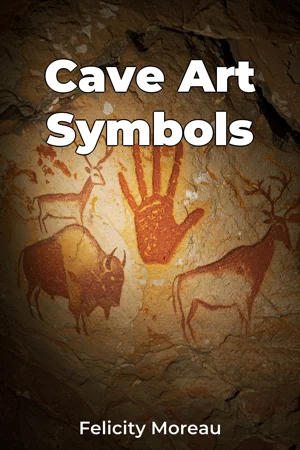
What if the silent walls of caves could speak, revealing the untold stories of our ancestors? "Cave Art Symbols" embarks on a journey to decode the enigmatic world of ancient cave paintings and petroglyphs, offering a comprehensive analysis of how indigenous populations used these visual narratives to record pivotal events, transmit cultural myths, and assert territorial dominion. This book delves into the symbolic language of early humans, providing insights into their cognitive abilities, social structures, and spiritual beliefs. The central focus revolves around three key themes: the interpretation of recurring symbols across diverse geographical locations, the contextual understanding of cave art within its environmental and cultural setting, and the reconstruction of historical narratives embedded within these prehistoric canvases. These topics are paramount because they offer a rare window into the minds of people who lived millennia ago, challenging conventional understandings of early human communication and artistic expression. Understanding cave art requires a multidisciplinary approach, drawing from archaeology, anthropology, art history, and cognitive science. The book provides the historical context of cave art discovery, tracing its origins from the late 19th century to contemporary research. Readers will gain familiarity with dating methods, stylistic analysis, and the diverse range of artistic techniques employed by early artists. The geographical scope spans continents, examining sites like Lascaux in France, Altamira in Spain, and Kakadu National Park in Australia. The book's central argument posits that cave art constitutes a sophisticated form of visual communication, intentional and structured, rather than random acts of artistic expression. It challenges the notion that early humans lacked the capacity for abstract thought and symbolic representation, presenting evidence for complex systems of meaning encoded in their artwork. This argument carries significant weight, suggesting a more profound understanding of the cognitive evolution of humankind. The book is structured in four parts. First, it introduces the foundational concepts of cave art, including its dating, preservation, and the primary theories surrounding its purpose. Second, it systematically examines recurring symbols and motifs, analyzing their potential meanings within different cultural contexts. Third, it reconstructs potential narratives and events depicted in cave art, proposing interpretations of hunting scenes, rituals, and territorial markers. Finally, the book explores the implications of cave art for understanding the development of human cognition, communication, and social organization. Evidence presented includes detailed analyses of cave art sites, comparative studies of symbols across different cultures, and experimental research on the perception and interpretation of prehistoric images. A unique aspect involves the integration of ethnographic data from contemporary indigenous cultures, offering insights into the potential meanings of ancient symbols based on analogous cultural practices. The book also incorporates virtual reconstructions of caves to aid in visualizing the original context of the artwork. This work bridges several disciplines. It connects to anthropology by examining the cultural practices and belief systems reflected in the art. It relates to cognitive science through investigations into the symbolic reasoning and abstract thought of early humans. It further links to environmental studies by considering the influence of the natural world on the themes and materials used in cave art. This book stands out by offering a synthesis of diverse perspectives, combining archaeological findings, art historical analysis, and cognitive insights to develop a holistic understanding of cave art. Its approach is academic but accessible, presenting complex ideas in a clear and engaging manner. The target audience includes students of archaeology, anthropology, and art history, as well as general readers interested in prehistoric art and the origins of human culture. It will appeal to anyone seeking a deeper understanding of the symbolic language of early humans and the insights it provides into their lives and minds. As a work of non-fiction history and art, "Cave Art Symbols" emphasizes factual accuracy, thorough research, and objective analysis. It adheres to scholarly standards of evidence and interpretation, while also seeking to engage a broader audience with the fascinating world of prehistoric art. The scope of the book is intentionally broad, encompassing a global survey of cave art sites and a wide range of interpretative approaches. However, it acknowledges the inherent limitations of interpreting ancient symbols without direct access to the cultural context in which they were created. The information in "Cave Art Symbols" has real-world applications for archaeologists, art historians, and cultural heritage managers involved in the preservation and interpretation of cave art sites. It also provides valuable insights for educators seeking to teach about prehistoric art and the development of human culture. The field of cave art interpretation is not without its debates with disagreement among experts regarding the meaning of certain symbols. The book addresses these controversies, presenting different viewpoints and offering balanced assessments of the available evidence.
What if the silent walls of caves could speak, revealing the untold stories of our ancestors? "Cave Art Symbols" embarks on a journey to decode the enigmatic world of ancient cave paintings and petroglyphs, offering a comprehensive analysis of how indigenous populations used these visual narratives to record pivotal events, transmit cultural myths, and assert territorial dominion. This book delves into the symbolic language of early humans, providing insights into their cognitive abilities, social structures, and spiritual beliefs. The central focus revolves around three key themes: the interpretation of recurring symbols across diverse geographical locations, the contextual understanding of cave art within its environmental and cultural setting, and the reconstruction of historical narratives embedded within these prehistoric canvases. These topics are paramount because they offer a rare window into the minds of people who lived millennia ago, challenging conventional understandings of early human communication and artistic expression. Understanding cave art requires a multidisciplinary approach, drawing from archaeology, anthropology, art history, and cognitive science. The book provides the historical context of cave art discovery, tracing its origins from the late 19th century to contemporary research. Readers will gain familiarity with dating methods, stylistic analysis, and the diverse range of artistic techniques employed by early artists. The geographical scope spans continents, examining sites like Lascaux in France, Altamira in Spain, and Kakadu National Park in Australia. The book's central argument posits that cave art constitutes a sophisticated form of visual communication, intentional and structured, rather than random acts of artistic expression. It challenges the notion that early humans lacked the capacity for abstract thought and symbolic representation, presenting evidence for complex systems of meaning encoded in their artwork. This argument carries significant weight, suggesting a more profound understanding of the cognitive evolution of humankind. The book is structured in four parts. First, it introduces the foundational concepts of cave art, including its dating, preservation, and the primary theories surrounding its purpose. Second, it systematically examines recurring symbols and motifs, analyzing their potential meanings within different cultural contexts. Third, it reconstructs potential narratives and events depicted in cave art, proposing interpretations of hunting scenes, rituals, and territorial markers. Finally, the book explores the implications of cave art for understanding the development of human cognition, communication, and social organization. Evidence presented includes detailed analyses of cave art sites, comparative studies of symbols across different cultures, and experimental research on the perception and interpretation of prehistoric images. A unique aspect involves the integration of ethnographic data from contemporary indigenous cultures, offering insights into the potential meanings of ancient symbols based on analogous cultural practices. The book also incorporates virtual reconstructions of caves to aid in visualizing the original context of the artwork. This work bridges several disciplines. It connects to anthropology by examining the cultural practices and belief systems reflected in the art. It relates to cognitive science through investigations into the symbolic reasoning and abstract thought of early humans. It further links to environmental studies by considering the influence of the natural world on the themes and materials used in cave art. This book stands out by offering a synthesis of diverse perspectives, combining archaeological findings, art historical analysis, and cognitive insights to develop a holistic understanding of cave art. Its approach is academic but accessible, presenting complex ideas in a clear and engaging manner. The target audience includes students of archaeology, anthropology, and art history, as well as general readers interested in prehistoric art and the origins of human culture. It will appeal to anyone seeking a deeper understanding of the symbolic language of early humans and the insights it provides into their lives and minds. As a work of non-fiction history and art, "Cave Art Symbols" emphasizes factual accuracy, thorough research, and objective analysis. It adheres to scholarly standards of evidence and interpretation, while also seeking to engage a broader audience with the fascinating world of prehistoric art. The scope of the book is intentionally broad, encompassing a global survey of cave art sites and a wide range of interpretative approaches. However, it acknowledges the inherent limitations of interpreting ancient symbols without direct access to the cultural context in which they were created. The information in "Cave Art Symbols" has real-world applications for archaeologists, art historians, and cultural heritage managers involved in the preservation and interpretation of cave art sites. It also provides valuable insights for educators seeking to teach about prehistoric art and the development of human culture. The field of cave art interpretation is not without its debates with disagreement among experts regarding the meaning of certain symbols. The book addresses these controversies, presenting different viewpoints and offering balanced assessments of the available evidence.
"Cave Art Symbols" decodes the captivating world of prehistoric art, exploring how early humans used cave paintings and petroglyphs to communicate, record events, and transmit cultural myths. This exploration into ancient art provides a window into the cognitive abilities, social structures, and spiritual beliefs of our ancestors. Intriguingly, recurring symbols appear across geographically diverse sites, suggesting a shared understanding or symbolic language among early human populations. The book argues that cave art represents a sophisticated form of visual communication, reflecting intentional and structured thought processes, rather than random artistic expression. The book adopts a multidisciplinary approach, drawing from archaeology, anthropology, art history, and cognitive science to analyze cave art. It begins by introducing foundational concepts, such as dating methods and preservation techniques, before systematically examining recurring symbols and motifs. Later chapters reconstruct potential narratives depicted in the art, offering interpretations of hunting scenes and ritualistic practices. Ultimately, "Cave Art Symbols" offers a fascinating glimpse into the minds of early humans, challenging conventional understandings of their communication and artistic expression.
Book Details
ISBN
9788235238344
Publisher
Publifye AS
Your Licenses
You don't own any licenses for this book
Purchase a license below to unlock this book and download the EPUB.
Purchase License
Select a tier to unlock this book
Need bulk licensing?
Contact us for enterprise agreements.