
About This Book
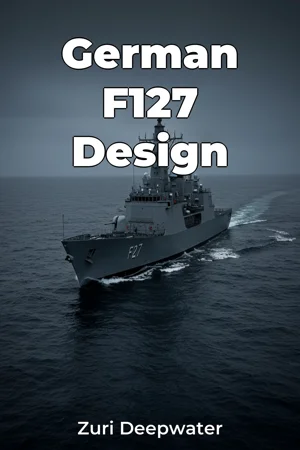
What if the future of European naval power rested on a single, meticulously engineered warship? "German F127 Design" delves into the sophisticated world of the Thyssen Krupp Marine Systems' F127 frigate, a vessel poised to redefine naval capabilities and international defense collaboration. This book explores the F127, emphasizing its operational capacity and potential as a cornerstone for collaborative European defense initiatives. It is crucial to understand the F127 not just as a ship, but as a symbol of evolving military technology and the shifting geopolitical landscape of European defense. The book centers around three key topics: first, a comprehensive examination of the F127’s technological specifications and capabilities, including its sensor suite, weapon systems, and propulsion technology. Second, an analysis of the strategic implications of the F127, exploring its role in modern naval warfare and its capacity to address emerging threats. Third, a detailed assessment of the potential for European collaboration in the design, construction, and deployment of the F127, including the political and economic factors that influence such partnerships. To fully appreciate the F127, readers should possess a basic understanding of naval architecture, military technology, and European defense policy. The central argument of "German F127 Design" is that the F127 represents a significant leap forward in frigate design, offering a viable platform for enhanced European naval cooperation and contributing to increased security within the region. This is important because it presents a case study in how technological innovation combined with strategic international partnerships can lead to stronger, more resilient defense capabilities. The book unfolds in a structured manner. It begins with an introduction to the F127’s design specifications, tracing its development from initial concept to finalized blueprints. It progresses to an in-depth analysis of key systems, such as its advanced radar, sonar, and missile defense capabilities, alongside a discussion of its crew capacity and operational range. Following this, the book examines the strategic impact of the F127, assessing its effectiveness in various combat scenarios, including anti-submarine warfare, anti-air defense, and surface engagement. It also considers its role in maritime security operations, such as counter-piracy and search and rescue. The book culminates with an exploration of the potential for European collaborative efforts around the F127 program, evaluating the benefits and challenges of joint procurement, technology sharing, and operational integration. The analysis relies heavily on technical data released by Thyssen Krupp Marine Systems, alongside open-source intelligence, defense industry publications, and expert interviews. The book connects the F127 project to broader themes in international relations, particularly the dynamics of European security cooperation, as well as to technology studies, offering insights into the innovation processes that shape military advancements, and to economics, examining defense spending and the economic impact of large-scale naval construction projects. Regarding approach, this book offers a blend of technical analysis and strategic assessment. It avoids hyperbole, providing a balanced and objective overview of the F127’s capabilities and limitations. The primary audience is naval architects, military strategists, defense analysts, and policymakers interested in European defense cooperation. This book offers valuable insights into the future of naval warfare and the role of collaborative defense initiatives in the 21st century. As a work of military history and technology, "German F127 Design" adheres to standards of accuracy and objectivity, presenting a detailed account of the F127 while avoiding speculation. The book covers the design and potential deployment of the F127, but it does not address specific operational plans or classified information. The information in this book can be applied by naval architects to inform future ship designs, by military strategists to analyze the evolving landscape of naval warfare, and by policymakers to develop effective defense strategies. The book acknowledges the ongoing debate about the optimal balance between national defense autonomy and European security integration, presenting the F127 as a case study that illuminates these complex questions.
What if the future of European naval power rested on a single, meticulously engineered warship? "German F127 Design" delves into the sophisticated world of the Thyssen Krupp Marine Systems' F127 frigate, a vessel poised to redefine naval capabilities and international defense collaboration. This book explores the F127, emphasizing its operational capacity and potential as a cornerstone for collaborative European defense initiatives. It is crucial to understand the F127 not just as a ship, but as a symbol of evolving military technology and the shifting geopolitical landscape of European defense. The book centers around three key topics: first, a comprehensive examination of the F127’s technological specifications and capabilities, including its sensor suite, weapon systems, and propulsion technology. Second, an analysis of the strategic implications of the F127, exploring its role in modern naval warfare and its capacity to address emerging threats. Third, a detailed assessment of the potential for European collaboration in the design, construction, and deployment of the F127, including the political and economic factors that influence such partnerships. To fully appreciate the F127, readers should possess a basic understanding of naval architecture, military technology, and European defense policy. The central argument of "German F127 Design" is that the F127 represents a significant leap forward in frigate design, offering a viable platform for enhanced European naval cooperation and contributing to increased security within the region. This is important because it presents a case study in how technological innovation combined with strategic international partnerships can lead to stronger, more resilient defense capabilities. The book unfolds in a structured manner. It begins with an introduction to the F127’s design specifications, tracing its development from initial concept to finalized blueprints. It progresses to an in-depth analysis of key systems, such as its advanced radar, sonar, and missile defense capabilities, alongside a discussion of its crew capacity and operational range. Following this, the book examines the strategic impact of the F127, assessing its effectiveness in various combat scenarios, including anti-submarine warfare, anti-air defense, and surface engagement. It also considers its role in maritime security operations, such as counter-piracy and search and rescue. The book culminates with an exploration of the potential for European collaborative efforts around the F127 program, evaluating the benefits and challenges of joint procurement, technology sharing, and operational integration. The analysis relies heavily on technical data released by Thyssen Krupp Marine Systems, alongside open-source intelligence, defense industry publications, and expert interviews. The book connects the F127 project to broader themes in international relations, particularly the dynamics of European security cooperation, as well as to technology studies, offering insights into the innovation processes that shape military advancements, and to economics, examining defense spending and the economic impact of large-scale naval construction projects. Regarding approach, this book offers a blend of technical analysis and strategic assessment. It avoids hyperbole, providing a balanced and objective overview of the F127’s capabilities and limitations. The primary audience is naval architects, military strategists, defense analysts, and policymakers interested in European defense cooperation. This book offers valuable insights into the future of naval warfare and the role of collaborative defense initiatives in the 21st century. As a work of military history and technology, "German F127 Design" adheres to standards of accuracy and objectivity, presenting a detailed account of the F127 while avoiding speculation. The book covers the design and potential deployment of the F127, but it does not address specific operational plans or classified information. The information in this book can be applied by naval architects to inform future ship designs, by military strategists to analyze the evolving landscape of naval warfare, and by policymakers to develop effective defense strategies. The book acknowledges the ongoing debate about the optimal balance between national defense autonomy and European security integration, presenting the F127 as a case study that illuminates these complex questions.
"German F127 Design" explores the F127 frigate, a cutting-edge warship designed by Thyssen Krupp Marine Systems, and its potential to reshape European naval power. This book examines the F127's technological advancements, strategic implications, and the possibilities for European defense collaboration. The F127 represents a significant leap in military technology, offering enhanced capabilities in naval warfare and maritime security. One intriguing fact is the F127's advanced sensor suite, which provides unparalleled situational awareness. Another is its potential as a model for collaborative defense initiatives, enhancing European security through shared resources and technology. The book approaches the topic with a blend of technical analysis and strategic assessment, avoiding exaggeration and presenting a balanced view of the F127's strengths and weaknesses. It begins with the ship's design specifications and development, then delves into key systems like radar and missile defense. The book progresses to analyze its impact on combat scenarios and maritime security, culminating in an exploration of European collaborative efforts. Ultimately, "German F127 Design" offers a comprehensive understanding of the F127's role in the evolving landscape of naval architecture and European defense.
Book Details
ISBN
9788235238139
Publisher
Publifye AS
Your Licenses
You don't own any licenses for this book
Purchase a license below to unlock this book and download the EPUB.
Purchase License
Select a tier to unlock this book
Need bulk licensing?
Contact us for enterprise agreements.