
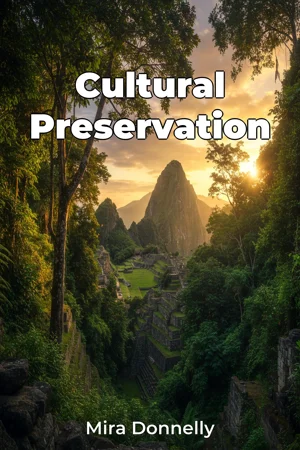
About This Book
What happens when a culture faces erasure? This book, "Cultural Preservation," delves into the multifaceted efforts of indigenous communities worldwide to safeguard their languages, traditions, and heritage in the face of historical disruptions and ongoing external influences. It explores the critical importance of cultural preservation as a fundamental aspect of human rights, social justice, and collective identity. "Cultural Preservation" addresses several key topics. First, it examines the historical and ongoing impact of colonialism, globalization, and forced assimilation on indigenous cultures, detailing how these forces contribute to language loss, the erosion of traditional practices, and the displacement of communities. Second, the book presents a comprehensive overview of diverse preservation strategies employed at the community level, including language revitalization programs, cultural heritage tourism initiatives, and the establishment of cultural centers. Third, it analyzes the role of international organizations, governments, and advocacy groups in supporting indigenous-led preservation efforts, evaluating the effectiveness of various policies and legal frameworks designed to protect cultural rights. The central argument posits that cultural preservation is not merely a nostalgic endeavor but a dynamic and essential process that empowers indigenous communities to maintain their distinct identities, exercise self-determination, and contribute to a more diverse and equitable world. This argument is crucial because it challenges dominant narratives that often marginalize indigenous cultures and underestimate their resilience. The book is structured in three parts. The first section introduces the concepts of cultural heritage, indigenous identity, and the threats they face. The second part details specific case studies from various regions, illustrating preservation strategies in action. Examples may include Maori language revitalization in New Zealand, the preservation of traditional weaving practices among indigenous groups in Guatemala, and the fight to protect sacred sites in the United States. The third section analyzes the broader implications of these efforts, discussing the role of cultural preservation in promoting reconciliation, addressing historical injustices, and fostering sustainable development. The conclusion offers practical recommendations for policymakers, educators, and community members who seek to support indigenous-led preservation initiatives. The analysis presented in "Cultural Preservation" draws on a wide range of evidence, including ethnographic research, archival documents, oral histories, and legal analyses. It incorporates data from international organizations such as UNESCO and the United Nations, as well as reports from indigenous-led advocacy groups. The book adopts an interdisciplinary approach, drawing insights from anthropology, history, linguistics, law, and political science. This interdisciplinary lens allows for a more nuanced understanding of the complex challenges and opportunities associated with cultural preservation. "Cultural Preservation" distinguishes itself through its focus on the agency and resilience of indigenous communities. It emphasizes the importance of indigenous-led initiatives and challenges the notion that cultural preservation is solely the responsibility of external actors. The book is written in an accessible style, making it suitable for students, researchers, policymakers, and anyone interested in learning more about indigenous cultures and the importance of cultural preservation. The intended readership includes undergraduate and graduate students in social sciences, humanities, and related fields, as well as professionals working in cultural heritage management, international development, and indigenous rights advocacy. As a work of social science and history, the book adheres to standards of academic rigor, providing well-researched and balanced perspectives on complex issues. While the book aims to provide a broad overview of cultural preservation efforts worldwide, it acknowledges that certain regions and cultural groups may receive more attention than others due to the availability of research and the limitations of space. "Cultural Preservation" highlights the practical applications of its findings, demonstrating how the insights gained can inform policies, programs, and community-based initiatives aimed at protecting and promoting cultural diversity. The book also addresses ongoing debates surrounding issues such as intellectual property rights, the commodification of culture, and the repatriation of cultural artifacts.
What happens when a culture faces erasure? This book, "Cultural Preservation," delves into the multifaceted efforts of indigenous communities worldwide to safeguard their languages, traditions, and heritage in the face of historical disruptions and ongoing external influences. It explores the critical importance of cultural preservation as a fundamental aspect of human rights, social justice, and collective identity. "Cultural Preservation" addresses several key topics. First, it examines the historical and ongoing impact of colonialism, globalization, and forced assimilation on indigenous cultures, detailing how these forces contribute to language loss, the erosion of traditional practices, and the displacement of communities. Second, the book presents a comprehensive overview of diverse preservation strategies employed at the community level, including language revitalization programs, cultural heritage tourism initiatives, and the establishment of cultural centers. Third, it analyzes the role of international organizations, governments, and advocacy groups in supporting indigenous-led preservation efforts, evaluating the effectiveness of various policies and legal frameworks designed to protect cultural rights. The central argument posits that cultural preservation is not merely a nostalgic endeavor but a dynamic and essential process that empowers indigenous communities to maintain their distinct identities, exercise self-determination, and contribute to a more diverse and equitable world. This argument is crucial because it challenges dominant narratives that often marginalize indigenous cultures and underestimate their resilience. The book is structured in three parts. The first section introduces the concepts of cultural heritage, indigenous identity, and the threats they face. The second part details specific case studies from various regions, illustrating preservation strategies in action. Examples may include Maori language revitalization in New Zealand, the preservation of traditional weaving practices among indigenous groups in Guatemala, and the fight to protect sacred sites in the United States. The third section analyzes the broader implications of these efforts, discussing the role of cultural preservation in promoting reconciliation, addressing historical injustices, and fostering sustainable development. The conclusion offers practical recommendations for policymakers, educators, and community members who seek to support indigenous-led preservation initiatives. The analysis presented in "Cultural Preservation" draws on a wide range of evidence, including ethnographic research, archival documents, oral histories, and legal analyses. It incorporates data from international organizations such as UNESCO and the United Nations, as well as reports from indigenous-led advocacy groups. The book adopts an interdisciplinary approach, drawing insights from anthropology, history, linguistics, law, and political science. This interdisciplinary lens allows for a more nuanced understanding of the complex challenges and opportunities associated with cultural preservation. "Cultural Preservation" distinguishes itself through its focus on the agency and resilience of indigenous communities. It emphasizes the importance of indigenous-led initiatives and challenges the notion that cultural preservation is solely the responsibility of external actors. The book is written in an accessible style, making it suitable for students, researchers, policymakers, and anyone interested in learning more about indigenous cultures and the importance of cultural preservation. The intended readership includes undergraduate and graduate students in social sciences, humanities, and related fields, as well as professionals working in cultural heritage management, international development, and indigenous rights advocacy. As a work of social science and history, the book adheres to standards of academic rigor, providing well-researched and balanced perspectives on complex issues. While the book aims to provide a broad overview of cultural preservation efforts worldwide, it acknowledges that certain regions and cultural groups may receive more attention than others due to the availability of research and the limitations of space. "Cultural Preservation" highlights the practical applications of its findings, demonstrating how the insights gained can inform policies, programs, and community-based initiatives aimed at protecting and promoting cultural diversity. The book also addresses ongoing debates surrounding issues such as intellectual property rights, the commodification of culture, and the repatriation of cultural artifacts.
"Cultural Preservation" explores the struggles and triumphs of indigenous communities worldwide as they work to protect their cultural heritage. It highlights how forces like colonialism and globalization have threatened languages, traditions, and cultural identity, while also showcasing the innovative strategies these communities employ to revitalize their cultures. For instance, the book examines language revitalization programs and cultural heritage tourism as key components of community development and self-determination. The book argues that cultural preservation is not just about preserving the past; it's a dynamic process vital for social justice and human rights. It analyzes the roles of international organizations and governments in supporting these efforts, emphasizing the importance of indigenous-led initiatives. Through case studies and interdisciplinary analysis, "Cultural Preservation" details preservation strategies in action, addressing topics from Maori language revival to the protection of sacred sites. Structured in three parts, the book first introduces key concepts, then explores specific examples, and finally analyzes the broader implications for reconciliation and sustainable development. It emphasizes the agency of indigenous communities and offers practical recommendations for supporting their cultural preservation efforts, making it a valuable resource for anyone interested in history, social science, and indigenous rights.
Book Details
ISBN
9788235238122
Publisher
Publifye AS
Your Licenses
You don't own any licenses for this book
Purchase a license below to unlock this book and download the EPUB.
Purchase License
Select a tier to unlock this book
Need bulk licensing?
Contact us for enterprise agreements.