
About This Book
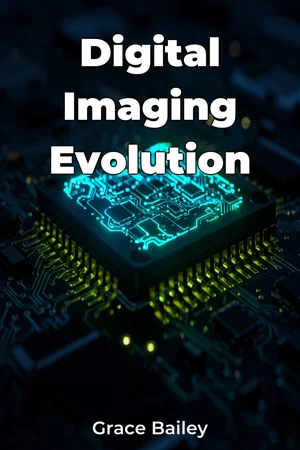
How did we move from capturing simple light to creating images that see beyond the capabilities of the human eye? "Digital Imaging Evolution" explores this transformative journey, tracing the development of digital imaging from its humble beginnings in early electronic sensors to the sophisticated computational photography systems that define modern image creation. This book delves into the core technologies, pivotal moments, and future trajectories of digital imaging, making it essential reading for anyone seeking to understand the forces shaping how we capture, process, and interact with visual information. The book focuses on three key areas: the evolution of image sensors, the rise of computational photography, and the increasing integration of artificial intelligence in imaging systems. The evolution of image sensors, from early charge-coupled devices (CCDs) to advanced CMOS sensors, demonstrates the technological advancements that have enabled higher resolution, improved sensitivity, and faster capture speeds. The rise of computational photography investigates the software and algorithms that manipulate raw image data to enhance image quality, correct distortions, and create entirely new imaging modalities, such as high dynamic range (HDR) and panoramic photography. Finally, the increasing integration of artificial intelligence (AI) in imaging systems examines how machine learning techniques are being used for tasks like image recognition, object detection, and automated image editing, pushing image manipulation into almost autonomous processes. These topics are critical because they highlight the interdisciplinary nature of digital imaging, combining elements of physics, computer science, and engineering to redefine the boundaries of visual representation. The book provides a historical context, examining the limitations of analog photography and the challenges early digital systems faced. It details the critical scientific breakthroughs and engineering innovations that paved the way for the digital revolution in imaging. Prior knowledge of basic photographic principles or computer science concepts is helpful, as well as the understanding of general technological advancements. The central argument of "Digital Imaging Evolution" emphasizes that digital imaging is not merely a replacement for traditional photography, but a fundamentally new medium with its own distinct capabilities and creative potential. It argues that the ongoing convergence of hardware, software, and AI is creating a paradigm shift in how we perceive and interact with visual information, leading to new forms of artistic expression and technological innovation. The book is structured to provide a comprehensive overview of the field. It starts with an introduction to the fundamental principles of digital imaging, including image sensors, image processing algorithms, and display technologies. Subsequent chapters trace the evolution of image sensor technology, detailing the advancements in CCD and CMOS sensors. Further, it discusses the core concepts of computational photography, such as image stitching, HDR imaging, and depth mapping, with practical examples and case studies. The book then examines the role that artificial intelligence plays in image enhancement, object recognition, and automated scene understanding. Later chapters explore applications in various fields, concluding with a discussion of potential future trends and challenges. The arguments are supported by a wide range of evidence, including technical specifications of imaging devices, performance metrics of image processing algorithms, and experimental results from research studies. It also incorporates case studies of significant digital imaging systems, such as smartphone cameras and medical imaging devices. The book draws upon academic research papers, industry reports, and patent filings to provide a comprehensive and well-supported analysis. "Digital Imaging Evolution" also connects to several interdisciplinary fields, including computer vision, machine learning, and human-computer interaction. Computer vision algorithms provide the foundation for automated image analysis and understanding. Machine learning techniques are used to train AI models for image recognition and enhancement. Human-computer interaction principles guide the design of user interfaces for digital imaging systems, ensuring they are intuitive and accessible. A unique approach of this book lies in its comprehensive coverage of the entire digital imaging pipeline, from light capture to image display. It integrates historical context with cutting-edge technological developments, providing a holistic perspective on the evolution of digital imaging. The book is written in a clear and accessible style, with technical concepts explained in a way that is easy for non-experts to understand. It strikes a balance between technical detail and conceptual understanding, making it suitable for a wide range of readers. The target audience includes students, researchers, engineers, and photography enthusiasts who want to understand the technology behind modern digital imaging. It is also valuable for professionals in fields such as medical imaging, remote sensing, and computer vision who need a comprehensive overview of the field. As a work dedicated to Photography, Photography General, and Technology, this book will present industry standards, technological innovations, and artistic applications, while also discussing the social and cultural impacts of digital imaging. The book's scope is limited to the technological aspects of digital imaging, with less focus on the artistic or aesthetic aspects. It focuses primarily on hardware and software technologies, rather than business or marketing aspects. The information provided in this book can be applied practically by readers in various ways. Photographers can use it to improve their understanding of digital imaging technology and make more informed decisions about their equipment and techniques. Engineers and researchers can use it to develop new imaging systems and algorithms. Students can use it as a textbook or reference guide for their studies. In conclusion, "Digital Imaging Evolution" offers a comprehensive and insightful exploration of the technological forces shaping how we capture, process, and interact with visual information in the digital age.
How did we move from capturing simple light to creating images that see beyond the capabilities of the human eye? "Digital Imaging Evolution" explores this transformative journey, tracing the development of digital imaging from its humble beginnings in early electronic sensors to the sophisticated computational photography systems that define modern image creation. This book delves into the core technologies, pivotal moments, and future trajectories of digital imaging, making it essential reading for anyone seeking to understand the forces shaping how we capture, process, and interact with visual information. The book focuses on three key areas: the evolution of image sensors, the rise of computational photography, and the increasing integration of artificial intelligence in imaging systems. The evolution of image sensors, from early charge-coupled devices (CCDs) to advanced CMOS sensors, demonstrates the technological advancements that have enabled higher resolution, improved sensitivity, and faster capture speeds. The rise of computational photography investigates the software and algorithms that manipulate raw image data to enhance image quality, correct distortions, and create entirely new imaging modalities, such as high dynamic range (HDR) and panoramic photography. Finally, the increasing integration of artificial intelligence (AI) in imaging systems examines how machine learning techniques are being used for tasks like image recognition, object detection, and automated image editing, pushing image manipulation into almost autonomous processes. These topics are critical because they highlight the interdisciplinary nature of digital imaging, combining elements of physics, computer science, and engineering to redefine the boundaries of visual representation. The book provides a historical context, examining the limitations of analog photography and the challenges early digital systems faced. It details the critical scientific breakthroughs and engineering innovations that paved the way for the digital revolution in imaging. Prior knowledge of basic photographic principles or computer science concepts is helpful, as well as the understanding of general technological advancements. The central argument of "Digital Imaging Evolution" emphasizes that digital imaging is not merely a replacement for traditional photography, but a fundamentally new medium with its own distinct capabilities and creative potential. It argues that the ongoing convergence of hardware, software, and AI is creating a paradigm shift in how we perceive and interact with visual information, leading to new forms of artistic expression and technological innovation. The book is structured to provide a comprehensive overview of the field. It starts with an introduction to the fundamental principles of digital imaging, including image sensors, image processing algorithms, and display technologies. Subsequent chapters trace the evolution of image sensor technology, detailing the advancements in CCD and CMOS sensors. Further, it discusses the core concepts of computational photography, such as image stitching, HDR imaging, and depth mapping, with practical examples and case studies. The book then examines the role that artificial intelligence plays in image enhancement, object recognition, and automated scene understanding. Later chapters explore applications in various fields, concluding with a discussion of potential future trends and challenges. The arguments are supported by a wide range of evidence, including technical specifications of imaging devices, performance metrics of image processing algorithms, and experimental results from research studies. It also incorporates case studies of significant digital imaging systems, such as smartphone cameras and medical imaging devices. The book draws upon academic research papers, industry reports, and patent filings to provide a comprehensive and well-supported analysis. "Digital Imaging Evolution" also connects to several interdisciplinary fields, including computer vision, machine learning, and human-computer interaction. Computer vision algorithms provide the foundation for automated image analysis and understanding. Machine learning techniques are used to train AI models for image recognition and enhancement. Human-computer interaction principles guide the design of user interfaces for digital imaging systems, ensuring they are intuitive and accessible. A unique approach of this book lies in its comprehensive coverage of the entire digital imaging pipeline, from light capture to image display. It integrates historical context with cutting-edge technological developments, providing a holistic perspective on the evolution of digital imaging. The book is written in a clear and accessible style, with technical concepts explained in a way that is easy for non-experts to understand. It strikes a balance between technical detail and conceptual understanding, making it suitable for a wide range of readers. The target audience includes students, researchers, engineers, and photography enthusiasts who want to understand the technology behind modern digital imaging. It is also valuable for professionals in fields such as medical imaging, remote sensing, and computer vision who need a comprehensive overview of the field. As a work dedicated to Photography, Photography General, and Technology, this book will present industry standards, technological innovations, and artistic applications, while also discussing the social and cultural impacts of digital imaging. The book's scope is limited to the technological aspects of digital imaging, with less focus on the artistic or aesthetic aspects. It focuses primarily on hardware and software technologies, rather than business or marketing aspects. The information provided in this book can be applied practically by readers in various ways. Photographers can use it to improve their understanding of digital imaging technology and make more informed decisions about their equipment and techniques. Engineers and researchers can use it to develop new imaging systems and algorithms. Students can use it as a textbook or reference guide for their studies. In conclusion, "Digital Imaging Evolution" offers a comprehensive and insightful exploration of the technological forces shaping how we capture, process, and interact with visual information in the digital age.
"Digital Imaging Evolution" explores the fascinating journey of digital imaging, from rudimentary electronic sensors to today's AI imaging systems. It reveals how we've moved beyond merely capturing light to creating images that surpass human vision. One intriguing aspect is the evolution of image sensors, transitioning from early CCD sensors to advanced CMOS sensors, enabling higher resolution and faster capture speeds. Another is the rise of computational photography, where algorithms enhance image quality and create new modalities like HDR. The book uniquely covers the entire digital imaging pipeline, integrating historical context with cutting-edge technology. It begins with fundamental principles, progresses through the evolution of image sensors and computational photography, and culminates in the integration of artificial intelligence for tasks like object recognition and image enhancement. This comprehensive approach makes it valuable for anyone seeking to understand the digital revolution in visual information.
Book Details
ISBN
9788235238023
Publisher
Publifye AS
Your Licenses
You don't own any licenses for this book
Purchase a license below to unlock this book and download the EPUB.
Purchase License
Select a tier to unlock this book
Need bulk licensing?
Contact us for enterprise agreements.