
About This Book
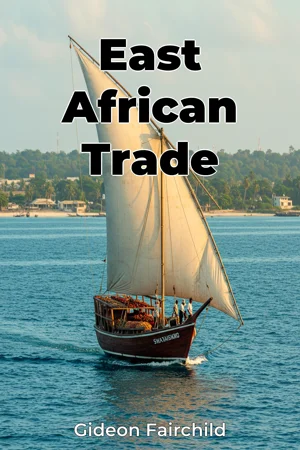
Imagine a world where the monsoon winds dictate the ebb and flow of civilizations, where the scent of cloves and cinnamon mingles with the salty air of bustling ports, and where cultures converge to create a unique tapestry of exchange. This book, *East African Trade*, delves into this vibrant history, exploring the intricate network that connected East Africa to India and Arabia, transforming not only its economy but also its social and cultural landscape. The book focuses on three key topics: the commodities that fueled the trade, the Swahili coastal cities that served as its hubs, and the far-reaching consequences of this interaction for East African societies. We will explore the demand for spices like cinnamon and ginger, the allure of ivory from the African interior, and the enduring value of gold, understanding how these materials moved through complex networks of merchants, sailors, and intermediaries. These topics are important because they illuminate a critical period in East African history, demonstrating the region's agency in shaping global trade dynamics and challenging Eurocentric narratives of exploration and exploitation. To fully grasp the significance of this trade, we must understand the broader context of the Indian Ocean world. This includes the seasonal monsoon winds that facilitated navigation, the existing trade routes that predated European involvement, and the diverse cultural influences that shaped the Swahili coast. The central argument of *East African Trade* is that the trade networks connecting East Africa to India and Arabia were not merely economic exchanges but were powerful forces in shaping the social, cultural, and political development of the region. It wasn't a simple case of resource extraction; rather, it was a complex interplay of mutual benefit, cultural exchange, and adaptation that left a lasting legacy on East Africa. The book is structured to provide a comprehensive understanding of this complex system. Part 1 introduces the geography, key players, and pre-existing trade networks of the Indian Ocean. Part 2 examines the major commodities traded, detailing their sources, uses, and economic impact. Part 3 focuses on the Swahili city-states, such as Kilwa, Mombasa, and Zanzibar, analyzing their political organization, social structures, and architectural achievements as reflections of their role in the trade. The concluding chapters synthesize the evidence, illustrating the long-term effects of this trade on East African identity, culture, and its subsequent interactions with the wider world. This book draws upon a range of sources, including archaeological evidence from Swahili coastal sites, historical accounts from Arab and Indian navigators and chroniclers, and linguistic analysis of Swahili language and culture, which reveals significant Arabic and Indian influences. We also analyze trade records and maritime charts to reconstruct the routes and patterns of exchange. *East African Trade* connects to various fields, including anthropology (studying cultural exchange and social structures), archaeology (uncovering physical evidence of trade), and linguistics (analyzing the evolution of the Swahili language). These interdisciplinary connections enrich the analysis and provide a more holistic understanding of the trade's impact. This book provides a nuanced perspective, moving beyond simplistic narratives of exploitation to reveal the agency of East African communities in shaping their own destinies through trade and cultural exchange. The writing style is academic, grounded in rigorous research, but also accessible to a broad audience interested in world history. It avoids jargon and presents complex information in a clear and engaging manner, using maps, illustrations, and primary source excerpts to bring the past to life. The target audience includes students of African history, world history, and economics, as well as general readers interested in learning more about the interconnectedness of global cultures and economies. Further, readers interested in International trade will find immense value. Understanding these historical precedents of globalization is crucial for grasping current dynamics. As a work of world history, the book adheres to the genre's emphasis on factual accuracy, detailed analysis, and a broad geographical perspective. The analysis emphasizes the economic impacts of trade drawing from the History World and Economics genre. The scope of the book is limited to the pre-colonial period, focusing primarily on the period between the 8th and 15th centuries. The knowledge gained from this book can be applied to understand contemporary global trade routes, the impact of trade on cultural exchange, and the challenges of economic development in Africa. While the benefits of the East African trade are clear, the book also addresses ongoing debates surrounding issues like the role of slavery in the trade and the potential for environmental degradation due to resource extraction.
Imagine a world where the monsoon winds dictate the ebb and flow of civilizations, where the scent of cloves and cinnamon mingles with the salty air of bustling ports, and where cultures converge to create a unique tapestry of exchange. This book, *East African Trade*, delves into this vibrant history, exploring the intricate network that connected East Africa to India and Arabia, transforming not only its economy but also its social and cultural landscape. The book focuses on three key topics: the commodities that fueled the trade, the Swahili coastal cities that served as its hubs, and the far-reaching consequences of this interaction for East African societies. We will explore the demand for spices like cinnamon and ginger, the allure of ivory from the African interior, and the enduring value of gold, understanding how these materials moved through complex networks of merchants, sailors, and intermediaries. These topics are important because they illuminate a critical period in East African history, demonstrating the region's agency in shaping global trade dynamics and challenging Eurocentric narratives of exploration and exploitation. To fully grasp the significance of this trade, we must understand the broader context of the Indian Ocean world. This includes the seasonal monsoon winds that facilitated navigation, the existing trade routes that predated European involvement, and the diverse cultural influences that shaped the Swahili coast. The central argument of *East African Trade* is that the trade networks connecting East Africa to India and Arabia were not merely economic exchanges but were powerful forces in shaping the social, cultural, and political development of the region. It wasn't a simple case of resource extraction; rather, it was a complex interplay of mutual benefit, cultural exchange, and adaptation that left a lasting legacy on East Africa. The book is structured to provide a comprehensive understanding of this complex system. Part 1 introduces the geography, key players, and pre-existing trade networks of the Indian Ocean. Part 2 examines the major commodities traded, detailing their sources, uses, and economic impact. Part 3 focuses on the Swahili city-states, such as Kilwa, Mombasa, and Zanzibar, analyzing their political organization, social structures, and architectural achievements as reflections of their role in the trade. The concluding chapters synthesize the evidence, illustrating the long-term effects of this trade on East African identity, culture, and its subsequent interactions with the wider world. This book draws upon a range of sources, including archaeological evidence from Swahili coastal sites, historical accounts from Arab and Indian navigators and chroniclers, and linguistic analysis of Swahili language and culture, which reveals significant Arabic and Indian influences. We also analyze trade records and maritime charts to reconstruct the routes and patterns of exchange. *East African Trade* connects to various fields, including anthropology (studying cultural exchange and social structures), archaeology (uncovering physical evidence of trade), and linguistics (analyzing the evolution of the Swahili language). These interdisciplinary connections enrich the analysis and provide a more holistic understanding of the trade's impact. This book provides a nuanced perspective, moving beyond simplistic narratives of exploitation to reveal the agency of East African communities in shaping their own destinies through trade and cultural exchange. The writing style is academic, grounded in rigorous research, but also accessible to a broad audience interested in world history. It avoids jargon and presents complex information in a clear and engaging manner, using maps, illustrations, and primary source excerpts to bring the past to life. The target audience includes students of African history, world history, and economics, as well as general readers interested in learning more about the interconnectedness of global cultures and economies. Further, readers interested in International trade will find immense value. Understanding these historical precedents of globalization is crucial for grasping current dynamics. As a work of world history, the book adheres to the genre's emphasis on factual accuracy, detailed analysis, and a broad geographical perspective. The analysis emphasizes the economic impacts of trade drawing from the History World and Economics genre. The scope of the book is limited to the pre-colonial period, focusing primarily on the period between the 8th and 15th centuries. The knowledge gained from this book can be applied to understand contemporary global trade routes, the impact of trade on cultural exchange, and the challenges of economic development in Africa. While the benefits of the East African trade are clear, the book also addresses ongoing debates surrounding issues like the role of slavery in the trade and the potential for environmental degradation due to resource extraction.
"East African Trade" explores the vibrant history of trade networks connecting East Africa to India and Arabia, highlighting its profound impact on the region's social, cultural, and economic development. This book delves into the bustling Swahili coastal cities that served as trade hubs and examines the commodities that fueled this exchange, like sought-after spices and valuable ivory. Challenging Eurocentric narratives, the book emphasizes East Africa's active role in shaping global trade dynamics. The book reveals how monsoon winds dictated trade patterns and facilitated cultural exchange, leaving a lasting legacy on East African identity. For example, linguistic analysis shows significant Arabic and Indian influences on the Swahili language and culture. Progressing through chapters, the book first introduces the geography and key players, then explores major commodities and the Swahili city-states, concluding with the long-term effects of this trade on East Africa. This approach provides a comprehensive understanding of the complex system of pre-colonial East African trade.
Book Details
ISBN
9788235237989
Publisher
Publifye AS
Your Licenses
You don't own any licenses for this book
Purchase a license below to unlock this book and download the EPUB.
Purchase License
Select a tier to unlock this book
Need bulk licensing?
Contact us for enterprise agreements.