
About This Book
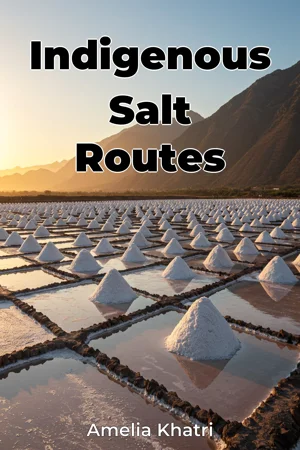
Imagine a world where salt, not gold, fueled empires and dictated the flow of power. ‘Indigenous Salt Routes’ unveils the intricate networks through which indigenous communities across the globe controlled the production, trade, and cultural significance of this essential commodity. This book explores the profound impact salt had on shaping societies, economies, and the very landscape of the ancient world. We will delve into three key areas: the methods of salt extraction employed by indigenous groups, the complex trade routes they established and maintained, and the cultural and spiritual importance of salt within their communities. Understanding these facets is crucial to re-evaluating the conventional narratives of global trade and recognizing the agency of indigenous peoples in shaping economic landscapes. This book builds upon a foundation of archaeological findings, ethnohistorical accounts, and linguistic analysis to reconstruct the forgotten histories of salt economies. Prior knowledge of basic economic principles and an awareness of different indigenous cultures is beneficial, but not essential, as necessary background will be provided within the text. ‘Indigenous Salt Routes’ argues that the control and distribution of salt was a primary driver of social and political organization in many indigenous societies, challenging Eurocentric perspectives that often overlook the economic sophistication and influence of these communities. Recognizing this influence is crucial for a more accurate and comprehensive understanding of global economic history. The book is organized into three main sections. The first section introduces the diverse methods by which indigenous groups extracted salt from various sources, including seawater, salt springs, and mineral deposits. The second section examines the trade routes that crisscrossed continents, focusing on the logistical challenges and the political agreements that facilitated the movement of salt. The third section explores the rituals, beliefs, and social structures associated with salt production and consumption, revealing its central role in indigenous cultures. The book culminates with a discussion of the legacy of these salt routes and their relevance to contemporary issues of indigenous rights and resource management. The evidence presented in this book draws from a wide range of sources, including archaeological excavations of salt production sites, historical documents detailing trade transactions, and ethnographic studies of contemporary salt-producing communities. New data from recent archaeological digs is incorporated, as are oral histories gathered from indigenous communities, offering a unique perspective on these historical trade networks. The study of indigenous salt routes connects to several other fields, including anthropology, archaeology, and economic history. By examining the cultural significance of salt, we gain insights into indigenous belief systems and social structures. Archaeological evidence provides tangible proof of salt production and trade, while economic history helps us understand the broader economic impact of these activities. These interdisciplinary connections enrich our understanding of the complexities of indigenous societies. ‘Indigenous Salt Routes’ distinguishes itself by focusing on the indigenous perspective, offering a counter-narrative to traditional accounts that often prioritize European exploration and trade. It employs a multidisciplinary approach, integrating archaeological, historical, and ethnographic data to provide a holistic picture of indigenous salt economies. The writing style is academic yet accessible, aiming to engage both scholars and general readers interested in history, anthropology, and indigenous cultures. The book is aimed at students, researchers, and anyone interested in learning about rarely discussed aspects of indigenous economic and cultural history. It avoids jargon and explains technical terms clearly, ensuring that the information is accessible to a broad audience. The book adheres to the conventions of academic history, including rigorous sourcing, detailed analysis, and a balanced presentation of evidence. The scope of the book is global, encompassing indigenous salt routes from various regions of the world, including the Americas, Africa, and Asia. However, it is not exhaustive, and focuses on specific case studies that exemplify the diverse methods and cultural significance of indigenous salt production and trade. The information presented in this book can be applied to contemporary issues of indigenous rights and resource management, providing a historical context for understanding current conflicts over land and resources. It highlights the ingenuity and resilience of indigenous communities in the face of historical challenges, offering valuable lessons for sustainable development and cultural preservation. While the importance of salt in ancient economies is generally acknowledged, the specific role of indigenous communities in controlling and shaping these economies is often debated. This book addresses these debates by presenting new evidence and offering a nuanced interpretation of existing historical accounts.
Imagine a world where salt, not gold, fueled empires and dictated the flow of power. ‘Indigenous Salt Routes’ unveils the intricate networks through which indigenous communities across the globe controlled the production, trade, and cultural significance of this essential commodity. This book explores the profound impact salt had on shaping societies, economies, and the very landscape of the ancient world. We will delve into three key areas: the methods of salt extraction employed by indigenous groups, the complex trade routes they established and maintained, and the cultural and spiritual importance of salt within their communities. Understanding these facets is crucial to re-evaluating the conventional narratives of global trade and recognizing the agency of indigenous peoples in shaping economic landscapes. This book builds upon a foundation of archaeological findings, ethnohistorical accounts, and linguistic analysis to reconstruct the forgotten histories of salt economies. Prior knowledge of basic economic principles and an awareness of different indigenous cultures is beneficial, but not essential, as necessary background will be provided within the text. ‘Indigenous Salt Routes’ argues that the control and distribution of salt was a primary driver of social and political organization in many indigenous societies, challenging Eurocentric perspectives that often overlook the economic sophistication and influence of these communities. Recognizing this influence is crucial for a more accurate and comprehensive understanding of global economic history. The book is organized into three main sections. The first section introduces the diverse methods by which indigenous groups extracted salt from various sources, including seawater, salt springs, and mineral deposits. The second section examines the trade routes that crisscrossed continents, focusing on the logistical challenges and the political agreements that facilitated the movement of salt. The third section explores the rituals, beliefs, and social structures associated with salt production and consumption, revealing its central role in indigenous cultures. The book culminates with a discussion of the legacy of these salt routes and their relevance to contemporary issues of indigenous rights and resource management. The evidence presented in this book draws from a wide range of sources, including archaeological excavations of salt production sites, historical documents detailing trade transactions, and ethnographic studies of contemporary salt-producing communities. New data from recent archaeological digs is incorporated, as are oral histories gathered from indigenous communities, offering a unique perspective on these historical trade networks. The study of indigenous salt routes connects to several other fields, including anthropology, archaeology, and economic history. By examining the cultural significance of salt, we gain insights into indigenous belief systems and social structures. Archaeological evidence provides tangible proof of salt production and trade, while economic history helps us understand the broader economic impact of these activities. These interdisciplinary connections enrich our understanding of the complexities of indigenous societies. ‘Indigenous Salt Routes’ distinguishes itself by focusing on the indigenous perspective, offering a counter-narrative to traditional accounts that often prioritize European exploration and trade. It employs a multidisciplinary approach, integrating archaeological, historical, and ethnographic data to provide a holistic picture of indigenous salt economies. The writing style is academic yet accessible, aiming to engage both scholars and general readers interested in history, anthropology, and indigenous cultures. The book is aimed at students, researchers, and anyone interested in learning about rarely discussed aspects of indigenous economic and cultural history. It avoids jargon and explains technical terms clearly, ensuring that the information is accessible to a broad audience. The book adheres to the conventions of academic history, including rigorous sourcing, detailed analysis, and a balanced presentation of evidence. The scope of the book is global, encompassing indigenous salt routes from various regions of the world, including the Americas, Africa, and Asia. However, it is not exhaustive, and focuses on specific case studies that exemplify the diverse methods and cultural significance of indigenous salt production and trade. The information presented in this book can be applied to contemporary issues of indigenous rights and resource management, providing a historical context for understanding current conflicts over land and resources. It highlights the ingenuity and resilience of indigenous communities in the face of historical challenges, offering valuable lessons for sustainable development and cultural preservation. While the importance of salt in ancient economies is generally acknowledged, the specific role of indigenous communities in controlling and shaping these economies is often debated. This book addresses these debates by presenting new evidence and offering a nuanced interpretation of existing historical accounts.
"Indigenous Salt Routes" reveals the untold stories of how indigenous communities worldwide managed salt, a commodity as valuable as gold. The book uncovers intricate networks of salt production, trade, and cultural practices, challenging conventional views of global economic history. It emphasizes that control over salt was a significant driver of social and political structures in many indigenous societies, highlighting their economic sophistication often overlooked in Eurocentric narratives. Did you know some communities extracted salt from seawater, salt springs, and mineral deposits, showcasing remarkable resourcefulness? This book takes an interdisciplinary approach, using archaeological findings, ethnohistorical accounts, and linguistic analysis to reconstruct these forgotten histories. Organized into three sections, the book progresses by first introducing diverse salt extraction methods, then examining trade routes, and finally delving into the cultural and spiritual significance of salt. It explores the logistical challenges and political agreements that facilitated salt movement, and reveals rituals, beliefs and social structures tied to salt production. The book concludes by discussing the legacy of these routes and their relevance to contemporary issues of indigenous rights and resource management.
Book Details
ISBN
9788235237910
Publisher
Publifye AS
Your Licenses
You don't own any licenses for this book
Purchase a license below to unlock this book and download the EPUB.
Purchase License
Select a tier to unlock this book
Need bulk licensing?
Contact us for enterprise agreements.