
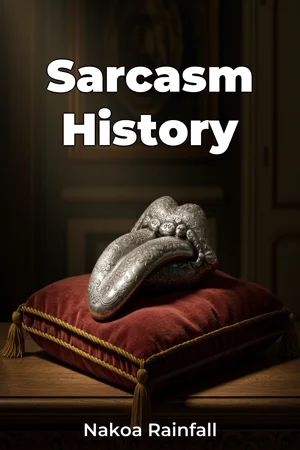
About This Book
Why do some people find a cutting remark hilarious, while others find it deeply offensive? "Sarcasm History" delves into this complex question, exploring the multifaceted role of sarcasm throughout human history as it manifests in literature, politics, and everyday speech, explaining the cultural factors that determine its acceptance or rejection. This book is crucial because understanding sarcasm allows us to better interpret communication, navigate social interactions, and appreciate the nuances of cultural expression. This exploration begins by establishing a foundational understanding of sarcasm, differentiating it from related concepts like irony, satire, and cynicism. We will trace its etymological roots and its early appearances in ancient texts, illustrating how its function and perception have evolved over time. This historical context provides a framework for understanding its modern usage. The book is structured in three major parts. Part one examines sarcasm's presence in literature, from the biting wit of Shakespearean characters to the subtle barbs found in modern novels. By analyzing literary examples, we uncover how authors use sarcasm to develop characters, critique society, and engage readers. Part two dissects the use of sarcasm in the political arena. From ancient Roman orators to contemporary political commentators, sarcasm has been employed as a tool for persuasion, ridicule, and dissent. We analyze its effectiveness in shaping public opinion and influencing political discourse, while also addressing its potential for manipulation and polarization. Part three examines the everyday use of sarcasm in various cultures, exploring how cultural norms shape its interpretation and acceptance. Through cross-cultural comparisons, we shed light on why some societies embrace sarcasm as a form of humor and social bonding, while others view it as rude or offensive. The arguments presented are supported by a wealth of evidence drawn from literary analysis, historical documents, linguistic studies, and sociological research. The analysis features diverse sources, including classic literature, political speeches, interviews with cultural experts, and surveys on the perception of sarcasm across different demographics. "Sarcasm History" also connects to diverse fields such as psychology, sociology, and communications. Psychology provides insights into the cognitive processes involved in understanding sarcasm. Sociology helps explain the social dynamics that influence its use and interpretation. Communications theory offers frameworks for analyzing its effectiveness as a rhetorical device. This book offers a unique perspective by combining historical analysis, cultural comparisons, and linguistic theory to provide a comprehensive understanding of sarcasm. It stands out by exploring not only its function but also its cultural relativity, challenging the assumption that sarcasm is universally understood or appreciated. Written in an accessible and engaging style, "Sarcasm History" aims to appeal to a broad audience, including students of literature, history, linguistics, and anyone interested in understanding the complexities of human communication as well as the general reader. The book acknowledges that, given the vast history and global presence of sarcasm, a fully exhaustive study is impossible. The focus remains on providing a representative overview of its evolution and cultural significance. The insights offered in this book have practical applications in fields such as intercultural communication, conflict resolution, and media literacy. By understanding the nuances of sarcasm, we can improve our ability to communicate effectively across cultures, navigate difficult conversations, and critically evaluate the messages we receive. Finally, "Sarcasm History" addresses the ongoing debates surrounding the use of sarcasm. Is it a sign of intelligence or a form of aggression? Can it be used constructively, or is it inherently negative? The book does not offer definitive answers but rather provides a framework for understanding these debates and forming informed opinions.
Why do some people find a cutting remark hilarious, while others find it deeply offensive? "Sarcasm History" delves into this complex question, exploring the multifaceted role of sarcasm throughout human history as it manifests in literature, politics, and everyday speech, explaining the cultural factors that determine its acceptance or rejection. This book is crucial because understanding sarcasm allows us to better interpret communication, navigate social interactions, and appreciate the nuances of cultural expression. This exploration begins by establishing a foundational understanding of sarcasm, differentiating it from related concepts like irony, satire, and cynicism. We will trace its etymological roots and its early appearances in ancient texts, illustrating how its function and perception have evolved over time. This historical context provides a framework for understanding its modern usage. The book is structured in three major parts. Part one examines sarcasm's presence in literature, from the biting wit of Shakespearean characters to the subtle barbs found in modern novels. By analyzing literary examples, we uncover how authors use sarcasm to develop characters, critique society, and engage readers. Part two dissects the use of sarcasm in the political arena. From ancient Roman orators to contemporary political commentators, sarcasm has been employed as a tool for persuasion, ridicule, and dissent. We analyze its effectiveness in shaping public opinion and influencing political discourse, while also addressing its potential for manipulation and polarization. Part three examines the everyday use of sarcasm in various cultures, exploring how cultural norms shape its interpretation and acceptance. Through cross-cultural comparisons, we shed light on why some societies embrace sarcasm as a form of humor and social bonding, while others view it as rude or offensive. The arguments presented are supported by a wealth of evidence drawn from literary analysis, historical documents, linguistic studies, and sociological research. The analysis features diverse sources, including classic literature, political speeches, interviews with cultural experts, and surveys on the perception of sarcasm across different demographics. "Sarcasm History" also connects to diverse fields such as psychology, sociology, and communications. Psychology provides insights into the cognitive processes involved in understanding sarcasm. Sociology helps explain the social dynamics that influence its use and interpretation. Communications theory offers frameworks for analyzing its effectiveness as a rhetorical device. This book offers a unique perspective by combining historical analysis, cultural comparisons, and linguistic theory to provide a comprehensive understanding of sarcasm. It stands out by exploring not only its function but also its cultural relativity, challenging the assumption that sarcasm is universally understood or appreciated. Written in an accessible and engaging style, "Sarcasm History" aims to appeal to a broad audience, including students of literature, history, linguistics, and anyone interested in understanding the complexities of human communication as well as the general reader. The book acknowledges that, given the vast history and global presence of sarcasm, a fully exhaustive study is impossible. The focus remains on providing a representative overview of its evolution and cultural significance. The insights offered in this book have practical applications in fields such as intercultural communication, conflict resolution, and media literacy. By understanding the nuances of sarcasm, we can improve our ability to communicate effectively across cultures, navigate difficult conversations, and critically evaluate the messages we receive. Finally, "Sarcasm History" addresses the ongoing debates surrounding the use of sarcasm. Is it a sign of intelligence or a form of aggression? Can it be used constructively, or is it inherently negative? The book does not offer definitive answers but rather provides a framework for understanding these debates and forming informed opinions.
"Sarcasm History" explores sarcasm's intricate role throughout history, examining how its perception and use vary across cultures and contexts. The book analyzes sarcasm as a powerful tool in literature, politics, and everyday interactions, illustrating how it can both unite and divide. It traces sarcasm from ancient texts to modern media, revealing how its function has evolved, with some cultures embracing it as humor while others deem it offensive. Beginning with sarcasm's etymological roots, the book progresses through literature, political discourse, and social interactions. Literary analysis reveals how authors employ sarcasm to critique society and develop characters. In politics, sarcasm serves as a tool for persuasion and dissent, as seen in the rhetoric of ancient Roman orators and contemporary political commentators. The book highlights that effective intercultural communication hinges on understanding sarcasm's nuances, as misinterpretations can lead to conflict. By examining diverse sources from literature to sociological research, "Sarcasm History" connects to psychology, sociology, and communications. It addresses ongoing debates about whether sarcasm indicates intelligence or aggression, offering a framework for understanding its complex nature. Ultimately, the book provides a comprehensive overview of sarcasm's evolution and cultural significance, emphasizing its multifaceted role in human communication and cultural expression.
Book Details
ISBN
9788235237835
Publisher
Publifye AS
Your Licenses
You don't own any licenses for this book
Purchase a license below to unlock this book and download the EPUB.
Purchase License
Select a tier to unlock this book
Need bulk licensing?
Contact us for enterprise agreements.