
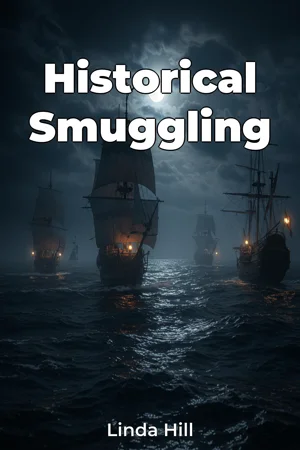
About This Book
How have clandestine networks shaped the course of global history far more profoundly than generally acknowledged? "Historical Smuggling" delves into the intricate world of illicit trade, revealing its pervasive influence on economies and international relations, particularly during times of conflict. This book examines how smuggling, often perceived as a marginal activity, has consistently served as a critical catalyst for economic development, political upheaval, and even warfare. This book will address three main areas: the economic drivers of smuggling, the formation and operation of smuggling networks, and the geopolitical consequences of illicit trade. By studying these areas, we gain a deeper appreciation for how criminal enterprises have consistently reshaped global events. These topics are vital because understanding smuggling provides a more nuanced perspective on the dynamics of trade, power, and conflict, offering insights often overlooked in conventional historical narratives. The historical context spans centuries, from ancient trade routes to the modern era, examining various types of smuggled goods from precious metals and drugs to advanced weaponry and cultural artifacts. No specialized prior knowledge is required; the book provides necessary background information regarding economic systems, international relations and regulatory frameworks. The central argument of "Historical Smuggling" is that smuggling is not merely a shadow economy but rather a deeply embedded feature of global commerce and geopolitics. The book contends that understanding the historical patterns and impacts of smuggling is crucial for interpreting significant events and making informed decisions about contemporary international issues. The structure of the book begins by defining key terms and concepts, setting the stage by outlining the economic incentives and historical conditions that foster smuggling. The following chapters investigate specific case studies of smuggling networks across different regions and eras, analyzing their organizational structures, operational methods, and interactions with governments and other institutions. The concluding section synthesizes the findings to offer a broader theoretical framework. Practical implications for policymakers and law enforcement agencies, providing strategies for countering illicit trade and mitigating its adverse effects will also be discussed. Evidence presented includes archival documents, trade statistics, court records, and firsthand accounts from smugglers, law enforcement officials, and individuals affected by illicit trade. Data sources include customs reports, intelligence dossiers, and academic studies across multiple disciplines. "Historical Smuggling" connects to fields such as economics, political science, and criminology by examining the economic motivations, political implications, and criminal behaviors associated with smuggling. These interdisciplinary connections enhance the book's argument, providing a more holistic understanding of smuggling as a complex phenomenon. This book stands out by offering a comprehensive, comparative analysis of smuggling across different historical periods and geographic regions. The tone and writing style are academic yet accessible to a broad audience. It aims to provide a balanced and objective assessment of smuggling, avoiding sensationalism and focusing on rigorous analysis and evidence-based conclusions. The intended audience includes students, researchers, policymakers, and anyone interested in international history, economics, or criminology. The book offers valuable insights for those seeking a deeper understanding of the hidden forces that shape our world. As a work of history, "Historical Smuggling" adheres to the conventions of rigorous scholarship, including thorough documentation, critical analysis of sources, and clear presentation of evidence. The scope of the book is global, encompassing diverse regions and historical eras. It does not, however, delve into every single instance of smuggling ever recorded; instead, it focuses on representative case studies. Practically, the information in this book can be applied to inform policy decisions related to trade regulation, border security, and international cooperation. It also serves as a valuable resource for researchers seeking to investigate specific aspects of smuggling in greater depth. The book addresses controversies surrounding the morality and effectiveness of different approaches to combating smuggling. It engages with ongoing debates about the role of governments, international organizations, and private actors in addressing illicit trade. "Historical Smuggling" looks to provide a balanced and nuanced perspective on these contested issues.
How have clandestine networks shaped the course of global history far more profoundly than generally acknowledged? "Historical Smuggling" delves into the intricate world of illicit trade, revealing its pervasive influence on economies and international relations, particularly during times of conflict. This book examines how smuggling, often perceived as a marginal activity, has consistently served as a critical catalyst for economic development, political upheaval, and even warfare. This book will address three main areas: the economic drivers of smuggling, the formation and operation of smuggling networks, and the geopolitical consequences of illicit trade. By studying these areas, we gain a deeper appreciation for how criminal enterprises have consistently reshaped global events. These topics are vital because understanding smuggling provides a more nuanced perspective on the dynamics of trade, power, and conflict, offering insights often overlooked in conventional historical narratives. The historical context spans centuries, from ancient trade routes to the modern era, examining various types of smuggled goods from precious metals and drugs to advanced weaponry and cultural artifacts. No specialized prior knowledge is required; the book provides necessary background information regarding economic systems, international relations and regulatory frameworks. The central argument of "Historical Smuggling" is that smuggling is not merely a shadow economy but rather a deeply embedded feature of global commerce and geopolitics. The book contends that understanding the historical patterns and impacts of smuggling is crucial for interpreting significant events and making informed decisions about contemporary international issues. The structure of the book begins by defining key terms and concepts, setting the stage by outlining the economic incentives and historical conditions that foster smuggling. The following chapters investigate specific case studies of smuggling networks across different regions and eras, analyzing their organizational structures, operational methods, and interactions with governments and other institutions. The concluding section synthesizes the findings to offer a broader theoretical framework. Practical implications for policymakers and law enforcement agencies, providing strategies for countering illicit trade and mitigating its adverse effects will also be discussed. Evidence presented includes archival documents, trade statistics, court records, and firsthand accounts from smugglers, law enforcement officials, and individuals affected by illicit trade. Data sources include customs reports, intelligence dossiers, and academic studies across multiple disciplines. "Historical Smuggling" connects to fields such as economics, political science, and criminology by examining the economic motivations, political implications, and criminal behaviors associated with smuggling. These interdisciplinary connections enhance the book's argument, providing a more holistic understanding of smuggling as a complex phenomenon. This book stands out by offering a comprehensive, comparative analysis of smuggling across different historical periods and geographic regions. The tone and writing style are academic yet accessible to a broad audience. It aims to provide a balanced and objective assessment of smuggling, avoiding sensationalism and focusing on rigorous analysis and evidence-based conclusions. The intended audience includes students, researchers, policymakers, and anyone interested in international history, economics, or criminology. The book offers valuable insights for those seeking a deeper understanding of the hidden forces that shape our world. As a work of history, "Historical Smuggling" adheres to the conventions of rigorous scholarship, including thorough documentation, critical analysis of sources, and clear presentation of evidence. The scope of the book is global, encompassing diverse regions and historical eras. It does not, however, delve into every single instance of smuggling ever recorded; instead, it focuses on representative case studies. Practically, the information in this book can be applied to inform policy decisions related to trade regulation, border security, and international cooperation. It also serves as a valuable resource for researchers seeking to investigate specific aspects of smuggling in greater depth. The book addresses controversies surrounding the morality and effectiveness of different approaches to combating smuggling. It engages with ongoing debates about the role of governments, international organizations, and private actors in addressing illicit trade. "Historical Smuggling" looks to provide a balanced and nuanced perspective on these contested issues.
"Historical Smuggling" explores the pervasive influence of illicit trade, arguing it's not a marginal activity but a deeply embedded feature of global commerce and geopolitics. The book reveals how clandestine networks have profoundly shaped global history, particularly during conflicts, often acting as a catalyst for economic development, political upheaval, and warfare. For instance, the smuggling of precious metals in ancient times could destabilize empires, while modern arms smuggling fuels ongoing conflicts. The book progresses by first defining key terms and historical conditions that foster smuggling. It then investigates case studies of smuggling networks across different regions and eras, analyzing their structures, methods, and interactions with governments. The book addresses economic drivers, the formation and operation of smuggling networks, and the geopolitical consequences of illicit trade. Understanding these smuggling networks is crucial for interpreting events and informing decisions about contemporary international issues. Unique in its comprehensive, comparative analysis across different periods and regions, "Historical Smuggling" connects economics, political science, and criminology to provide a holistic understanding. It examines evidence from archival documents, trade statistics, and firsthand accounts, offering strategies for countering illicit trade. The book offers insights into trade regulation, border security, and international relations.
Book Details
ISBN
9788235237798
Publisher
Publifye AS
Your Licenses
You don't own any licenses for this book
Purchase a license below to unlock this book and download the EPUB.
Purchase License
Select a tier to unlock this book
Need bulk licensing?
Contact us for enterprise agreements.