
About This Book
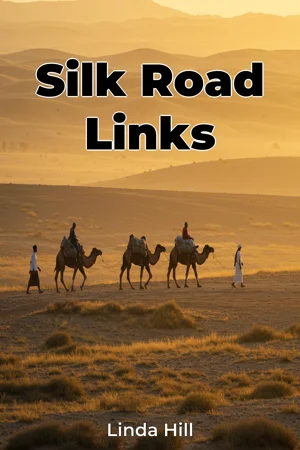
Imagine a network of pathways stretching thousands of miles, not just connecting cities, but entire civilizations. "Silk Road Links" unveils this intricate web, exploring how the Silk Road served as a vital artery between the Middle East, Asia, and Europe, facilitating an exchange of trade, culture, and groundbreaking technologies that irrevocably shaped the world. This book delves into three core themes: the economic engine of the Silk Road, the cultural diffusion it enabled, and the technological advancements it propagated. These themes are crucial because they highlight how interconnectedness fostered progress and transformation across diverse societies. Understanding the Silk Road's impact offers valuable insights into the dynamics of globalization and intercultural exchange that continue to define our world. To fully appreciate the Silk Road's significance, a basic understanding of ancient and medieval Eurasian history is helpful. This includes familiarity with empires like the Roman Empire, the Persian Empires, the Han Dynasty, and the later Mongol Empire, as well as knowledge of major religions like Buddhism, Christianity, and Islam, which all traversed the Silk Road. "Silk Road Links" argues that the Silk Road wasn't merely a trade route, but a catalyst for societal evolution, fostering innovation and shaping the geopolitical landscape of Eurasia. This argument is important because it challenges the traditional view of isolated civilizations and emphasizes the profound impact of cross-cultural interaction on historical development. The book unfolds in a structured manner. First, it introduces the origins and establishment of the Silk Road, detailing its geographical expanse and the key players involved. Second, it explores the economic impact of the Silk Road, analyzing the commodities traded (silk, spices, precious metals) and the economic systems that developed along its routes. Third, the book examines the cultural exchange, showcasing the spread of religions, artistic styles, and philosophical ideas. Fourth, it investigates the technological transfer, highlighting advancements in areas like mathematics, astronomy, and medicine that were disseminated through the Silk Road. Finally, the book culminates by considering the Silk Road's decline and its legacy in the modern world. The arguments presented are supported by a wide range of historical sources, including archaeological findings, primary accounts from travelers and merchants, and scholarly analyses of trade patterns and cultural artifacts. The book also draws upon recent research in fields like genetics and linguistics to provide novel perspectives on the movement of people and ideas along the Silk Road. "Silk Road Links" connects to several other fields of study. Firstly, it intersects with economics by examining trade networks and their impact on regional development. Secondly, it relates to anthropology and sociology by exploring cultural exchange and the formation of hybrid identities. Thirdly, it connects to political science by analyzing the role of empires and states in controlling and facilitating trade. A unique aspect of this book is its focus on the interconnectedness of these different aspects. It moves beyond simply describing the goods traded or the religions spread, and explores how these different aspects influenced each other. The book adopts a factual yet engaging tone, aiming to present complex information in an accessible manner for a broad audience. The target audience includes students of history, enthusiasts of world cultures, and anyone interested in understanding the roots of globalization. "Silk Road Links" offers a comprehensive and insightful overview of a pivotal period in human history. As a work of history, "Silk Road Links" adheres to standards of accuracy and objectivity. It presents a balanced perspective, acknowledging the complexities and nuances of historical interpretation. The scope of the book is limited to the Silk Road's impact on Eurasia, focusing primarily on the period from the 2nd century BCE to the 15th century CE. It acknowledges the existence of other trade routes, but does not delve into them in detail. The insights gained from "Silk Road Links" have practical applications in understanding contemporary issues such as international trade, cultural diplomacy, and the challenges of globalization. By examining the successes and failures of the Silk Road, we can learn valuable lessons about building bridges between different cultures and fostering mutually beneficial exchange. While the Silk Road is often romanticized, "Silk Road Links" also addresses the controversies and debates surrounding its legacy, including the potential for exploitation and the spread of disease. By acknowledging these complexities, the book offers a more nuanced and realistic portrayal of this important historical phenomenon.
Imagine a network of pathways stretching thousands of miles, not just connecting cities, but entire civilizations. "Silk Road Links" unveils this intricate web, exploring how the Silk Road served as a vital artery between the Middle East, Asia, and Europe, facilitating an exchange of trade, culture, and groundbreaking technologies that irrevocably shaped the world. This book delves into three core themes: the economic engine of the Silk Road, the cultural diffusion it enabled, and the technological advancements it propagated. These themes are crucial because they highlight how interconnectedness fostered progress and transformation across diverse societies. Understanding the Silk Road's impact offers valuable insights into the dynamics of globalization and intercultural exchange that continue to define our world. To fully appreciate the Silk Road's significance, a basic understanding of ancient and medieval Eurasian history is helpful. This includes familiarity with empires like the Roman Empire, the Persian Empires, the Han Dynasty, and the later Mongol Empire, as well as knowledge of major religions like Buddhism, Christianity, and Islam, which all traversed the Silk Road. "Silk Road Links" argues that the Silk Road wasn't merely a trade route, but a catalyst for societal evolution, fostering innovation and shaping the geopolitical landscape of Eurasia. This argument is important because it challenges the traditional view of isolated civilizations and emphasizes the profound impact of cross-cultural interaction on historical development. The book unfolds in a structured manner. First, it introduces the origins and establishment of the Silk Road, detailing its geographical expanse and the key players involved. Second, it explores the economic impact of the Silk Road, analyzing the commodities traded (silk, spices, precious metals) and the economic systems that developed along its routes. Third, the book examines the cultural exchange, showcasing the spread of religions, artistic styles, and philosophical ideas. Fourth, it investigates the technological transfer, highlighting advancements in areas like mathematics, astronomy, and medicine that were disseminated through the Silk Road. Finally, the book culminates by considering the Silk Road's decline and its legacy in the modern world. The arguments presented are supported by a wide range of historical sources, including archaeological findings, primary accounts from travelers and merchants, and scholarly analyses of trade patterns and cultural artifacts. The book also draws upon recent research in fields like genetics and linguistics to provide novel perspectives on the movement of people and ideas along the Silk Road. "Silk Road Links" connects to several other fields of study. Firstly, it intersects with economics by examining trade networks and their impact on regional development. Secondly, it relates to anthropology and sociology by exploring cultural exchange and the formation of hybrid identities. Thirdly, it connects to political science by analyzing the role of empires and states in controlling and facilitating trade. A unique aspect of this book is its focus on the interconnectedness of these different aspects. It moves beyond simply describing the goods traded or the religions spread, and explores how these different aspects influenced each other. The book adopts a factual yet engaging tone, aiming to present complex information in an accessible manner for a broad audience. The target audience includes students of history, enthusiasts of world cultures, and anyone interested in understanding the roots of globalization. "Silk Road Links" offers a comprehensive and insightful overview of a pivotal period in human history. As a work of history, "Silk Road Links" adheres to standards of accuracy and objectivity. It presents a balanced perspective, acknowledging the complexities and nuances of historical interpretation. The scope of the book is limited to the Silk Road's impact on Eurasia, focusing primarily on the period from the 2nd century BCE to the 15th century CE. It acknowledges the existence of other trade routes, but does not delve into them in detail. The insights gained from "Silk Road Links" have practical applications in understanding contemporary issues such as international trade, cultural diplomacy, and the challenges of globalization. By examining the successes and failures of the Silk Road, we can learn valuable lessons about building bridges between different cultures and fostering mutually beneficial exchange. While the Silk Road is often romanticized, "Silk Road Links" also addresses the controversies and debates surrounding its legacy, including the potential for exploitation and the spread of disease. By acknowledging these complexities, the book offers a more nuanced and realistic portrayal of this important historical phenomenon.
"Silk Road Links" explores the historical significance of the Silk Road, a vast network of trade routes that connected East and West, serving as a conduit for economic, cultural, and technological exchange across Eurasia. The book argues that the Silk Road was more than just a trade route; it was a catalyst for societal evolution, fostering innovation and shaping the geopolitical landscape. Readers will discover how the exchange of goods like silk and spices spurred economic development and how technological advancements in mathematics and medicine spread through intercultural exchange. The book examines the Silk Road's origins, economic impact, cultural diffusion, and technological transfer across chapters. It highlights how religions like Buddhism, Christianity, and Islam traversed these routes and influenced diverse societies. By understanding the Silk Road, readers gain insights into the dynamics of globalization and intercultural exchange that still resonate today. Finally, "Silk Road Links" acknowledges the Silk Road's complexities, including potential exploitation and the spread of disease, offering a nuanced view of this pivotal period in world history. The book progresses from the Silk Road's establishment to its decline, concluding with its lasting legacy, making it a valuable resource for understanding ancient and medieval history.
Book Details
ISBN
9788235237637
Publisher
Publifye AS
Your Licenses
You don't own any licenses for this book
Purchase a license below to unlock this book and download the EPUB.
Purchase License
Select a tier to unlock this book
Need bulk licensing?
Contact us for enterprise agreements.