
About This Book
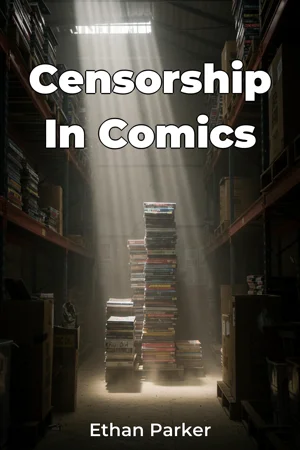
How did a wave of public outcry transform a burgeoning art form into a battleground for free expression and moral responsibility? "Censorship In Comics" delves into the tumultuous history of content regulation within the American comic book industry, exploring how external pressures and internal reforms reshaped the medium and its creative landscape. This book examines the critical period of the mid-20th century when concerns about juvenile delinquency led to intense scrutiny and the imposition of censorship, forever altering the trajectory of comics. The book focuses on three main topics. First, the societal anxieties surrounding youth and the perceived link between comic book content and delinquent behavior. Second, the formation, implementation, and impact of the Comics Code Authority (CCA), a self-regulatory body created to preempt government intervention. Third, the evolution of comic book narratives and artistic styles in response to these constraints, demonstrating both the limitations and the creative strategies employed by artists and writers. These topics are relevant because they reveal the complex interplay between art, commerce, social responsibility, and freedom of expression. Understanding this history is crucial for anyone interested in media studies, popular culture, or the history of censorship. The historical context is rooted in post-World War II America, a time of increasing consumerism, suburbanization, and anxieties about the moral development of children. Landmark events, such as the publication of Frederic Wertham’s "Seduction of the Innocent," fueled public panic and legislative action. The central argument of "Censorship In Comics" is that censorship, while intending to protect youth, ultimately reshaped the comic book industry in ways that both stifled creativity and inadvertently paved the way for the medium's later diversification and artistic maturity. This argument is critical because it challenges simplistic narratives of censorship as purely negative, highlighting its complex and often paradoxical effects. The book begins by introducing the cultural and political climate that fostered censorship movements. It then proceeds to analyze the key figures and events that led to the establishment of the CCA, including Senate subcommittee hearings and the role of publishers. Major points include: an examination of the CCA's specific content restrictions and their enforcement, an analysis of how different genres (e.g., crime, horror, superhero) were affected by the code, and case studies of individual artists and writers who navigated or challenged the censorship regime. The culmination of the argument demonstrates how the CCA, despite its limitations, contributed to the eventual decline of mainstream comics and the rise of independent publishers willing to tackle more controversial themes. The book also explores the legacy of the CCA and its continuing relevance in debates about media regulation and artistic freedom. The book's arguments are supported by a range of primary and secondary sources, including: archival documents from comic book publishers, transcripts of Senate hearings, original comic books from the period, and critical analyses from media scholars. Unique data includes internal memos and correspondence from the CCA, providing insights into the decision-making processes and internal debates within the organization. "Censorship In Comics" connects to several other fields, including: legal studies (examining First Amendment rights and freedom of expression), sociology (analyzing the construction of moral panics and the role of media in shaping social norms), and art history (exploring the impact of censorship on artistic styles and narrative conventions). These connections enrich the book's argument by providing a broader interdisciplinary framework for understanding the complexities of censorship. This book offers a unique perspective by examining the long-term consequences of censorship, demonstrating how initial restrictions inadvertently created opportunities for alternative forms of comic book production and distribution. The tone is analytical and objective, aiming to provide a balanced and nuanced account of a complex historical period. The target audience includes students and scholars of media studies, comic book enthusiasts, educators, and anyone interested in the history of censorship and its impact on popular culture. This book would be valuable to them because it provides a comprehensive and rigorously researched account of a pivotal moment in the history of American comics. In line with the conventions of historical non-fiction, the book emphasizes factual accuracy, detailed analysis, and clear argumentation. The scope is limited to the American comic book industry from the mid-1940s to the present, with a particular focus on the period between 1950 and 1970. This intentional limitation allows for a more in-depth exploration of the specific historical context and the effects of the CCA. The information in this book can be applied practically by readers interested in understanding contemporary debates about media regulation, artistic freedom, and the role of media in shaping social values. It offers valuable insights into the complexities of censorship and its unintended consequences. Finally, the book addresses ongoing debates about the effectiveness and ethical implications of content regulation, acknowledging the diverse perspectives on the role of censorship in protecting youth and promoting social responsibility.
How did a wave of public outcry transform a burgeoning art form into a battleground for free expression and moral responsibility? "Censorship In Comics" delves into the tumultuous history of content regulation within the American comic book industry, exploring how external pressures and internal reforms reshaped the medium and its creative landscape. This book examines the critical period of the mid-20th century when concerns about juvenile delinquency led to intense scrutiny and the imposition of censorship, forever altering the trajectory of comics. The book focuses on three main topics. First, the societal anxieties surrounding youth and the perceived link between comic book content and delinquent behavior. Second, the formation, implementation, and impact of the Comics Code Authority (CCA), a self-regulatory body created to preempt government intervention. Third, the evolution of comic book narratives and artistic styles in response to these constraints, demonstrating both the limitations and the creative strategies employed by artists and writers. These topics are relevant because they reveal the complex interplay between art, commerce, social responsibility, and freedom of expression. Understanding this history is crucial for anyone interested in media studies, popular culture, or the history of censorship. The historical context is rooted in post-World War II America, a time of increasing consumerism, suburbanization, and anxieties about the moral development of children. Landmark events, such as the publication of Frederic Wertham’s "Seduction of the Innocent," fueled public panic and legislative action. The central argument of "Censorship In Comics" is that censorship, while intending to protect youth, ultimately reshaped the comic book industry in ways that both stifled creativity and inadvertently paved the way for the medium's later diversification and artistic maturity. This argument is critical because it challenges simplistic narratives of censorship as purely negative, highlighting its complex and often paradoxical effects. The book begins by introducing the cultural and political climate that fostered censorship movements. It then proceeds to analyze the key figures and events that led to the establishment of the CCA, including Senate subcommittee hearings and the role of publishers. Major points include: an examination of the CCA's specific content restrictions and their enforcement, an analysis of how different genres (e.g., crime, horror, superhero) were affected by the code, and case studies of individual artists and writers who navigated or challenged the censorship regime. The culmination of the argument demonstrates how the CCA, despite its limitations, contributed to the eventual decline of mainstream comics and the rise of independent publishers willing to tackle more controversial themes. The book also explores the legacy of the CCA and its continuing relevance in debates about media regulation and artistic freedom. The book's arguments are supported by a range of primary and secondary sources, including: archival documents from comic book publishers, transcripts of Senate hearings, original comic books from the period, and critical analyses from media scholars. Unique data includes internal memos and correspondence from the CCA, providing insights into the decision-making processes and internal debates within the organization. "Censorship In Comics" connects to several other fields, including: legal studies (examining First Amendment rights and freedom of expression), sociology (analyzing the construction of moral panics and the role of media in shaping social norms), and art history (exploring the impact of censorship on artistic styles and narrative conventions). These connections enrich the book's argument by providing a broader interdisciplinary framework for understanding the complexities of censorship. This book offers a unique perspective by examining the long-term consequences of censorship, demonstrating how initial restrictions inadvertently created opportunities for alternative forms of comic book production and distribution. The tone is analytical and objective, aiming to provide a balanced and nuanced account of a complex historical period. The target audience includes students and scholars of media studies, comic book enthusiasts, educators, and anyone interested in the history of censorship and its impact on popular culture. This book would be valuable to them because it provides a comprehensive and rigorously researched account of a pivotal moment in the history of American comics. In line with the conventions of historical non-fiction, the book emphasizes factual accuracy, detailed analysis, and clear argumentation. The scope is limited to the American comic book industry from the mid-1940s to the present, with a particular focus on the period between 1950 and 1970. This intentional limitation allows for a more in-depth exploration of the specific historical context and the effects of the CCA. The information in this book can be applied practically by readers interested in understanding contemporary debates about media regulation, artistic freedom, and the role of media in shaping social values. It offers valuable insights into the complexities of censorship and its unintended consequences. Finally, the book addresses ongoing debates about the effectiveness and ethical implications of content regulation, acknowledging the diverse perspectives on the role of censorship in protecting youth and promoting social responsibility.
"Censorship In Comics" explores the intense scrutiny and content regulation that reshaped the American comic book industry in the mid-20th century. Fueled by societal anxieties linking comics to juvenile delinquency, this period saw the rise of the Comics Code Authority (CCA), a self-regulatory body intended to preempt government intervention. The book examines how this censorship impacted comic book narratives and artistic styles, revealing both the limitations imposed and the creative strategies employed by artists and writers. The book analyzes key events and figures leading to the CCA's establishment, including Senate subcommittee hearings and the role of publishers. The CCA's content restrictions had a profound effect; for example, crime and horror genres faced significant limitations. Despite its constraints, the book argues that the CCA inadvertently contributed to the diversification of the medium, paving the way for independent publishers willing to tackle controversial themes. Beginning with the cultural and political climate that fostered censorship, the book progresses to analyze the CCA’s formation, implementation, and impact. It concludes by exploring the legacy of the CCA and its relevance in debates about media regulation and artistic freedom, offering a balanced account of a pivotal moment in popular culture.
Book Details
ISBN
9788235237491
Publisher
Publifye AS
Your Licenses
You don't own any licenses for this book
Purchase a license below to unlock this book and download the EPUB.
Purchase License
Select a tier to unlock this book
Need bulk licensing?
Contact us for enterprise agreements.