
About This Book
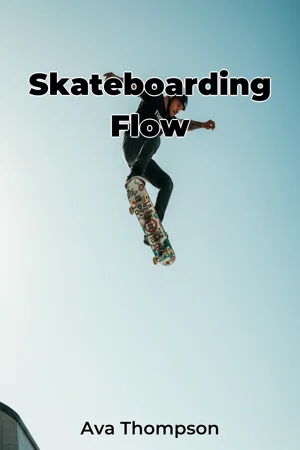
Have you ever wondered how skateboarders seemingly defy gravity, soaring through the air with grace and precision? "Skateboarding Flow" delves into the fascinating physics behind skateboarding tricks, revealing the intricate interplay of ramps, gravity, and momentum that allows skaters to achieve the seemingly impossible. This book primarily explores three core areas: ramp dynamics, gravitational forces, and the principle of momentum conservation as they manifest in skateboarding. Understanding these topics is crucial not only for appreciating the skill involved in the sport but also for gaining a deeper insight into fundamental physics principles. We'll examine how ramp design influences a skater's trajectory, how gravity acts as both a challenge and a tool, and how skaters harness momentum to execute complex maneuvers. Skateboarding, while appearing modern, has roots tracing back to the mid-20th century when surfers sought a similar thrill on land. Its evolution has been intertwined with technological advancements in board design and the construction of skateparks, leading to increasingly complex tricks and aerial maneuvers. A basic understanding of Newtonian mechanics will be helpful, but the book will build upon these concepts with concrete examples and visual aids. Our central argument is that skateboarding tricks, far from being random acts of athleticism, are carefully orchestrated applications of physics principles. By understanding these underlying mechanics, skaters can improve their performance, and observers can gain a greater appreciation for the sport’s intellectual and physical demands. The book unfolds in several stages. First, we introduce the fundamental concepts of ramps, gravity, and momentum, providing clear definitions and relatable examples. Then, we dedicate individual chapters to exploring each concept in detail, analyzing how they apply to specific skateboarding tricks such as ollies, grinds, and aerials. These chapters will include: a) The physics of ramp transitions and their impact on skater velocity and trajectory. b) How gravity is manipulated to generate lift and control rotation. c) Detailed explanations of angular momentum and its impact of spin tricks. The book culminates in a discussion of advanced techniques and the integration of multiple physics principles in complex routines. We conclude by exploring the practical implications for skatepark design and training methodologies, offering insights for both skaters and designers. Throughout "Skateboarding Flow," we will present evidence drawn from video analysis of professional skateboarding performances, biomechanical studies of skater movements, and physics-based simulations. This book connects to diverse fields, including sports science, engineering, and even art. An understanding of biomechanics helps explain how skaters can optimize their movements; engineering principles are crucial for designing effective skateparks; and an artistic perspective enriches our appreciation of the grace and style inherent in skateboarding. This book offers a unique perspective, bridging the gap between theoretical physics and the practical world of action sports. By deconstructing skateboarding tricks into their fundamental components, we provide a framework for understanding and appreciating the physics at play. The tone is both informative and accessible, aiming for a conversational yet authoritative style. Complex concepts are explained in clear, jargon-free language, making the book suitable for a wide audience. "Skateboarding Flow" is targeted towards skateboarders, physics enthusiasts, sports fans, and anyone curious about the science behind athletic feats. It's valuable for skaters seeking to improve their understanding of trick mechanics and for educators looking for engaging examples of applied physics. As a non-fiction book in the sports, physics, and science physics genres, it presents factual information supported by research and analysis, avoiding speculation. The scope is primarily focused on the physics of skateboarding, with limited discussion of the sociology or cultural aspects of the sport. The information presented in this book can be directly applied to improve skateboarding performance, optimize skatepark design, and enhance physics education. While the fundamental principles of physics are well-established, debates persist regarding the best training methodologies and skatepark designs for maximizing performance and safety. "Skateboarding Flow" contributes to these discussions by providing a scientific foundation for evaluating different approaches.
Have you ever wondered how skateboarders seemingly defy gravity, soaring through the air with grace and precision? "Skateboarding Flow" delves into the fascinating physics behind skateboarding tricks, revealing the intricate interplay of ramps, gravity, and momentum that allows skaters to achieve the seemingly impossible. This book primarily explores three core areas: ramp dynamics, gravitational forces, and the principle of momentum conservation as they manifest in skateboarding. Understanding these topics is crucial not only for appreciating the skill involved in the sport but also for gaining a deeper insight into fundamental physics principles. We'll examine how ramp design influences a skater's trajectory, how gravity acts as both a challenge and a tool, and how skaters harness momentum to execute complex maneuvers. Skateboarding, while appearing modern, has roots tracing back to the mid-20th century when surfers sought a similar thrill on land. Its evolution has been intertwined with technological advancements in board design and the construction of skateparks, leading to increasingly complex tricks and aerial maneuvers. A basic understanding of Newtonian mechanics will be helpful, but the book will build upon these concepts with concrete examples and visual aids. Our central argument is that skateboarding tricks, far from being random acts of athleticism, are carefully orchestrated applications of physics principles. By understanding these underlying mechanics, skaters can improve their performance, and observers can gain a greater appreciation for the sport’s intellectual and physical demands. The book unfolds in several stages. First, we introduce the fundamental concepts of ramps, gravity, and momentum, providing clear definitions and relatable examples. Then, we dedicate individual chapters to exploring each concept in detail, analyzing how they apply to specific skateboarding tricks such as ollies, grinds, and aerials. These chapters will include: a) The physics of ramp transitions and their impact on skater velocity and trajectory. b) How gravity is manipulated to generate lift and control rotation. c) Detailed explanations of angular momentum and its impact of spin tricks. The book culminates in a discussion of advanced techniques and the integration of multiple physics principles in complex routines. We conclude by exploring the practical implications for skatepark design and training methodologies, offering insights for both skaters and designers. Throughout "Skateboarding Flow," we will present evidence drawn from video analysis of professional skateboarding performances, biomechanical studies of skater movements, and physics-based simulations. This book connects to diverse fields, including sports science, engineering, and even art. An understanding of biomechanics helps explain how skaters can optimize their movements; engineering principles are crucial for designing effective skateparks; and an artistic perspective enriches our appreciation of the grace and style inherent in skateboarding. This book offers a unique perspective, bridging the gap between theoretical physics and the practical world of action sports. By deconstructing skateboarding tricks into their fundamental components, we provide a framework for understanding and appreciating the physics at play. The tone is both informative and accessible, aiming for a conversational yet authoritative style. Complex concepts are explained in clear, jargon-free language, making the book suitable for a wide audience. "Skateboarding Flow" is targeted towards skateboarders, physics enthusiasts, sports fans, and anyone curious about the science behind athletic feats. It's valuable for skaters seeking to improve their understanding of trick mechanics and for educators looking for engaging examples of applied physics. As a non-fiction book in the sports, physics, and science physics genres, it presents factual information supported by research and analysis, avoiding speculation. The scope is primarily focused on the physics of skateboarding, with limited discussion of the sociology or cultural aspects of the sport. The information presented in this book can be directly applied to improve skateboarding performance, optimize skatepark design, and enhance physics education. While the fundamental principles of physics are well-established, debates persist regarding the best training methodologies and skatepark designs for maximizing performance and safety. "Skateboarding Flow" contributes to these discussions by providing a scientific foundation for evaluating different approaches.
"Skateboarding Flow" explores the captivating physics that enables skateboarders to perform awe-inspiring tricks. It unveils how skaters harness ramps, gravity, and momentum to achieve seemingly impossible feats. Did you know that skateboarding has roots tracing back to surfers seeking a similar thrill on land? Or that understanding Newtonian mechanics can significantly improve a skater's performance? This book uniquely bridges theoretical physics and action sports, offering insights valuable to both skaters and physics enthusiasts. The book delves into ramp dynamics, gravitational forces, and momentum, demonstrating how these principles are applied in tricks like ollies, grinds, and aerials. Through video analysis, biomechanical studies, and physics-based simulations, the author presents evidence-based explanations. Each chapter builds upon the previous, starting with fundamental concepts and culminating in advanced techniques and practical applications for skatepark design and training. The book's approach is both informative and accessible, using clear language to demystify complex physics. It progresses from basic definitions to detailed analyses of specific skateboarding maneuvers, providing a framework for understanding and appreciating the science behind this dynamic sport. By examining the physics at play, "Skateboarding Flow" enhances our appreciation of skateboarding's intellectual and physical demands.
Book Details
ISBN
9788235237392
Publisher
Publifye AS
Your Licenses
You don't own any licenses for this book
Purchase a license below to unlock this book and download the EPUB.
Purchase License
Select a tier to unlock this book
Need bulk licensing?
Contact us for enterprise agreements.