
About This Book
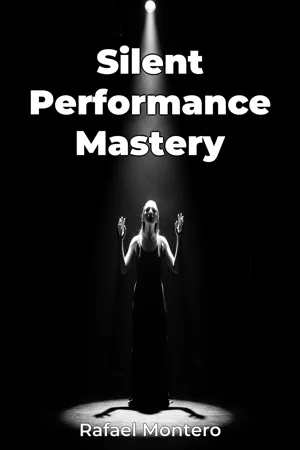
Can a performance truly captivate without uttering a single word? "Silent Performance Mastery" delves into the profound power of non-verbal communication in the performing arts, exploring how mime, physical theater, and expression-driven acting transcend spoken language to create compelling and deeply resonant experiences. This book is a comprehensive exploration of the techniques, history, and impact of silent performance, revealing its capacity to convey complex emotions, narratives, and social commentary. This book focuses on three core areas: the historical development of non-verbal performance traditions, the specific techniques utilized in various forms of silent expression, and the psychological and emotional impact these performances have on both the performer and the audience. Understanding these areas is crucial for appreciating the subtleties and complexities inherent in silent art forms. The significance lies in recognizing that effective communication extends far beyond words, and mastering non-verbal techniques opens up new avenues for artistic expression and audience engagement. Historically, silent performance has roots in ancient rituals, commedia dell'arte, and vaudeville. The book traces this evolution, highlighting key figures and movements that shaped the art form. Understanding this context provides a foundation for appreciating the modern applications of non-verbal techniques. Prior knowledge of basic theater history is helpful but not essential, as the book provides sufficient background on key movements and figures. The central argument of "Silent Performance Mastery" is that non-verbal performance is not merely the absence of speech, but a distinct and powerful language in its own right. This language, composed of gesture, facial expression, posture, and movement, can convey meaning with unparalleled precision and emotional depth. This argument is important because it challenges the conventional focus on dialogue in performance studies and emphasizes the untapped potential of physical expression. The book is structured to guide the reader through a logical progression. It begins by introducing fundamental concepts, such as the elements of mime, the principles of physical theater, and the use of emotional expression in acting. It then delves into specific techniques, including isolations, illusions, character development through physicality, and ensemble work. The book culminates in an exploration of the practical applications of these techniques in various performance contexts, such as stage productions, film, and even everyday communication. The arguments presented are supported by a combination of historical analysis, case studies of renowned performers and performances, and insights from psychology and communication theory. The book draws on primary source materials, such as performance scripts and training manuals, as well as secondary sources, including scholarly articles and critical reviews. Furthermore, it incorporates original observations and analyses based on the author's experience in the performing arts. "Silent Performance Mastery" intersects with several other fields, including psychology (specifically the study of emotional expression and non-verbal communication), cultural studies (examining the cultural contexts of different performance traditions), and movement studies (analyzing the biomechanics and aesthetics of physical expression). These interdisciplinary connections enrich the book's argument by providing diverse perspectives on the art of silent performance. This book offers a unique perspective by focusing on the practical application of non-verbal techniques across different performance genres. Instead of simply analyzing existing performances, it provides readers with the tools and knowledge to develop their own skills in silent expression. The book adopts a conversational and accessible tone, avoiding overly academic jargon while maintaining intellectual rigor. The target audience includes actors, dancers, theater students, directors, and anyone interested in improving their communication skills. The book is valuable to them because it provides a comprehensive guide to mastering the art of silent performance, offering practical techniques and insights that can be applied to a wide range of performance contexts. As a book on performing arts, it emphasizes practical exercises and real-world examples to allow readers to learn the art of silent performance. The book's scope is broad, covering various forms of non-verbal performance, but it deliberately focuses on techniques applicable to stage acting and closely related theatrical forms. It does not delve into the intricacies of purely visual art forms like painting or sculpture, although relevant connections are acknowledged. The information presented in "Silent Performance Mastery" can be applied practically by readers to enhance their acting skills, improve their stage presence, and develop more compelling and expressive performances. The techniques can also be used to improve communication skills in everyday life, fostering greater empathy and understanding. While the effectiveness of different non-verbal techniques is generally acknowledged, there are ongoing debates within the field regarding the relative importance of innate talent versus learned skill. This book acknowledges these debates and presents a balanced perspective, emphasizing the importance of both natural aptitude and dedicated training.
Can a performance truly captivate without uttering a single word? "Silent Performance Mastery" delves into the profound power of non-verbal communication in the performing arts, exploring how mime, physical theater, and expression-driven acting transcend spoken language to create compelling and deeply resonant experiences. This book is a comprehensive exploration of the techniques, history, and impact of silent performance, revealing its capacity to convey complex emotions, narratives, and social commentary. This book focuses on three core areas: the historical development of non-verbal performance traditions, the specific techniques utilized in various forms of silent expression, and the psychological and emotional impact these performances have on both the performer and the audience. Understanding these areas is crucial for appreciating the subtleties and complexities inherent in silent art forms. The significance lies in recognizing that effective communication extends far beyond words, and mastering non-verbal techniques opens up new avenues for artistic expression and audience engagement. Historically, silent performance has roots in ancient rituals, commedia dell'arte, and vaudeville. The book traces this evolution, highlighting key figures and movements that shaped the art form. Understanding this context provides a foundation for appreciating the modern applications of non-verbal techniques. Prior knowledge of basic theater history is helpful but not essential, as the book provides sufficient background on key movements and figures. The central argument of "Silent Performance Mastery" is that non-verbal performance is not merely the absence of speech, but a distinct and powerful language in its own right. This language, composed of gesture, facial expression, posture, and movement, can convey meaning with unparalleled precision and emotional depth. This argument is important because it challenges the conventional focus on dialogue in performance studies and emphasizes the untapped potential of physical expression. The book is structured to guide the reader through a logical progression. It begins by introducing fundamental concepts, such as the elements of mime, the principles of physical theater, and the use of emotional expression in acting. It then delves into specific techniques, including isolations, illusions, character development through physicality, and ensemble work. The book culminates in an exploration of the practical applications of these techniques in various performance contexts, such as stage productions, film, and even everyday communication. The arguments presented are supported by a combination of historical analysis, case studies of renowned performers and performances, and insights from psychology and communication theory. The book draws on primary source materials, such as performance scripts and training manuals, as well as secondary sources, including scholarly articles and critical reviews. Furthermore, it incorporates original observations and analyses based on the author's experience in the performing arts. "Silent Performance Mastery" intersects with several other fields, including psychology (specifically the study of emotional expression and non-verbal communication), cultural studies (examining the cultural contexts of different performance traditions), and movement studies (analyzing the biomechanics and aesthetics of physical expression). These interdisciplinary connections enrich the book's argument by providing diverse perspectives on the art of silent performance. This book offers a unique perspective by focusing on the practical application of non-verbal techniques across different performance genres. Instead of simply analyzing existing performances, it provides readers with the tools and knowledge to develop their own skills in silent expression. The book adopts a conversational and accessible tone, avoiding overly academic jargon while maintaining intellectual rigor. The target audience includes actors, dancers, theater students, directors, and anyone interested in improving their communication skills. The book is valuable to them because it provides a comprehensive guide to mastering the art of silent performance, offering practical techniques and insights that can be applied to a wide range of performance contexts. As a book on performing arts, it emphasizes practical exercises and real-world examples to allow readers to learn the art of silent performance. The book's scope is broad, covering various forms of non-verbal performance, but it deliberately focuses on techniques applicable to stage acting and closely related theatrical forms. It does not delve into the intricacies of purely visual art forms like painting or sculpture, although relevant connections are acknowledged. The information presented in "Silent Performance Mastery" can be applied practically by readers to enhance their acting skills, improve their stage presence, and develop more compelling and expressive performances. The techniques can also be used to improve communication skills in everyday life, fostering greater empathy and understanding. While the effectiveness of different non-verbal techniques is generally acknowledged, there are ongoing debates within the field regarding the relative importance of innate talent versus learned skill. This book acknowledges these debates and presents a balanced perspective, emphasizing the importance of both natural aptitude and dedicated training.
"Silent Performance Mastery" explores the captivating world of non-verbal communication in performing arts, revealing how gesture, facial expression, and movement can convey profound meaning. It examines the historical roots of silent performance, from ancient rituals to modern mime, while providing a deep dive into techniques for emotional expression and stage presence. The book uniquely emphasizes that non-verbal performance isn't merely the absence of speech, but a powerful language capable of conveying complex narratives. This exploration covers techniques like isolations and illusions, crucial for character development. It also delves into the psychological impact of silent performances on both performers and audiences. Did you know that mastering non-verbal cues can significantly enhance your communication skills, fostering greater empathy? Or that the art of mime can trace back to ancient theatrical traditions? The book progresses logically, starting with fundamental concepts and techniques before exploring practical applications in various performance contexts. Through historical analysis, case studies, and insights from psychology, "Silent Performance Mastery" offers a comprehensive guide for actors, dancers, and anyone seeking to unlock the power of silent performance and improve their communication skills.
Book Details
ISBN
9788235237323
Publisher
Publifye AS
Your Licenses
You don't own any licenses for this book
Purchase a license below to unlock this book and download the EPUB.
Purchase License
Select a tier to unlock this book
Need bulk licensing?
Contact us for enterprise agreements.