
About This Book
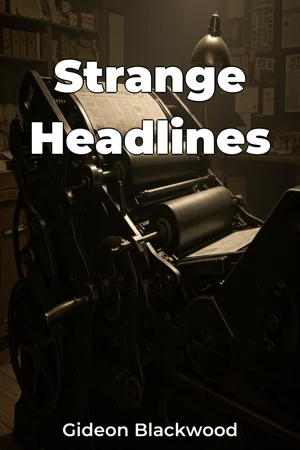
Have you ever chuckled at a newspaper headline, not because of the news it conveyed, but because of the unintended humor in its phrasing? "Strange Headlines" delves into the fascinating world of journalistic mishaps, where ambiguous wording, unfortunate juxtapositions, and editorial oversights result in headlines that are unintentionally hilarious. This book explores how language, a tool intended to inform, can sometimes inadvertently amuse, revealing the subtle complexities of communication. The core of this investigation rests on two pillars: the pervasive nature of linguistic ambiguity and the often-hurried process of news production. Ambiguity, inherent in language, allows for multiple interpretations of a single phrase or sentence. This, compounded by the fast-paced environment of journalism, where deadlines loom and editors are pressed for time, creates the perfect conditions for headline howlers. Understanding these foundational concepts provides insight into why such errors occur with surprising frequency. This is important because it highlights potential pitfalls in communication, even among professionals, and offers a valuable case study in the power and limitations of language. Journalism, as a field, relies on precision and clarity. However, the pressure to capture attention and convey information concisely often leads to compromises in wording. This book analyzes the interplay between these competing demands, demonstrating how the desire for brevity can inadvertently create ambiguity. We examine headlines from a diverse range of sources, spanning local news outlets to national publications, analyzing the linguistic structures that contribute to their unintended humor. Types of errors explored include misplaced modifiers, ambiguous pronouns, and unfortunate double entendres. "Strange Headlines" argues that these unintended comedic moments offer more than just a laugh; they provide valuable lessons in effective communication and critical reading. By examining where and why these errors occur, readers can improve their own writing and become more discerning consumers of news. The book is structured to first introduce the key concepts of linguistic ambiguity and the pressures of news production. It then proceeds with an analysis of specific categories of headline errors, supported by numerous real-world examples. These examples are classified by type of linguistic error. Finally, it explores the broader implications of these errors for journalism and communication. The evidence base for this book consists primarily of a curated collection of authentic newspaper headlines gathered from online archives, print media, and reader submissions. Each headline is presented alongside an analysis of the linguistic factors that contribute to its unintended humor. The approach is multidisciplinary, drawing insights from linguistics, journalism studies, and humor theory. The book also connects to broader fields of study. Firstly, journalism ethics and media literacy, by prompting readers to think critically about the information they consume. Secondly, linguistics, by serving as a real-world illustration of how language can be interpreted from multiple points of view. Thirdly, communications, by raising awareness about the importance of clear and concise expression. What sets this book apart is its unique focus on the unintentional humor found in real-world news headlines. It is not a theoretical treatise on linguistics, but rather an engaging exploration of how language quirks manifest in a highly visible and influential form of communication. The tone is conversational and accessible, aiming to inform and entertain readers. The target audience is broad, encompassing anyone interested in language, humor, journalism, or current events. It appeals to those who enjoy witty observations and appreciate the nuances of language. It’s particularly relevant to students of journalism and communication, as well as anyone who writes or edits professionally. As a work of current events and language arts, "Strange Headlines" presents information in a structured and factual manner, adhering to journalistic standards of accuracy and verification. The scope of the book is limited to the analysis of newspaper headlines, excluding other forms of linguistic humor or satirical writing. It does not delve into the political or social agendas of the news outlets from which the headlines are drawn, focusing instead on the linguistic aspects of the errors. The practical application of this book lies in its ability to improve readers' communication skills. By understanding the common pitfalls of headline writing, readers can learn to avoid similar errors in their own writing and communication. Furthermore, it encourages critical thinking and media literacy, enabling readers to approach news headlines with a discerning eye. While the book does not directly address controversies in the journalism industry, it implicitly touches upon the ongoing debate about the balance between accuracy and sensationalism in news reporting. Ultimately, "Strange Headlines" offers a lighthearted yet insightful exploration of the power and pitfalls of language in the news.
Have you ever chuckled at a newspaper headline, not because of the news it conveyed, but because of the unintended humor in its phrasing? "Strange Headlines" delves into the fascinating world of journalistic mishaps, where ambiguous wording, unfortunate juxtapositions, and editorial oversights result in headlines that are unintentionally hilarious. This book explores how language, a tool intended to inform, can sometimes inadvertently amuse, revealing the subtle complexities of communication. The core of this investigation rests on two pillars: the pervasive nature of linguistic ambiguity and the often-hurried process of news production. Ambiguity, inherent in language, allows for multiple interpretations of a single phrase or sentence. This, compounded by the fast-paced environment of journalism, where deadlines loom and editors are pressed for time, creates the perfect conditions for headline howlers. Understanding these foundational concepts provides insight into why such errors occur with surprising frequency. This is important because it highlights potential pitfalls in communication, even among professionals, and offers a valuable case study in the power and limitations of language. Journalism, as a field, relies on precision and clarity. However, the pressure to capture attention and convey information concisely often leads to compromises in wording. This book analyzes the interplay between these competing demands, demonstrating how the desire for brevity can inadvertently create ambiguity. We examine headlines from a diverse range of sources, spanning local news outlets to national publications, analyzing the linguistic structures that contribute to their unintended humor. Types of errors explored include misplaced modifiers, ambiguous pronouns, and unfortunate double entendres. "Strange Headlines" argues that these unintended comedic moments offer more than just a laugh; they provide valuable lessons in effective communication and critical reading. By examining where and why these errors occur, readers can improve their own writing and become more discerning consumers of news. The book is structured to first introduce the key concepts of linguistic ambiguity and the pressures of news production. It then proceeds with an analysis of specific categories of headline errors, supported by numerous real-world examples. These examples are classified by type of linguistic error. Finally, it explores the broader implications of these errors for journalism and communication. The evidence base for this book consists primarily of a curated collection of authentic newspaper headlines gathered from online archives, print media, and reader submissions. Each headline is presented alongside an analysis of the linguistic factors that contribute to its unintended humor. The approach is multidisciplinary, drawing insights from linguistics, journalism studies, and humor theory. The book also connects to broader fields of study. Firstly, journalism ethics and media literacy, by prompting readers to think critically about the information they consume. Secondly, linguistics, by serving as a real-world illustration of how language can be interpreted from multiple points of view. Thirdly, communications, by raising awareness about the importance of clear and concise expression. What sets this book apart is its unique focus on the unintentional humor found in real-world news headlines. It is not a theoretical treatise on linguistics, but rather an engaging exploration of how language quirks manifest in a highly visible and influential form of communication. The tone is conversational and accessible, aiming to inform and entertain readers. The target audience is broad, encompassing anyone interested in language, humor, journalism, or current events. It appeals to those who enjoy witty observations and appreciate the nuances of language. It’s particularly relevant to students of journalism and communication, as well as anyone who writes or edits professionally. As a work of current events and language arts, "Strange Headlines" presents information in a structured and factual manner, adhering to journalistic standards of accuracy and verification. The scope of the book is limited to the analysis of newspaper headlines, excluding other forms of linguistic humor or satirical writing. It does not delve into the political or social agendas of the news outlets from which the headlines are drawn, focusing instead on the linguistic aspects of the errors. The practical application of this book lies in its ability to improve readers' communication skills. By understanding the common pitfalls of headline writing, readers can learn to avoid similar errors in their own writing and communication. Furthermore, it encourages critical thinking and media literacy, enabling readers to approach news headlines with a discerning eye. While the book does not directly address controversies in the journalism industry, it implicitly touches upon the ongoing debate about the balance between accuracy and sensationalism in news reporting. Ultimately, "Strange Headlines" offers a lighthearted yet insightful exploration of the power and pitfalls of language in the news.
"Strange Headlines" explores the world of unintentionally humorous newspaper headlines, born from linguistic ambiguity and the pressures of quick news production. It examines how language errors, like misplaced modifiers or ambiguous pronouns, can transform serious news into comedic gold. For example, a poorly worded headline might inadvertently create a double entendre, offering a laugh where none was intended. The book argues that these errors are more than just funny; they're valuable lessons in effective communication. The book progresses by first introducing concepts of linguistic ambiguity and journalistic pressures. Then, it presents real-world examples categorized by error type, drawn from various news sources. This approach offers a unique perspective on how even professionals can fall victim to linguistic pitfalls, highlighting the power and limitations of language in a concise format. Ultimately, "Strange Headlines" aims to improve reader's communication skills and media literacy through the analysis of humorous journalistic mishaps.
Book Details
ISBN
9788235237262
Publisher
Publifye AS
Your Licenses
You don't own any licenses for this book
Purchase a license below to unlock this book and download the EPUB.
Purchase License
Select a tier to unlock this book
Need bulk licensing?
Contact us for enterprise agreements.