
About This Book
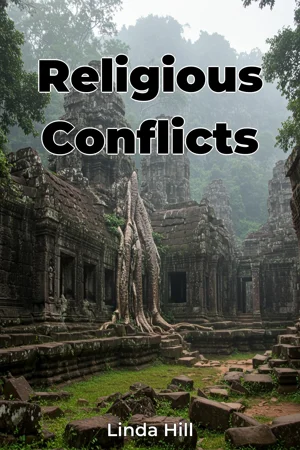
How have religious differences ignited some of history's most devastating conflicts, and how do these past struggles continue to shape our world? "Religious Conflicts" delves into the intricate relationship between faith, power, and societal development, examining how religious beliefs have been both a source of unity and a catalyst for division. This book focuses on three core themes: the root causes of religious conflicts, the instrumental role of political power in exacerbating or mitigating these conflicts, and the lasting impact of these historical events on the formation of modern societies. Understanding these themes is crucial, as religious tensions remain a significant factor in global politics and social dynamics. Without a grasp of the historical context, we risk misinterpreting current events and failing to address the underlying issues effectively. We begin by establishing the historical, social, and theological frameworks that provide the backdrop for understanding religious conflict. This includes examining the development of major world religions, the inherent potential for differing interpretations of doctrine, and the sociological factors that contribute to in-group/out-group dynamics. No prior specialized knowledge is required, as the book provides a comprehensive introduction to the key concepts. The central argument is that religious conflicts are rarely solely about theological differences. Instead, they are often intertwined with political, economic, and social power struggles. Religion provides a powerful framework for identity and mobilization, making it a convenient tool for those seeking to gain or maintain control. This argument is crucial because it challenges simplistic explanations of religious violence and encourages a more nuanced understanding of the complex forces at play. The book is structured to guide readers through a logical progression of ideas. First, the introduction establishes the core concepts and defines key terms. Then, several chapters explore specific historical conflicts, such as the Crusades, the Wars of Religion in Europe, and conflicts in the modern Middle East. These case studies illustrate how political ambitions, economic interests, and social grievances have fueled religious tensions. Each case study analyzes the specific religious doctrines involved, the political context, the key players, and the short-term and long-term consequences of the conflict. Finally, the book culminates in an analysis of the ongoing impact of religious conflicts on contemporary societies, examining issues such as religious freedom, secularism, and interfaith dialogue. The concluding chapter explores practical strategies for promoting peaceful coexistence and resolving religious tensions. Our analysis is supported by a wide range of primary and secondary sources, including religious texts, historical documents, academic research, and journalistic accounts. We draw on historical records, archaeological findings, and sociological studies to provide a comprehensive and evidence-based analysis. "Religious Conflicts" also builds interdisciplinary connections between history, political science, and religious studies. The historical analysis is informed by political science theories of power and conflict, while religious studies provides insights into the theological and cultural dimensions of the issues. These connections enhance the book's argument by providing a more holistic and nuanced understanding of religious conflicts. This book stands out because of its integrated approach, which combines historical analysis with political and religious perspectives. It avoids simplistic narratives and instead offers a complex and nuanced understanding of the factors that contribute to religious conflict. Written in a clear and accessible style, "Religious Conflicts" aims at reaching a broad audience including students, researchers, policymakers, and anyone interested in understanding the complex interplay of religion and conflict. It is valuable to those seeking a deeper knowledge of world history, international relations, and the role of religion in shaping human societies. As a work of history and world history, the book adheres to the conventions of academic rigor, objectivity, and evidence-based analysis. While covering a broad range of historical events, the book does not attempt to be exhaustive. Instead, it focuses on key case studies that illustrate the core themes and arguments. The information presented in "Religious Conflicts" has practical applications for policymakers, diplomats, and community leaders involved in conflict resolution and peacebuilding efforts. By understanding the root causes of religious conflict and the role of political power, they can develop more effective strategies for promoting peaceful coexistence. Finally, this book addresses some of the ongoing debates and controversies in the field of religious studies. This includes debates about the relationship between religion and violence, the role of secularism in promoting peace, and the effectiveness of interfaith dialogue. By engaging with these debates, it contributes to a deeper and more critical understanding of religious conflict.
How have religious differences ignited some of history's most devastating conflicts, and how do these past struggles continue to shape our world? "Religious Conflicts" delves into the intricate relationship between faith, power, and societal development, examining how religious beliefs have been both a source of unity and a catalyst for division. This book focuses on three core themes: the root causes of religious conflicts, the instrumental role of political power in exacerbating or mitigating these conflicts, and the lasting impact of these historical events on the formation of modern societies. Understanding these themes is crucial, as religious tensions remain a significant factor in global politics and social dynamics. Without a grasp of the historical context, we risk misinterpreting current events and failing to address the underlying issues effectively. We begin by establishing the historical, social, and theological frameworks that provide the backdrop for understanding religious conflict. This includes examining the development of major world religions, the inherent potential for differing interpretations of doctrine, and the sociological factors that contribute to in-group/out-group dynamics. No prior specialized knowledge is required, as the book provides a comprehensive introduction to the key concepts. The central argument is that religious conflicts are rarely solely about theological differences. Instead, they are often intertwined with political, economic, and social power struggles. Religion provides a powerful framework for identity and mobilization, making it a convenient tool for those seeking to gain or maintain control. This argument is crucial because it challenges simplistic explanations of religious violence and encourages a more nuanced understanding of the complex forces at play. The book is structured to guide readers through a logical progression of ideas. First, the introduction establishes the core concepts and defines key terms. Then, several chapters explore specific historical conflicts, such as the Crusades, the Wars of Religion in Europe, and conflicts in the modern Middle East. These case studies illustrate how political ambitions, economic interests, and social grievances have fueled religious tensions. Each case study analyzes the specific religious doctrines involved, the political context, the key players, and the short-term and long-term consequences of the conflict. Finally, the book culminates in an analysis of the ongoing impact of religious conflicts on contemporary societies, examining issues such as religious freedom, secularism, and interfaith dialogue. The concluding chapter explores practical strategies for promoting peaceful coexistence and resolving religious tensions. Our analysis is supported by a wide range of primary and secondary sources, including religious texts, historical documents, academic research, and journalistic accounts. We draw on historical records, archaeological findings, and sociological studies to provide a comprehensive and evidence-based analysis. "Religious Conflicts" also builds interdisciplinary connections between history, political science, and religious studies. The historical analysis is informed by political science theories of power and conflict, while religious studies provides insights into the theological and cultural dimensions of the issues. These connections enhance the book's argument by providing a more holistic and nuanced understanding of religious conflicts. This book stands out because of its integrated approach, which combines historical analysis with political and religious perspectives. It avoids simplistic narratives and instead offers a complex and nuanced understanding of the factors that contribute to religious conflict. Written in a clear and accessible style, "Religious Conflicts" aims at reaching a broad audience including students, researchers, policymakers, and anyone interested in understanding the complex interplay of religion and conflict. It is valuable to those seeking a deeper knowledge of world history, international relations, and the role of religion in shaping human societies. As a work of history and world history, the book adheres to the conventions of academic rigor, objectivity, and evidence-based analysis. While covering a broad range of historical events, the book does not attempt to be exhaustive. Instead, it focuses on key case studies that illustrate the core themes and arguments. The information presented in "Religious Conflicts" has practical applications for policymakers, diplomats, and community leaders involved in conflict resolution and peacebuilding efforts. By understanding the root causes of religious conflict and the role of political power, they can develop more effective strategies for promoting peaceful coexistence. Finally, this book addresses some of the ongoing debates and controversies in the field of religious studies. This includes debates about the relationship between religion and violence, the role of secularism in promoting peace, and the effectiveness of interfaith dialogue. By engaging with these debates, it contributes to a deeper and more critical understanding of religious conflict.
"Religious Conflicts" explores the historical intersection of faith, political power, and societal development, revealing how religious beliefs have simultaneously united and divided societies. It examines how religious conflicts are rarely solely about theological differences, often intertwining with political, economic, and social power struggles. For instance, the book sheds light on how religion provides a powerful framework for identity and mobilization, becoming a tool for those seeking control. Understanding this interplay is crucial for interpreting current global events and addressing underlying issues effectively. The book progresses through historical, social, and theological frameworks, exploring specific conflicts like the Crusades, the Wars of Religion, and Middle East conflicts. These case studies illustrate how political ambitions, economic interests, and social grievances fuel religious tensions. "Religious Conflicts" uniquely integrates historical analysis with political and religious perspectives, offering a nuanced understanding of conflict factors. It's valuable for students, researchers, and policymakers seeking deeper knowledge of world history, international relations, and religion's role in shaping human societies.
Book Details
ISBN
9788235237002
Publisher
Publifye AS
Your Licenses
You don't own any licenses for this book
Purchase a license below to unlock this book and download the EPUB.
Purchase License
Select a tier to unlock this book
Need bulk licensing?
Contact us for enterprise agreements.