
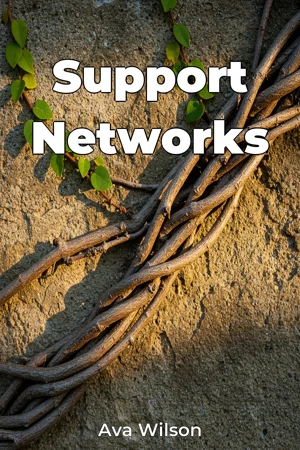
About This Book
How do our relationships truly shape our capacity to heal and overcome adversity? "Support Networks" delves into the crucial role that family, friends, and various group affiliations play in individual recovery processes. This book explores the dynamics of these support systems, highlighting their profound impact on psychological well-being and resilience. Understanding these networks is vital because they often serve as the primary buffer against stress, trauma, and mental health challenges. In a society increasingly grappling with isolation and mental health crises, comprehending how to cultivate and utilize effective support networks is more critical than ever. We begin by examining the historical and social context of support systems, tracing their evolution from traditional community structures to modern, more fragmented networks. This includes exploring how shifts in family dynamics, increased geographical mobility, and the rise of digital communication have reshaped the landscape of social support. We will also clarify key psychological concepts, such as attachment theory, social capital, and the stress-buffering hypothesis, to provide a foundational understanding of the mechanisms through which support networks operate. The central argument of "Support Networks" is that the quality and structure of an individual's support network are directly correlated with their ability to navigate and recover from adverse life experiences. This book emphasizes that recovery is rarely a solitary journey, but rather a process deeply intertwined with the relationships and communities to which we belong. This argument's importance lies in its potential to shift the focus of mental health interventions and recovery strategies from individualistic approaches to more holistic, relationship-centered models. The book is structured in three major parts. First, we introduce the core concepts of support networks, including different types of support (emotional, informational, instrumental) and their respective functions. Second, we delve into specific relationship categories: family, friendships, and group affiliations (such as support groups, religious organizations, and professional networks), analyzing their unique contributions to recovery. This section will utilize case studies and empirical research to illustrate how these relationships either facilitate or hinder the recovery process. Finally, we culminate by synthesizing the previous findings and offering practical strategies for building and maintaining strong support networks, tailored to different life stages and circumstances. The evidence presented will draw from a wide range of sources, including longitudinal studies on the impact of social support on mental and physical health, qualitative interviews with individuals who have successfully navigated recovery with the aid of their networks, and meta-analyses of existing research on social support interventions. Unique data sources may include analyses of online support communities and their effectiveness in providing emotional support and information. "Support Networks" is interdisciplinary, connecting to fields like sociology, public health, and social work. Sociology provides insights into the structural aspects of social networks and how they are shaped by societal factors. Public health offers a broader perspective on the impact of social support on population health and well-being. Social work provides practical frameworks for assessing and strengthening support networks in clinical settings. These connections enrich the book's argument by providing a more comprehensive understanding of the multifaceted nature of support systems. A unique aspect of this book is its emphasis on the dynamic nature of support networks, recognizing that they evolve over time and in response to changing life circumstances. We move beyond simply cataloging the benefits of social support and instead explore the processes by which these networks are created, maintained, and sometimes dissolved. The tone is professional yet accessible, aiming to bridge the gap between academic research and practical application. The writing style balances empirical evidence with relatable anecdotes and case studies to engage a broad audience. The target audience includes mental health professionals, educators, social workers, and anyone interested in improving their own well-being and the well-being of those around them. This book would be valuable to readers seeking actionable strategies for building stronger relationships and leveraging their support networks to navigate life's challenges. As a work in psychology and relationship studies, "Support Networks" adheres to the genre's conventions of evidence-based analysis and practical application. The scope of the book is broad, covering a wide range of relationship types and recovery contexts, but it is limited to the study of interpersonal support, excluding structural or institutional forms of support. The information in "Support Networks" can be applied in various real-world settings, from clinical practice to community-based interventions to personal development. Mental health professionals can use the book's insights to design more effective treatment plans that incorporate social support. Educators can use it to create more supportive classroom environments. Individuals can use it to build stronger relationships and cultivate a more resilient support network. Finally, the book addresses the ongoing debate surrounding the effectiveness of different types of social support and the potential for negative consequences, such as enabling unhealthy behaviors or perpetuating harmful social norms. By acknowledging these controversies, "Support Networks" offers a nuanced and balanced perspective on the complex dynamics of social support.
How do our relationships truly shape our capacity to heal and overcome adversity? "Support Networks" delves into the crucial role that family, friends, and various group affiliations play in individual recovery processes. This book explores the dynamics of these support systems, highlighting their profound impact on psychological well-being and resilience. Understanding these networks is vital because they often serve as the primary buffer against stress, trauma, and mental health challenges. In a society increasingly grappling with isolation and mental health crises, comprehending how to cultivate and utilize effective support networks is more critical than ever. We begin by examining the historical and social context of support systems, tracing their evolution from traditional community structures to modern, more fragmented networks. This includes exploring how shifts in family dynamics, increased geographical mobility, and the rise of digital communication have reshaped the landscape of social support. We will also clarify key psychological concepts, such as attachment theory, social capital, and the stress-buffering hypothesis, to provide a foundational understanding of the mechanisms through which support networks operate. The central argument of "Support Networks" is that the quality and structure of an individual's support network are directly correlated with their ability to navigate and recover from adverse life experiences. This book emphasizes that recovery is rarely a solitary journey, but rather a process deeply intertwined with the relationships and communities to which we belong. This argument's importance lies in its potential to shift the focus of mental health interventions and recovery strategies from individualistic approaches to more holistic, relationship-centered models. The book is structured in three major parts. First, we introduce the core concepts of support networks, including different types of support (emotional, informational, instrumental) and their respective functions. Second, we delve into specific relationship categories: family, friendships, and group affiliations (such as support groups, religious organizations, and professional networks), analyzing their unique contributions to recovery. This section will utilize case studies and empirical research to illustrate how these relationships either facilitate or hinder the recovery process. Finally, we culminate by synthesizing the previous findings and offering practical strategies for building and maintaining strong support networks, tailored to different life stages and circumstances. The evidence presented will draw from a wide range of sources, including longitudinal studies on the impact of social support on mental and physical health, qualitative interviews with individuals who have successfully navigated recovery with the aid of their networks, and meta-analyses of existing research on social support interventions. Unique data sources may include analyses of online support communities and their effectiveness in providing emotional support and information. "Support Networks" is interdisciplinary, connecting to fields like sociology, public health, and social work. Sociology provides insights into the structural aspects of social networks and how they are shaped by societal factors. Public health offers a broader perspective on the impact of social support on population health and well-being. Social work provides practical frameworks for assessing and strengthening support networks in clinical settings. These connections enrich the book's argument by providing a more comprehensive understanding of the multifaceted nature of support systems. A unique aspect of this book is its emphasis on the dynamic nature of support networks, recognizing that they evolve over time and in response to changing life circumstances. We move beyond simply cataloging the benefits of social support and instead explore the processes by which these networks are created, maintained, and sometimes dissolved. The tone is professional yet accessible, aiming to bridge the gap between academic research and practical application. The writing style balances empirical evidence with relatable anecdotes and case studies to engage a broad audience. The target audience includes mental health professionals, educators, social workers, and anyone interested in improving their own well-being and the well-being of those around them. This book would be valuable to readers seeking actionable strategies for building stronger relationships and leveraging their support networks to navigate life's challenges. As a work in psychology and relationship studies, "Support Networks" adheres to the genre's conventions of evidence-based analysis and practical application. The scope of the book is broad, covering a wide range of relationship types and recovery contexts, but it is limited to the study of interpersonal support, excluding structural or institutional forms of support. The information in "Support Networks" can be applied in various real-world settings, from clinical practice to community-based interventions to personal development. Mental health professionals can use the book's insights to design more effective treatment plans that incorporate social support. Educators can use it to create more supportive classroom environments. Individuals can use it to build stronger relationships and cultivate a more resilient support network. Finally, the book addresses the ongoing debate surrounding the effectiveness of different types of social support and the potential for negative consequences, such as enabling unhealthy behaviors or perpetuating harmful social norms. By acknowledging these controversies, "Support Networks" offers a nuanced and balanced perspective on the complex dynamics of social support.
"Support Networks" examines the vital role that relationships play in our ability to recover from adversity and enhance overall well-being. It explores how family, friendships, and group affiliations act as crucial buffers against stress and mental health challenges. The book emphasizes that recovery is rarely a solitary endeavor, but rather a process deeply connected to the relationships and communities we belong to. For instance, attachment theory helps explain how early childhood relationships can shape our later ability to form and maintain supportive bonds. The book progresses by first establishing the core concepts of support networks, including emotional, informational, and instrumental support. It then delves into specific relationship categories, such as family and friendships, using case studies and empirical research to illustrate their unique contributions to recovery and psychological well-being. A unique aspect of the book is its focus on the dynamic nature of these networks, acknowledging their evolution over time. Ultimately, "Support Networks" provides practical strategies for building and maintaining strong support systems, tailored to different life stages and circumstances, highlighting the importance of social support for mental health.
Book Details
ISBN
9788235236876
Publisher
Publifye AS
Your Licenses
You don't own any licenses for this book
Purchase a license below to unlock this book and download the EPUB.
Purchase License
Select a tier to unlock this book
Need bulk licensing?
Contact us for enterprise agreements.