
About This Book
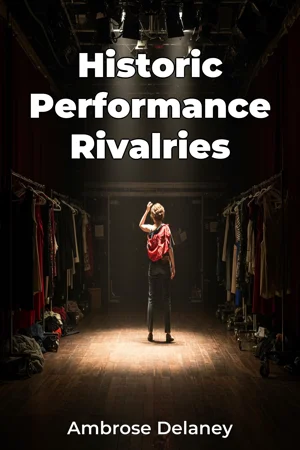
What happens when ambition clashes with talent, envy simmers beneath applause, and personal animosity ignites artistic innovation? "Historic Performance Rivalries" delves into the intense, often volatile, relationships between actors, playwrights, and directors whose competitive spirits fueled some of history's most remarkable theatrical achievements. This book explores the profound impact of rivalry on the performing arts, examining how personal conflicts shaped careers, influenced creative choices, and ultimately left an indelible mark on the stage. The book focuses on two key areas: the psychological underpinnings of rivalry and the tangible effects of these rivalries on specific productions and artistic movements. Understanding the motivation behind competitive behavior – the desire for recognition, the fear of obsolescence, and the pressure to innovate – offers insight into the personalities of these iconic figures. Examining the resulting creative output allows us to appreciate the artistic outcomes of these tensions and how they resonate with audiences today. This exploration of performance rivalries is set against the backdrop of various theatrical periods, from the Elizabethan era to the modern stage. It requires an understanding of the historical contexts in which these artists worked, including prevailing aesthetic values, social structures, and economic realities that influenced their careers and relationships. The central argument of "Historic Performance Rivalries" is that competition, while often destructive on a personal level, has served as a catalyst for artistic innovation in the performing arts. By scrutinizing historical evidence, including personal letters, biographies, reviews, and production records, the book demonstrates how individuals pushed the boundaries of their abilities and revolutionized theatrical performance in response to the perceived threat or challenge from their rivals. The book is structured to provide a comprehensive understanding of this complex dynamic. It begins by defining the nature of rivalry in the performing arts, examining its psychological and social dimensions. Following this introduction, the book presents in-depth case studies of prominent rivalries. Chapters will explore, for instance, the tense relationship between Laurence Olivier and John Gielgud, the playwrights Lillian Hellman and Mary McCarthy, or the directing styles of Elia Kazan and Stella Adler. Each case study will analyze the specific circumstances of the rivalry, its effect on the individuals involved, and its influence on their creative output and the broader theatrical landscape. The book culminates by synthesizing these case studies to identify recurring themes and patterns in performance rivalries, offering insights into the dynamics of artistic collaboration and competition. The evidence presented draws upon extensive archival research, including correspondence, diaries, production notes, and critical reviews. The analysis also incorporates relevant insights from psychology, sociology, and performance studies to provide a multi-faceted understanding of these complex relationships. "Historic Performance Rivalries" connects to several other fields of study, including psychology of competition, sociology of art, and business management, where the principles of competition and teamwork are constantly analyzed. These interdisciplinary connections enhance the book's argument by providing a broader framework for understanding the dynamics of rivalry and its consequences. This book distinguishes itself by offering a unique perspective on the history of the performing arts, focusing not on individual achievements in isolation but on the interconnectedness of artistic creation and personal relationships. It's written in a narrative non-fiction style, aiming to be accessible to a broad audience while maintaining scholarly rigor. The target audience includes students of theater, film, and history, as well as theater professionals and general readers interested in the performing arts. This book will be valuable to them by providing a fresh perspective on familiar figures and events, shedding light on the often-hidden dynamics that shaped theatrical history. As a work in the genres of Performing Arts and Biography, the book adheres to the conventions of historical accuracy, thorough research, and balanced analysis. It acknowledges the complexities of human relationships and avoids simplistic judgments, instead aiming to provide nuanced understanding of the forces at play. The book's scope is intentionally limited to the Western theatrical tradition to allow for in-depth analysis of specific rivalries within a defined historical and cultural context. While the principles of rivalry may be universal, the specific manifestations and consequences are shaped by cultural and historical factors. The information in "Historic Performance Rivalries" can be applied practically by readers in various ways. Aspiring performers and creatives can learn from the experiences of their predecessors, gaining insight into the challenges and opportunities of collaboration and competition. Managers and leaders can draw lessons about motivation, team dynamics, and conflict resolution from the case studies presented. While the value of competition in fostering innovation is often celebrated, the book also addresses the potential downsides of rivalry, including personal suffering, ethical compromises, and artistic stagnation. By exploring these complexities, "Historic Performance Rivalries" offers a balanced and nuanced perspective on a powerful and pervasive human dynamic.
What happens when ambition clashes with talent, envy simmers beneath applause, and personal animosity ignites artistic innovation? "Historic Performance Rivalries" delves into the intense, often volatile, relationships between actors, playwrights, and directors whose competitive spirits fueled some of history's most remarkable theatrical achievements. This book explores the profound impact of rivalry on the performing arts, examining how personal conflicts shaped careers, influenced creative choices, and ultimately left an indelible mark on the stage. The book focuses on two key areas: the psychological underpinnings of rivalry and the tangible effects of these rivalries on specific productions and artistic movements. Understanding the motivation behind competitive behavior – the desire for recognition, the fear of obsolescence, and the pressure to innovate – offers insight into the personalities of these iconic figures. Examining the resulting creative output allows us to appreciate the artistic outcomes of these tensions and how they resonate with audiences today. This exploration of performance rivalries is set against the backdrop of various theatrical periods, from the Elizabethan era to the modern stage. It requires an understanding of the historical contexts in which these artists worked, including prevailing aesthetic values, social structures, and economic realities that influenced their careers and relationships. The central argument of "Historic Performance Rivalries" is that competition, while often destructive on a personal level, has served as a catalyst for artistic innovation in the performing arts. By scrutinizing historical evidence, including personal letters, biographies, reviews, and production records, the book demonstrates how individuals pushed the boundaries of their abilities and revolutionized theatrical performance in response to the perceived threat or challenge from their rivals. The book is structured to provide a comprehensive understanding of this complex dynamic. It begins by defining the nature of rivalry in the performing arts, examining its psychological and social dimensions. Following this introduction, the book presents in-depth case studies of prominent rivalries. Chapters will explore, for instance, the tense relationship between Laurence Olivier and John Gielgud, the playwrights Lillian Hellman and Mary McCarthy, or the directing styles of Elia Kazan and Stella Adler. Each case study will analyze the specific circumstances of the rivalry, its effect on the individuals involved, and its influence on their creative output and the broader theatrical landscape. The book culminates by synthesizing these case studies to identify recurring themes and patterns in performance rivalries, offering insights into the dynamics of artistic collaboration and competition. The evidence presented draws upon extensive archival research, including correspondence, diaries, production notes, and critical reviews. The analysis also incorporates relevant insights from psychology, sociology, and performance studies to provide a multi-faceted understanding of these complex relationships. "Historic Performance Rivalries" connects to several other fields of study, including psychology of competition, sociology of art, and business management, where the principles of competition and teamwork are constantly analyzed. These interdisciplinary connections enhance the book's argument by providing a broader framework for understanding the dynamics of rivalry and its consequences. This book distinguishes itself by offering a unique perspective on the history of the performing arts, focusing not on individual achievements in isolation but on the interconnectedness of artistic creation and personal relationships. It's written in a narrative non-fiction style, aiming to be accessible to a broad audience while maintaining scholarly rigor. The target audience includes students of theater, film, and history, as well as theater professionals and general readers interested in the performing arts. This book will be valuable to them by providing a fresh perspective on familiar figures and events, shedding light on the often-hidden dynamics that shaped theatrical history. As a work in the genres of Performing Arts and Biography, the book adheres to the conventions of historical accuracy, thorough research, and balanced analysis. It acknowledges the complexities of human relationships and avoids simplistic judgments, instead aiming to provide nuanced understanding of the forces at play. The book's scope is intentionally limited to the Western theatrical tradition to allow for in-depth analysis of specific rivalries within a defined historical and cultural context. While the principles of rivalry may be universal, the specific manifestations and consequences are shaped by cultural and historical factors. The information in "Historic Performance Rivalries" can be applied practically by readers in various ways. Aspiring performers and creatives can learn from the experiences of their predecessors, gaining insight into the challenges and opportunities of collaboration and competition. Managers and leaders can draw lessons about motivation, team dynamics, and conflict resolution from the case studies presented. While the value of competition in fostering innovation is often celebrated, the book also addresses the potential downsides of rivalry, including personal suffering, ethical compromises, and artistic stagnation. By exploring these complexities, "Historic Performance Rivalries" offers a balanced and nuanced perspective on a powerful and pervasive human dynamic.
"Historic Performance Rivalries" explores the dramatic clashes and intense competitions between iconic figures in theater history, revealing how these rivalries fueled artistic innovation. The book examines the psychological motivations behind these conflicts, such as the desire for recognition and the fear of being overshadowed, and analyzes how these personal battles shaped some of history's most remarkable theatrical achievements. For example, the book highlights the contentious relationship between Laurence Olivier and John Gielgud, showing how their competition influenced their performances and careers. The book delves into specific case studies, analyzing the circumstances, effects, and influence of performance rivalries on creative output and the broader theatrical landscape. It progresses from defining rivalry in the performing arts to examining prominent rivalries across different theatrical periods. Through historical evidence and insights from psychology and sociology, "Historic Performance Rivalries" demonstrates how competition, while often destructive personally, has been a catalyst for artistic innovation. This approach offers a unique perspective on theater history, focusing on the interconnectedness of artistic creation and personal relationships, making it valuable for students, theater professionals, and anyone interested in the performing arts.
Book Details
ISBN
9788235236753
Publisher
Publifye AS
Your Licenses
You don't own any licenses for this book
Purchase a license below to unlock this book and download the EPUB.
Purchase License
Select a tier to unlock this book
Need bulk licensing?
Contact us for enterprise agreements.