
About This Book
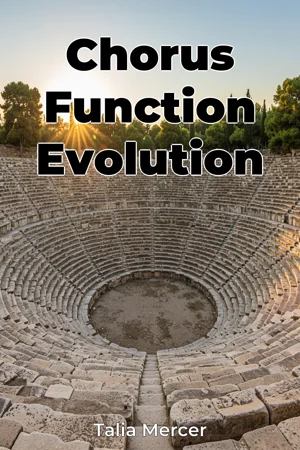
What if the seemingly unified voice of the ancient Greek chorus was never truly monolithic, but a site of ongoing negotiation and transformation? "Chorus Function Evolution" undertakes a comprehensive examination of the shifting role of the chorus in dramatic performance, from its origins in ancient Greece to its diverse modern reinterpretations. This book explores the multifaceted nature of the chorus, its evolving relationship with the central narrative, and its enduring capacity to reflect and shape cultural values. This analysis will focus on three key areas: first, the function of the chorus in classical Greek drama, emphasizing its role as a communal voice, a moral compass, and a dramatic participant; second, the periods of dormancy and reinvention of the chorus throughout theatrical history, examining how different eras have understood and utilized this dramatic device; and third, the diverse manifestations of the chorus in contemporary performance, noting its adaptation to address current social and political concerns. These topics are vital because they illuminate the dynamic nature of dramatic form and its continuous adaptation to reflect evolving societal perspectives. Understanding the chorus requires recognizing its historical context within ancient Greek society, where dramatic festivals were integral civic and religious events. The chorus originally represented the collective perspective, often commenting on the actions of individual characters and providing a broader ethical framework. This book traces the subsequent decline of the chorus's prominence in later dramatic forms and its sporadic re-emergence in various guises. The central argument of "Chorus Function Evolution" posits that the chorus, far from being a static and archaic element, remains a potent and adaptable theatrical tool; its enduring presence in modern performance demonstrates its ability to be reimagined and re-purposed to engage with contemporary audiences. This argument is important because it challenges conventional views of the chorus as merely a historical artifact and highlights its continuing relevance in shaping theatrical expression. The book begins by establishing the foundational role of the chorus in the tragedies of Aeschylus, Sophocles, and Euripides, analyzing its compositional structure, lyrical function, and dynamic presence. It then examines the chorus's diminished role in subsequent theatrical traditions, exploring instances of its revival and transformation in movements such as Renaissance drama, 19th-century opera, and 20th-century expressionist theatre. The book culminates with an exploration of the chorus's contemporary manifestations, analyzing its function in modern plays, musicals, and experimental performances. Throughout, the analysis considers the practical applications of these evolving choral forms. The analysis presented is supported by textual analysis of dramatic works, historical accounts of theatrical productions, and critical examinations of performance theory. Unique data sources include production records from both historical and contemporary performances, which offer insights into the practical implementation of choral elements. This book engages with several interdisciplinary connections. Firstly, it intersects with social and cultural studies, exploring how the chorus reflects and shapes societal values. Secondly, it connects with musicology, analyzing the musical dimensions of choral performance and its relationship to dramatic meaning. Thirdly, it relates to performance studies, examining the chorus's role in creating collective experiences and fostering audience engagement. These connections enrich the book's argument by demonstrating the chorus's multifaceted significance. "Chorus Function Evolution" offers a fresh perspective by examining the chorus not as a fixed entity, but as a dynamic and evolving element of dramatic expression. This book is written in an academic yet accessible style, designed to engage students, scholars, and theatre practitioners. It will appeal specifically to those interested in theatre history, dramatic literature, performance studies, and interdisciplinary approaches to the arts. The scope of the book encompasses the entire history of Western theatre, with selective references to non-Western traditions where relevant. While the focus is primarily on dramatic literature and performance, the book also acknowledges the influence of social and political contexts on the chorus's evolution. The information presented in this book has practical implications for theatre directors, designers, and performers seeking to revitalize the chorus in contemporary productions. By understanding the historical evolution and potential applications of the chorus, practitioners can unlock its power to create compelling and meaningful theatrical experiences. The book also addresses ongoing debates about the role of tradition in contemporary performance, arguing that a nuanced understanding of theatrical history is crucial for creative innovation.
What if the seemingly unified voice of the ancient Greek chorus was never truly monolithic, but a site of ongoing negotiation and transformation? "Chorus Function Evolution" undertakes a comprehensive examination of the shifting role of the chorus in dramatic performance, from its origins in ancient Greece to its diverse modern reinterpretations. This book explores the multifaceted nature of the chorus, its evolving relationship with the central narrative, and its enduring capacity to reflect and shape cultural values. This analysis will focus on three key areas: first, the function of the chorus in classical Greek drama, emphasizing its role as a communal voice, a moral compass, and a dramatic participant; second, the periods of dormancy and reinvention of the chorus throughout theatrical history, examining how different eras have understood and utilized this dramatic device; and third, the diverse manifestations of the chorus in contemporary performance, noting its adaptation to address current social and political concerns. These topics are vital because they illuminate the dynamic nature of dramatic form and its continuous adaptation to reflect evolving societal perspectives. Understanding the chorus requires recognizing its historical context within ancient Greek society, where dramatic festivals were integral civic and religious events. The chorus originally represented the collective perspective, often commenting on the actions of individual characters and providing a broader ethical framework. This book traces the subsequent decline of the chorus's prominence in later dramatic forms and its sporadic re-emergence in various guises. The central argument of "Chorus Function Evolution" posits that the chorus, far from being a static and archaic element, remains a potent and adaptable theatrical tool; its enduring presence in modern performance demonstrates its ability to be reimagined and re-purposed to engage with contemporary audiences. This argument is important because it challenges conventional views of the chorus as merely a historical artifact and highlights its continuing relevance in shaping theatrical expression. The book begins by establishing the foundational role of the chorus in the tragedies of Aeschylus, Sophocles, and Euripides, analyzing its compositional structure, lyrical function, and dynamic presence. It then examines the chorus's diminished role in subsequent theatrical traditions, exploring instances of its revival and transformation in movements such as Renaissance drama, 19th-century opera, and 20th-century expressionist theatre. The book culminates with an exploration of the chorus's contemporary manifestations, analyzing its function in modern plays, musicals, and experimental performances. Throughout, the analysis considers the practical applications of these evolving choral forms. The analysis presented is supported by textual analysis of dramatic works, historical accounts of theatrical productions, and critical examinations of performance theory. Unique data sources include production records from both historical and contemporary performances, which offer insights into the practical implementation of choral elements. This book engages with several interdisciplinary connections. Firstly, it intersects with social and cultural studies, exploring how the chorus reflects and shapes societal values. Secondly, it connects with musicology, analyzing the musical dimensions of choral performance and its relationship to dramatic meaning. Thirdly, it relates to performance studies, examining the chorus's role in creating collective experiences and fostering audience engagement. These connections enrich the book's argument by demonstrating the chorus's multifaceted significance. "Chorus Function Evolution" offers a fresh perspective by examining the chorus not as a fixed entity, but as a dynamic and evolving element of dramatic expression. This book is written in an academic yet accessible style, designed to engage students, scholars, and theatre practitioners. It will appeal specifically to those interested in theatre history, dramatic literature, performance studies, and interdisciplinary approaches to the arts. The scope of the book encompasses the entire history of Western theatre, with selective references to non-Western traditions where relevant. While the focus is primarily on dramatic literature and performance, the book also acknowledges the influence of social and political contexts on the chorus's evolution. The information presented in this book has practical implications for theatre directors, designers, and performers seeking to revitalize the chorus in contemporary productions. By understanding the historical evolution and potential applications of the chorus, practitioners can unlock its power to create compelling and meaningful theatrical experiences. The book also addresses ongoing debates about the role of tradition in contemporary performance, arguing that a nuanced understanding of theatrical history is crucial for creative innovation.
"Chorus Function Evolution" explores the dynamic journey of the Greek chorus, challenging the notion of it as a static element in dramatic performance. The book traces its evolution from ancient Greece, where the chorus served as a communal voice and moral compass, to its diverse modern reinventions. Intriguingly, the chorus's role wasn't always unified; it was a site of negotiation reflecting cultural values. The study reveals how the chorus, diminished at times, re-emerges in movements like Renaissance drama and even contemporary musicals, demonstrating its adaptability. The book analyzes the chorus's function across different periods, beginning with its foundational role in classical tragedies and progressing through periods of dormancy and reinvention. By examining theatrical productions and dramatic literature, the author illuminates the chorus's capacity to address current social and political concerns. Ultimately, "Chorus Function Evolution" argues that the chorus remains a potent theatrical tool, challenging conventional views and highlighting its relevance in shaping theatrical expression by providing a historical context within ancient Greek society.
Book Details
ISBN
9788235236678
Publisher
Publifye AS
Your Licenses
You don't own any licenses for this book
Purchase a license below to unlock this book and download the EPUB.
Purchase License
Select a tier to unlock this book
Need bulk licensing?
Contact us for enterprise agreements.