
About This Book
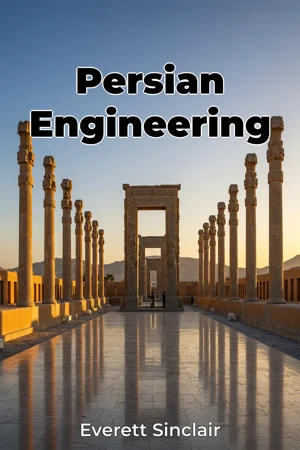
How did an empire, sprawling across vast and often harsh landscapes, not only survive but thrive for centuries? "Persian Engineering" explores the sophisticated and often overlooked engineering achievements of ancient Persia, revealing how innovative solutions transformed the environment, facilitated governance, and shaped a flourishing civilization. This book delves into the core of Persian ingenuity, examining three critical domains: the qanat system of underground aqueducts, the meticulously planned and maintained network of roads, and the awe-inspiring palaces and monumental architecture that symbolized imperial power. These topics are vital because they demonstrate the profound impact of engineering on the rise and sustenance of one of history's most influential empires, providing insights relevant to contemporary challenges in resource management, infrastructure development, and sustainable design. The book offers a historical, social, and technical context necessary to comprehend the magnitude of these achievements. Understanding the arid climate of Persia, the decentralized nature of its early governance, and the evolving technological landscape is crucial for appreciating the ingenuity of Persian engineers. While a basic understanding of ancient history and architectural principles will be helpful, the book is designed to be accessible to a broad audience. The central argument of "Persian Engineering" is that Persian engineering was not merely a collection of practical solutions but a cohesive and integrated system of innovations, driven by a sophisticated understanding of the environment and a centralized imperial vision, that was fundamental to Persia's political stability, economic prosperity, and cultural influence. This argument challenges the Eurocentric view of engineering history and highlights the significant contributions of Persian civilization to global technological advancement. The book is structured to systematically uncover this argument. It begins with an introduction to ancient Persia, setting the stage with its geography, history, and societal structure. The subsequent sections delve into the specifics of each engineering domain; beginning with the qanat system, detailing its construction, maintenance, and impact on agriculture and urban development. Next, the book examines the extensive road network, elucidating its role in facilitating trade, communication, and military control. Finally, it explores the grand palaces and monumental architecture, analyzing their structural innovations and their symbolic representation of imperial power and cultural identity. The book then culminates by synthesizing these elements, demonstrating how they interconnected to form a comprehensive engineering ecosystem that supported the empire. The final section explores the lasting impact of Persian engineering, considering its influence on subsequent civilizations and its relevance to contemporary challenges in sustainable development. The book relies on a diverse range of evidence and research, including archaeological findings, historical texts, and comparative studies of engineering practices across different cultures. It draws upon firsthand accounts from ancient historians and travelers, supplementing these with modern engineering analyses and simulations. Unique data sources include recovered qanat blueprints, descriptions of royal road construction, and detailed studies of palace architecture, offering a comprehensive and authoritative account of Persian engineering. "Persian Engineering" connects to several interdisciplinary fields, including: environmental studies, by examining the sustainable practices of qanat systems; political science, by analyzing the role of infrastructure in consolidating imperial power; and art history, by exploring the architectural symbolism of Persian monuments. This interdisciplinary approach enriches the book's argument, providing a holistic understanding of the impact of Persian engineering. This book distinguishes itself by adopting a systems-thinking approach, demonstrating how different engineering domains were interconnected to form a cohesive and resilient infrastructure. It moves beyond a mere description of individual projects to analyze the underlying principles and the socio-political context that shaped Persian engineering achievements. The tone of the book is academic yet accessible, striving to present complex technical information in a clear and engaging manner. The writing style blends rigorous scholarship with narrative storytelling, bringing the history of Persian engineering to life. The primary audience includes students and scholars of history, architecture, and engineering, as well as general readers interested in ancient civilizations and technological innovation. This book offers valuable insights for policymakers and practitioners involved in infrastructure development and sustainable resource management. As a work in the genre of 'History, Architecture, Architecture General', "Persian Engineering" adheres to the conventions of scholarly research, providing detailed citations and source materials. It also incorporates visual aids, such as maps, diagrams, and photographs, to enhance understanding and engagement. The book's scope is limited to the engineering achievements of the Achaemenid, Parthian, and Sasanian periods of ancient Persia, focusing on the qanat system, road network, and monumental architecture. While acknowledging the broader cultural and historical context, it does not delve into other aspects of Persian civilization. The principles and practices of Persian engineering have numerous real-world applications. The qanat system offers valuable lessons for sustainable water management in arid regions, while the Persian road network provides insights into efficient infrastructure planning and logistics. The architectural innovations of Persian palaces can inspire contemporary designs that blend functionality with aesthetic appeal. While Persian engineering achievements are widely recognized, there are ongoing debates about the extent of their influence on other civilizations and the specific techniques used in their construction. This book engages with these debates, presenting a balanced and evidence-based perspective.
How did an empire, sprawling across vast and often harsh landscapes, not only survive but thrive for centuries? "Persian Engineering" explores the sophisticated and often overlooked engineering achievements of ancient Persia, revealing how innovative solutions transformed the environment, facilitated governance, and shaped a flourishing civilization. This book delves into the core of Persian ingenuity, examining three critical domains: the qanat system of underground aqueducts, the meticulously planned and maintained network of roads, and the awe-inspiring palaces and monumental architecture that symbolized imperial power. These topics are vital because they demonstrate the profound impact of engineering on the rise and sustenance of one of history's most influential empires, providing insights relevant to contemporary challenges in resource management, infrastructure development, and sustainable design. The book offers a historical, social, and technical context necessary to comprehend the magnitude of these achievements. Understanding the arid climate of Persia, the decentralized nature of its early governance, and the evolving technological landscape is crucial for appreciating the ingenuity of Persian engineers. While a basic understanding of ancient history and architectural principles will be helpful, the book is designed to be accessible to a broad audience. The central argument of "Persian Engineering" is that Persian engineering was not merely a collection of practical solutions but a cohesive and integrated system of innovations, driven by a sophisticated understanding of the environment and a centralized imperial vision, that was fundamental to Persia's political stability, economic prosperity, and cultural influence. This argument challenges the Eurocentric view of engineering history and highlights the significant contributions of Persian civilization to global technological advancement. The book is structured to systematically uncover this argument. It begins with an introduction to ancient Persia, setting the stage with its geography, history, and societal structure. The subsequent sections delve into the specifics of each engineering domain; beginning with the qanat system, detailing its construction, maintenance, and impact on agriculture and urban development. Next, the book examines the extensive road network, elucidating its role in facilitating trade, communication, and military control. Finally, it explores the grand palaces and monumental architecture, analyzing their structural innovations and their symbolic representation of imperial power and cultural identity. The book then culminates by synthesizing these elements, demonstrating how they interconnected to form a comprehensive engineering ecosystem that supported the empire. The final section explores the lasting impact of Persian engineering, considering its influence on subsequent civilizations and its relevance to contemporary challenges in sustainable development. The book relies on a diverse range of evidence and research, including archaeological findings, historical texts, and comparative studies of engineering practices across different cultures. It draws upon firsthand accounts from ancient historians and travelers, supplementing these with modern engineering analyses and simulations. Unique data sources include recovered qanat blueprints, descriptions of royal road construction, and detailed studies of palace architecture, offering a comprehensive and authoritative account of Persian engineering. "Persian Engineering" connects to several interdisciplinary fields, including: environmental studies, by examining the sustainable practices of qanat systems; political science, by analyzing the role of infrastructure in consolidating imperial power; and art history, by exploring the architectural symbolism of Persian monuments. This interdisciplinary approach enriches the book's argument, providing a holistic understanding of the impact of Persian engineering. This book distinguishes itself by adopting a systems-thinking approach, demonstrating how different engineering domains were interconnected to form a cohesive and resilient infrastructure. It moves beyond a mere description of individual projects to analyze the underlying principles and the socio-political context that shaped Persian engineering achievements. The tone of the book is academic yet accessible, striving to present complex technical information in a clear and engaging manner. The writing style blends rigorous scholarship with narrative storytelling, bringing the history of Persian engineering to life. The primary audience includes students and scholars of history, architecture, and engineering, as well as general readers interested in ancient civilizations and technological innovation. This book offers valuable insights for policymakers and practitioners involved in infrastructure development and sustainable resource management. As a work in the genre of 'History, Architecture, Architecture General', "Persian Engineering" adheres to the conventions of scholarly research, providing detailed citations and source materials. It also incorporates visual aids, such as maps, diagrams, and photographs, to enhance understanding and engagement. The book's scope is limited to the engineering achievements of the Achaemenid, Parthian, and Sasanian periods of ancient Persia, focusing on the qanat system, road network, and monumental architecture. While acknowledging the broader cultural and historical context, it does not delve into other aspects of Persian civilization. The principles and practices of Persian engineering have numerous real-world applications. The qanat system offers valuable lessons for sustainable water management in arid regions, while the Persian road network provides insights into efficient infrastructure planning and logistics. The architectural innovations of Persian palaces can inspire contemporary designs that blend functionality with aesthetic appeal. While Persian engineering achievements are widely recognized, there are ongoing debates about the extent of their influence on other civilizations and the specific techniques used in their construction. This book engages with these debates, presenting a balanced and evidence-based perspective.
"Persian Engineering" unveils the sophisticated engineering of ancient Persia, demonstrating how innovative solutions fostered a thriving civilization. The book explores three core domains: the qanat system, a network of underground aqueducts vital for agriculture and urban development in the arid landscape; the meticulously planned road network, crucial for trade and governance; and the monumental architecture, reflecting imperial power. These achievements underscore Persia's significant impact on global technological advancement, challenging Eurocentric views of engineering history. The book argues that Persian engineering was a cohesive system driven by environmental understanding and imperial vision, essential for Persia's stability and prosperity. For example, the qanat system showcased sustainable resource management, while the road network facilitated efficient communication across the vast empire. Structured systematically, the book progresses from an introduction to ancient Persia through detailed examinations of each engineering domain, culminating in a synthesis of their interconnectedness. It relies on archaeological findings, historical texts, and modern engineering analyses to provide a comprehensive account. This book distinguishes itself by adopting a systems-thinking approach, revealing how the qanat system, roads, and architecture formed a resilient infrastructure. By analyzing underlying principles and socio-political contexts, "Persian Engineering" offers valuable insights for contemporary challenges in sustainable design and infrastructure development, making it relevant to both historical scholars and modern practitioners.
Book Details
ISBN
9788235236517
Publisher
Publifye AS
Your Licenses
You don't own any licenses for this book
Purchase a license below to unlock this book and download the EPUB.
Purchase License
Select a tier to unlock this book
Need bulk licensing?
Contact us for enterprise agreements.