
About This Book
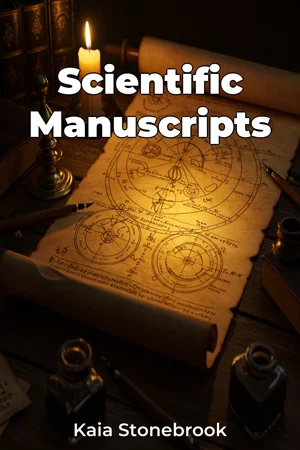
How did the wisdom of ancient civilizations shape the world we know today? This book delves into the fascinating history of scientific manuscripts from antiquity, exploring their profound impact on the development of medicine, astronomy, and mathematics, as well as detailing the remarkable efforts to preserve and translate them across cultures and centuries. These manuscripts are not merely historical relics; they represent the foundational building blocks of modern scientific thought. The preservation and transmission of ancient learning are crucial to understanding the evolution of scientific thought. The book investigates how these texts were copied, translated, and disseminated, often through perilous journeys and dedicated scholarship. We examine the crucial roles played by various cultures – from the Greeks and Romans to the Islamic world and medieval Europe – in safeguarding this intellectual heritage. Without these efforts, many of the scientific advancements of the Renaissance and beyond would have been impossible. This book contends that the scientific achievements of classical civilizations, while often overlooked in modern narratives, laid the groundwork for subsequent scientific revolutions. It demonstrates how these early writings provided not only specific knowledge but also a framework for scientific inquiry that continues to influence our approach to understanding the natural world. The book unfolds in three major parts. First, it introduces the key scientific fields of medicine, astronomy, and mathematics as they were understood in antiquity, drawing primarily from Greek, Roman, Egyptian, and early Mesopotamian sources. Second, it examines the preservation and transmission of these texts, focusing on the critical role of Islamic scholars during the Middle Ages and their subsequent translation into Latin, which paved the way for the European Renaissance. Specific attention is given to the House of Wisdom in Baghdad and the translation movements in Toledo and Sicily. Finally, the book analyzes the impact of these ancient scientific ideas on the scientific revolution in Europe, highlighting specific examples of how ancient theories and observations influenced figures like Copernicus, Vesalius, and Galileo. The evidence presented is drawn from a diverse range of sources, including original manuscript fragments, early printed editions, and secondary scholarship from historians of science and classical scholars. The book utilizes paleographical analysis to trace the movement and modification of texts over time, and it incorporates comparative textual analysis to highlight the evolution of scientific ideas across different cultures. This study intersects with several disciplines, including history, philosophy of science, and classical studies. The history component contextualizes the scientific manuscripts within their specific social and political environments. The philosophy of science aspect explores the epistemological assumptions underlying ancient scientific thought. Classical studies provides insight into the linguistic and cultural nuances of the original texts. This book offers a unique perspective by emphasizing the interconnectedness of ancient scientific traditions and their lasting legacy in modern science. It moves beyond a simple cataloging of ancient discoveries to present a nuanced analysis of their evolution and impact. The book is written in a clear and accessible style, suitable for students, academics, and general readers with an interest in the history of science. Its primary target audience includes undergraduate and graduate students in history, science, and related fields, as well as anyone curious about the roots of scientific knowledge. As a work of historical and scientific analysis, the book adheres to the standards of academic rigor, presenting well-supported arguments and thoroughly documented evidence. The scope of the book is limited to examining the direct influence of written scientific works, excluding archaeological findings or technological innovations that are not explicitly documented in manuscripts. The knowledge gained from this book can be applied to understanding the origins of modern scientific disciplines, appreciating the contributions of non-Western cultures to scientific progress, and promoting a more inclusive and historically informed approach to science education. The book also touches upon the debates surrounding the interpretation of ancient texts and the attribution of scientific discoveries. For example, it addresses the ongoing discussion about the extent to which Greek science was influenced by earlier Egyptian and Mesopotamian traditions.
How did the wisdom of ancient civilizations shape the world we know today? This book delves into the fascinating history of scientific manuscripts from antiquity, exploring their profound impact on the development of medicine, astronomy, and mathematics, as well as detailing the remarkable efforts to preserve and translate them across cultures and centuries. These manuscripts are not merely historical relics; they represent the foundational building blocks of modern scientific thought. The preservation and transmission of ancient learning are crucial to understanding the evolution of scientific thought. The book investigates how these texts were copied, translated, and disseminated, often through perilous journeys and dedicated scholarship. We examine the crucial roles played by various cultures – from the Greeks and Romans to the Islamic world and medieval Europe – in safeguarding this intellectual heritage. Without these efforts, many of the scientific advancements of the Renaissance and beyond would have been impossible. This book contends that the scientific achievements of classical civilizations, while often overlooked in modern narratives, laid the groundwork for subsequent scientific revolutions. It demonstrates how these early writings provided not only specific knowledge but also a framework for scientific inquiry that continues to influence our approach to understanding the natural world. The book unfolds in three major parts. First, it introduces the key scientific fields of medicine, astronomy, and mathematics as they were understood in antiquity, drawing primarily from Greek, Roman, Egyptian, and early Mesopotamian sources. Second, it examines the preservation and transmission of these texts, focusing on the critical role of Islamic scholars during the Middle Ages and their subsequent translation into Latin, which paved the way for the European Renaissance. Specific attention is given to the House of Wisdom in Baghdad and the translation movements in Toledo and Sicily. Finally, the book analyzes the impact of these ancient scientific ideas on the scientific revolution in Europe, highlighting specific examples of how ancient theories and observations influenced figures like Copernicus, Vesalius, and Galileo. The evidence presented is drawn from a diverse range of sources, including original manuscript fragments, early printed editions, and secondary scholarship from historians of science and classical scholars. The book utilizes paleographical analysis to trace the movement and modification of texts over time, and it incorporates comparative textual analysis to highlight the evolution of scientific ideas across different cultures. This study intersects with several disciplines, including history, philosophy of science, and classical studies. The history component contextualizes the scientific manuscripts within their specific social and political environments. The philosophy of science aspect explores the epistemological assumptions underlying ancient scientific thought. Classical studies provides insight into the linguistic and cultural nuances of the original texts. This book offers a unique perspective by emphasizing the interconnectedness of ancient scientific traditions and their lasting legacy in modern science. It moves beyond a simple cataloging of ancient discoveries to present a nuanced analysis of their evolution and impact. The book is written in a clear and accessible style, suitable for students, academics, and general readers with an interest in the history of science. Its primary target audience includes undergraduate and graduate students in history, science, and related fields, as well as anyone curious about the roots of scientific knowledge. As a work of historical and scientific analysis, the book adheres to the standards of academic rigor, presenting well-supported arguments and thoroughly documented evidence. The scope of the book is limited to examining the direct influence of written scientific works, excluding archaeological findings or technological innovations that are not explicitly documented in manuscripts. The knowledge gained from this book can be applied to understanding the origins of modern scientific disciplines, appreciating the contributions of non-Western cultures to scientific progress, and promoting a more inclusive and historically informed approach to science education. The book also touches upon the debates surrounding the interpretation of ancient texts and the attribution of scientific discoveries. For example, it addresses the ongoing discussion about the extent to which Greek science was influenced by earlier Egyptian and Mesopotamian traditions.
"Scientific Manuscripts" explores how ancient scientific knowledge, particularly from Greek, Roman, and Islamic scholars, shaped modern science. These manuscripts, encompassing medicine, astronomy, and mathematics, weren't just relics; they provided the groundwork for scientific inquiry that continues to influence our understanding of the natural world. The book highlights the crucial role of the House of Wisdom in Baghdad and translation movements in preserving and transmitting this knowledge across cultures. The book examines how these texts were copied, translated, and disseminated, enabling scientific advancements during the Renaissance and beyond. It reveals how Islamic scholars preserved and translated ancient Greek and Roman texts, subsequently influencing European scientific thought. For instance, ancient astronomical observations directly influenced Copernicus's heliocentric model. This book presents its information in three parts, beginning with an overview of sciences in antiquity, then covering the preservation and transmission of knowledge, and finally, discussing the impact on the European scientific revolution. By tracing the evolution and influence of these ancient works, the book provides a unique perspective on the interconnectedness of ancient scientific traditions and their lasting legacy.
Book Details
ISBN
9788235236296
Publisher
Publifye AS
Your Licenses
You don't own any licenses for this book
Purchase a license below to unlock this book and download the EPUB.
Purchase License
Select a tier to unlock this book
Need bulk licensing?
Contact us for enterprise agreements.