
About This Book
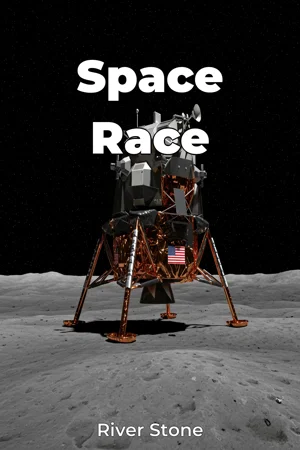
What drove two superpowers to expend vast resources in a relentless pursuit beyond Earth's atmosphere? "Space Race" delves into the intense competition between the United States and the Soviet Union during the Cold War to achieve unprecedented milestones in space exploration. This book examines the political, social, and technological factors that fueled this race, exploring its lasting impact on science, technology, and international relations. The book primarily focuses on three key topics: the geopolitical context of the Space Race, the technological advancements it spurred, and its cultural and societal ramifications. The struggle for global influence between the US and USSR heavily influenced the Space Race, turning scientific achievements into symbols of ideological superiority. Understanding the intricate interplay between political ambition and scientific progress is crucial for comprehending the motivations and consequences of this era. Furthermore, the book details the rapid advancements in rocketry, materials science, and computing necessary to conquer space, highlighting the ingenuity and dedication of the scientists and engineers involved. Finally, it explores how the Space Race captured the imagination of people worldwide, shaping popular culture and inspiring future generations of scientists and explorers. To provide a comprehensive understanding, the book offers historical background on the post-World War II era and the burgeoning Cold War tensions. It requires no specialized scientific knowledge, presenting technical information in an accessible manner suitable for the general reader. The central argument is that the Space Race, while driven by Cold War rivalry, resulted in significant scientific and technological advancements that continue to shape our world today. This book argues that beyond the political posturing, the Space Race demonstrates the power of human innovation when channeled toward ambitious goals. The book begins by introducing the political and ideological climate that fostered the Space Race. It then moves to chronicle the key events, from the launch of Sputnik to the Apollo moon landing, analyzing the technological breakthroughs and strategic decisions that defined each stage. Major sections are dedicated to the Soviet Union's early lead and the United States' subsequent efforts to catch up and surpass them. The narrative culminates with an assessment of the long-term effects of the Space Race, including the development of satellite technology, advancements in computing, and a renewed interest in scientific education. Evidence presented includes declassified documents, primary source accounts from astronauts and engineers, and analyses of Soviet and American space programs. The book draws on research from historical archives, technical reports, and scholarly publications to provide a well-supported and balanced view of the Space Race. The book connects to other fields such as political science by examining the role of Cold War politics and international relations. It also contains material relevant to sociology by looking at its cultural impact and effects on social movements. The book also touches on economics by looking at the costs and benefits of government-funded scientific research. This book distinguishes itself by offering a balanced perspective, avoiding nationalistic bias and providing insights into both the American and Soviet perspectives. It presents a detailed account of the Space Race that is both informative and engaging. Written in a clear and accessible style, "Space Race" aims to inform and captivate a broad audience, from history enthusiasts to science buffs. This book is valuable to those seeking a deeper understanding of the historical context of space exploration and its continuing impact on our lives. As a work of history, the book adheres to the genre conventions of accuracy, objectivity, and detailed sourcing. While covering a broad range of events and technologies, the book focuses primarily on the US and Soviet space programs, acknowledging that other nations also contributed to space exploration but were not central to this particular competition. The developments stemming from the Space Race have numerous real-world applications, from satellite communication and weather forecasting to medical imaging and materials science. The book also addresses ongoing debates, such as the ethical considerations of government-funded research and the long-term environmental impact of space exploration.
What drove two superpowers to expend vast resources in a relentless pursuit beyond Earth's atmosphere? "Space Race" delves into the intense competition between the United States and the Soviet Union during the Cold War to achieve unprecedented milestones in space exploration. This book examines the political, social, and technological factors that fueled this race, exploring its lasting impact on science, technology, and international relations. The book primarily focuses on three key topics: the geopolitical context of the Space Race, the technological advancements it spurred, and its cultural and societal ramifications. The struggle for global influence between the US and USSR heavily influenced the Space Race, turning scientific achievements into symbols of ideological superiority. Understanding the intricate interplay between political ambition and scientific progress is crucial for comprehending the motivations and consequences of this era. Furthermore, the book details the rapid advancements in rocketry, materials science, and computing necessary to conquer space, highlighting the ingenuity and dedication of the scientists and engineers involved. Finally, it explores how the Space Race captured the imagination of people worldwide, shaping popular culture and inspiring future generations of scientists and explorers. To provide a comprehensive understanding, the book offers historical background on the post-World War II era and the burgeoning Cold War tensions. It requires no specialized scientific knowledge, presenting technical information in an accessible manner suitable for the general reader. The central argument is that the Space Race, while driven by Cold War rivalry, resulted in significant scientific and technological advancements that continue to shape our world today. This book argues that beyond the political posturing, the Space Race demonstrates the power of human innovation when channeled toward ambitious goals. The book begins by introducing the political and ideological climate that fostered the Space Race. It then moves to chronicle the key events, from the launch of Sputnik to the Apollo moon landing, analyzing the technological breakthroughs and strategic decisions that defined each stage. Major sections are dedicated to the Soviet Union's early lead and the United States' subsequent efforts to catch up and surpass them. The narrative culminates with an assessment of the long-term effects of the Space Race, including the development of satellite technology, advancements in computing, and a renewed interest in scientific education. Evidence presented includes declassified documents, primary source accounts from astronauts and engineers, and analyses of Soviet and American space programs. The book draws on research from historical archives, technical reports, and scholarly publications to provide a well-supported and balanced view of the Space Race. The book connects to other fields such as political science by examining the role of Cold War politics and international relations. It also contains material relevant to sociology by looking at its cultural impact and effects on social movements. The book also touches on economics by looking at the costs and benefits of government-funded scientific research. This book distinguishes itself by offering a balanced perspective, avoiding nationalistic bias and providing insights into both the American and Soviet perspectives. It presents a detailed account of the Space Race that is both informative and engaging. Written in a clear and accessible style, "Space Race" aims to inform and captivate a broad audience, from history enthusiasts to science buffs. This book is valuable to those seeking a deeper understanding of the historical context of space exploration and its continuing impact on our lives. As a work of history, the book adheres to the genre conventions of accuracy, objectivity, and detailed sourcing. While covering a broad range of events and technologies, the book focuses primarily on the US and Soviet space programs, acknowledging that other nations also contributed to space exploration but were not central to this particular competition. The developments stemming from the Space Race have numerous real-world applications, from satellite communication and weather forecasting to medical imaging and materials science. The book also addresses ongoing debates, such as the ethical considerations of government-funded research and the long-term environmental impact of space exploration.
"Space Race" explores the intense mid-20th century competition between the United States and the Soviet Union to achieve dominance in space exploration during the Cold War. Driven by political ambition and the desire to demonstrate ideological superiority, this era saw rapid technological advancements. One intriguing fact is that the launch of Sputnik by the Soviet Union in 1957 caught the United States off guard, spurring a massive increase in funding for scientific research and development. Another key insight is how the Apollo Moon Landing became a symbol of American ingenuity and technological prowess, marking a pivotal moment in this geopolitical struggle. The book examines the political, social, and technological factors that fueled the Space Race, detailing key events from Sputnik to the Apollo missions. It highlights how these advancements, driven by Cold War rivalry, continue to shape our world through satellite technology and various applications. The book's approach balances historical accuracy with accessible language, making it valuable for readers seeking a deeper understanding of the historical context of space exploration. It progresses by first establishing the Cold War political landscape, then chronologically detailing milestones and breakthroughs, and concluding with a review of the long-term impacts and legacies.
Book Details
ISBN
9788235236135
Publisher
Publifye AS
Your Licenses
You don't own any licenses for this book
Purchase a license below to unlock this book and download the EPUB.
Purchase License
Select a tier to unlock this book
Need bulk licensing?
Contact us for enterprise agreements.