
About This Book
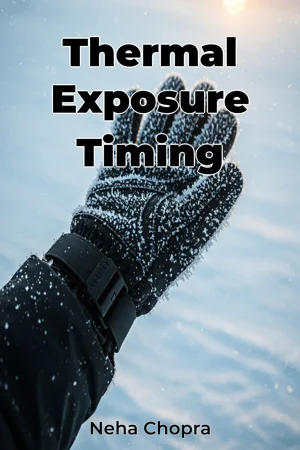
How long can skin withstand a flash fire, or specialized arctic gear truly protect against frostbite in prolonged sub-zero conditions? *Thermal Exposure Timing* examines the crucial intersection of time, temperature, and material science, focusing on the endurance limits of both human tissues and protective equipment when subjected to extreme heat or cold. This book delves into the biophysical responses of skin and the performance characteristics of various textiles and composites, revealing how critical exposure duration is in determining the extent of damage and impairment. The core topics addressed are the thermal limits of human skin, the protective capabilities of clothing and gear, and the impact of temperature extremes on human cognitive and motor functions. Understanding these limits is paramount, informing safety protocols for diverse fields from occupational safety in extreme environments to athletic performance and emergency response. Throughout history, humans have faced thermal challenges, necessitating the development of increasingly sophisticated protective measures. This book builds upon established principles of thermodynamics, physiology, and materials engineering and introduces the reader to the fundamental concepts of heat transfer, tissue injury mechanisms, and material degradation under thermal stress. A basic understanding of physics and biology is helpful, but all essential concepts are thoroughly explained. The central argument of *Thermal Exposure Timing* is that *time* is an often-overlooked but crucial factor in assessing the risk and severity of thermal exposure. The cumulative effect of even brief exposures can lead to significant damage, while extended exposure to seemingly tolerable conditions can gradually erode material integrity and human performance. This perspective challenges conventional approaches to thermal protection that often focus solely on temperature thresholds, highlighting the need for a more nuanced, time-dependent approach. The book begins by introducing the biophysics of heat transfer in human skin, detailing the mechanisms of burns, frostbite, and hypothermia. It then explores the material properties of textiles and composites, analyzing their thermal resistance, heat capacity, and degradation rates under extreme conditions. A key section is dedicated to the impact of cold and heat on human reaction time, dexterity, and cognitive functions, demonstrating how thermal stress can impair performance and increase the risk of accidents. The culmination of the argument lies in a proposed framework for assessing thermal exposure risks based on time-integrated thermal dose, applicable to a wide range of scenarios from industrial settings to recreational activities. Finally, the book explores practical applications, offering guidelines for selecting appropriate protective gear, designing effective safety protocols, and developing strategies for mitigating the effects of thermal exposure. The evidence presented in this book draws from a synthesis of experimental data, computational modeling, and case studies. Laboratory experiments on skin simulants and material samples are used to quantify thermal properties and degradation rates. Computational models are employed to simulate heat transfer in complex systems, such as multi-layered clothing. Real-world case studies from industrial accidents, athletic competitions, and military operations illustrate the practical implications of the concepts discussed. Unique data from field studies in extreme environments, combined with advanced materials testing, provide a comprehensive picture of the challenges and potential solutions. *Thermal Exposure Timing* bridges the gap between several disciplines, including physiology, materials science, ergonomics, and safety engineering. By integrating knowledge from these diverse fields, the book provides a holistic understanding of the complex interactions between humans, materials, and thermal environments. This interdisciplinary approach enhances the book's argument by revealing how advancements in one field can inform solutions in others. This book stands out by offering a time-centric perspective on thermal exposure, moving beyond traditional temperature-based assessments. The proposed framework for time-integrated thermal dose assessment provides a new tool for predicting and preventing thermal injuries and material failures. Written in a clear and accessible style, *Thermal Exposure Timing* aims to inform and empower a broad audience. The target audience includes safety professionals, engineers, athletes, military personnel, healthcare providers, and anyone working or recreating in extreme environments. This book will be valuable to them by providing the knowledge and tools necessary to make informed decisions about thermal protection and risk management. As a work of fact-based non-fiction, *Thermal Exposure Timing* adheres to the highest standards of scientific accuracy and objectivity. All claims are supported by evidence-based research and presented in a balanced and unbiased manner. While the book covers a wide range of thermal exposure scenarios, it does not delve into the specific medical treatments for severe burns or frostbite. The focus remains on prevention and mitigation strategies, rather than clinical interventions. The information presented in *Thermal Exposure Timing* can be directly applied to improve safety protocols in workplaces, enhance the performance of athletes in extreme conditions, and develop more effective protective gear for military personnel and emergency responders. While the basic principles of thermal science are well established, ongoing debates persist regarding the relative importance of different factors in determining the severity of thermal injuries and material degradation. This book addresses these debates by presenting a nuanced perspective that considers the interplay of temperature, time, and individual variability.
How long can skin withstand a flash fire, or specialized arctic gear truly protect against frostbite in prolonged sub-zero conditions? *Thermal Exposure Timing* examines the crucial intersection of time, temperature, and material science, focusing on the endurance limits of both human tissues and protective equipment when subjected to extreme heat or cold. This book delves into the biophysical responses of skin and the performance characteristics of various textiles and composites, revealing how critical exposure duration is in determining the extent of damage and impairment. The core topics addressed are the thermal limits of human skin, the protective capabilities of clothing and gear, and the impact of temperature extremes on human cognitive and motor functions. Understanding these limits is paramount, informing safety protocols for diverse fields from occupational safety in extreme environments to athletic performance and emergency response. Throughout history, humans have faced thermal challenges, necessitating the development of increasingly sophisticated protective measures. This book builds upon established principles of thermodynamics, physiology, and materials engineering and introduces the reader to the fundamental concepts of heat transfer, tissue injury mechanisms, and material degradation under thermal stress. A basic understanding of physics and biology is helpful, but all essential concepts are thoroughly explained. The central argument of *Thermal Exposure Timing* is that *time* is an often-overlooked but crucial factor in assessing the risk and severity of thermal exposure. The cumulative effect of even brief exposures can lead to significant damage, while extended exposure to seemingly tolerable conditions can gradually erode material integrity and human performance. This perspective challenges conventional approaches to thermal protection that often focus solely on temperature thresholds, highlighting the need for a more nuanced, time-dependent approach. The book begins by introducing the biophysics of heat transfer in human skin, detailing the mechanisms of burns, frostbite, and hypothermia. It then explores the material properties of textiles and composites, analyzing their thermal resistance, heat capacity, and degradation rates under extreme conditions. A key section is dedicated to the impact of cold and heat on human reaction time, dexterity, and cognitive functions, demonstrating how thermal stress can impair performance and increase the risk of accidents. The culmination of the argument lies in a proposed framework for assessing thermal exposure risks based on time-integrated thermal dose, applicable to a wide range of scenarios from industrial settings to recreational activities. Finally, the book explores practical applications, offering guidelines for selecting appropriate protective gear, designing effective safety protocols, and developing strategies for mitigating the effects of thermal exposure. The evidence presented in this book draws from a synthesis of experimental data, computational modeling, and case studies. Laboratory experiments on skin simulants and material samples are used to quantify thermal properties and degradation rates. Computational models are employed to simulate heat transfer in complex systems, such as multi-layered clothing. Real-world case studies from industrial accidents, athletic competitions, and military operations illustrate the practical implications of the concepts discussed. Unique data from field studies in extreme environments, combined with advanced materials testing, provide a comprehensive picture of the challenges and potential solutions. *Thermal Exposure Timing* bridges the gap between several disciplines, including physiology, materials science, ergonomics, and safety engineering. By integrating knowledge from these diverse fields, the book provides a holistic understanding of the complex interactions between humans, materials, and thermal environments. This interdisciplinary approach enhances the book's argument by revealing how advancements in one field can inform solutions in others. This book stands out by offering a time-centric perspective on thermal exposure, moving beyond traditional temperature-based assessments. The proposed framework for time-integrated thermal dose assessment provides a new tool for predicting and preventing thermal injuries and material failures. Written in a clear and accessible style, *Thermal Exposure Timing* aims to inform and empower a broad audience. The target audience includes safety professionals, engineers, athletes, military personnel, healthcare providers, and anyone working or recreating in extreme environments. This book will be valuable to them by providing the knowledge and tools necessary to make informed decisions about thermal protection and risk management. As a work of fact-based non-fiction, *Thermal Exposure Timing* adheres to the highest standards of scientific accuracy and objectivity. All claims are supported by evidence-based research and presented in a balanced and unbiased manner. While the book covers a wide range of thermal exposure scenarios, it does not delve into the specific medical treatments for severe burns or frostbite. The focus remains on prevention and mitigation strategies, rather than clinical interventions. The information presented in *Thermal Exposure Timing* can be directly applied to improve safety protocols in workplaces, enhance the performance of athletes in extreme conditions, and develop more effective protective gear for military personnel and emergency responders. While the basic principles of thermal science are well established, ongoing debates persist regarding the relative importance of different factors in determining the severity of thermal injuries and material degradation. This book addresses these debates by presenting a nuanced perspective that considers the interplay of temperature, time, and individual variability.
*Thermal Exposure Timing* focuses on the critical role of time in determining the impact of extreme temperatures on both human tissue and protective gear. It investigates how exposure duration influences the severity of burns, frostbite, and material degradation, highlighting that even short exposures can have significant cumulative effects. The book uniquely emphasizes the often-overlooked time-integrated thermal dose, challenging traditional temperature-centric approaches to thermal protection. Beginning with the biophysics of heat transfer in skin and the material properties of protective textiles, the book progresses to examine the effects of thermal stress on human cognitive and motor functions. It reveals intriguing insights, such as how extreme temperatures can impair reaction time and dexterity, increasing accident risks. Drawing on experimental data, computational modeling, and real-world case studies, the book provides a comprehensive understanding of thermal exposure risks. Ultimately, *Thermal Exposure Timing* bridges physiology, materials science, and safety engineering to offer guidelines for selecting appropriate protective gear, designing effective safety protocols, and developing strategies for mitigating thermal exposure effects. It presents a framework applicable across diverse scenarios, from occupational safety to athletic performance, making it a valuable resource for anyone working or recreating in extreme environments needing practical, actionable information.
Book Details
ISBN
9788235235893
Publisher
Publifye AS
Your Licenses
You don't own any licenses for this book
Purchase a license below to unlock this book and download the EPUB.
Purchase License
Select a tier to unlock this book
Need bulk licensing?
Contact us for enterprise agreements.