
About This Book
What if the future we envision was already here, centuries ago? "Lost Inventions" delves into the intriguing history of technological advancements that, against all odds, disappeared from our collective knowledge. We explore the compelling stories behind forgotten innovations, their potential to revolutionize society, and the complex reasons for their disappearance. This book is essential for anyone fascinated by the intersection of technology and history, and who seeks to understand how progress isn't always a linear path. This exploration pivots around three core concepts. First, the concept of "lost potential," assessing the impact these inventions *could* have had on the course of history. Second, the role of technological suppression, investigating instances where external forces may have intentionally hindered or erased technological progress. Third, the element of rediscoveries, examining how some lost inventions resurfaced later, often attributed to new inventors, and the implications this has for our understanding of innovation. These topics are important because they challenge conventional narratives of technological advancement, revealing a more nuanced and sometimes unsettling view of the past. We situate these investigations within the historical context of the civilizations that conceived these inventions, analyzing the social, economic, and political factors that influenced invention and its subsequent fate. The reader does not need a background in science or engineering to appreciate the book. A general interest in history and technology will suffice. "Lost Inventions" argues that the disappearance of technologies is not merely a series of unfortunate events, but a recurring phenomenon shaped by a complex interplay of social, economic, and political forces. Understanding this interplay is crucial for navigating the future of innovation, ensuring that valuable ideas are not lost to obscurity again. The book unfolds in a structured manner. Part one introduces the concept of technological loss and presents a framework for analyzing its causes. Part two showcases several case studies: the flexible glass of antiquity, the self-repairing Roman concrete, and the sophisticated mechanics of the Antikythera mechanism, for example. Each case study includes an objective assessment of its capabilities and an analysis of its disappearance. Part three examines the broader themes of technological suppression and rediscovery, drawing connections between seemingly disparate historical events. The book culminates with a discussion of the lessons we can learn from these 'lost' technologies, including the importance of preserving knowledge and fostering a culture that values innovation. The evidence presented is drawn from a wide array of sources, including archaeological finds, primary source documents, scientific analyses, and historical accounts. Unique data sources will include new interpretations of existing documentation, in addition to modern experiments recreating the effects of lost construction techniques. This book connects to other fields such as sociology, political science, and economics by examining how social structures, power dynamics, and economic considerations influence the development and dissemination of technology. This interdisciplinary approach enriches the analysis and provides a more complete understanding of the phenomenon of technological loss. The book is written in a narrative non-fiction style, blending rigorous research with engaging storytelling. This approach makes complex information accessible to a broad audience, while maintaining the intellectual integrity of the subject matter. The target audience includes readers interested in history, technology, and the social impact of innovation. It would be valuable to students, researchers, and anyone curious about the lesser-known aspects of technological progress. As a work of non-fiction, "Lost Inventions" adheres to the conventions of accuracy, objectivity, and thorough research. All claims are supported by evidence, and sources are clearly cited. The scope of the book is limited to technologies that were verifiably invented and subsequently lost or suppressed, rather than speculative or mythical inventions. The information in this book can be applied practically by policymakers, researchers, and inventors, informing strategies for preserving knowledge, promoting innovation, and mitigating the risks of technological loss. The book addresses ongoing debates about the nature of technological progress, the role of intellectual property, and the ethical implications of suppressing scientific discoveries.
What if the future we envision was already here, centuries ago? "Lost Inventions" delves into the intriguing history of technological advancements that, against all odds, disappeared from our collective knowledge. We explore the compelling stories behind forgotten innovations, their potential to revolutionize society, and the complex reasons for their disappearance. This book is essential for anyone fascinated by the intersection of technology and history, and who seeks to understand how progress isn't always a linear path. This exploration pivots around three core concepts. First, the concept of "lost potential," assessing the impact these inventions *could* have had on the course of history. Second, the role of technological suppression, investigating instances where external forces may have intentionally hindered or erased technological progress. Third, the element of rediscoveries, examining how some lost inventions resurfaced later, often attributed to new inventors, and the implications this has for our understanding of innovation. These topics are important because they challenge conventional narratives of technological advancement, revealing a more nuanced and sometimes unsettling view of the past. We situate these investigations within the historical context of the civilizations that conceived these inventions, analyzing the social, economic, and political factors that influenced invention and its subsequent fate. The reader does not need a background in science or engineering to appreciate the book. A general interest in history and technology will suffice. "Lost Inventions" argues that the disappearance of technologies is not merely a series of unfortunate events, but a recurring phenomenon shaped by a complex interplay of social, economic, and political forces. Understanding this interplay is crucial for navigating the future of innovation, ensuring that valuable ideas are not lost to obscurity again. The book unfolds in a structured manner. Part one introduces the concept of technological loss and presents a framework for analyzing its causes. Part two showcases several case studies: the flexible glass of antiquity, the self-repairing Roman concrete, and the sophisticated mechanics of the Antikythera mechanism, for example. Each case study includes an objective assessment of its capabilities and an analysis of its disappearance. Part three examines the broader themes of technological suppression and rediscovery, drawing connections between seemingly disparate historical events. The book culminates with a discussion of the lessons we can learn from these 'lost' technologies, including the importance of preserving knowledge and fostering a culture that values innovation. The evidence presented is drawn from a wide array of sources, including archaeological finds, primary source documents, scientific analyses, and historical accounts. Unique data sources will include new interpretations of existing documentation, in addition to modern experiments recreating the effects of lost construction techniques. This book connects to other fields such as sociology, political science, and economics by examining how social structures, power dynamics, and economic considerations influence the development and dissemination of technology. This interdisciplinary approach enriches the analysis and provides a more complete understanding of the phenomenon of technological loss. The book is written in a narrative non-fiction style, blending rigorous research with engaging storytelling. This approach makes complex information accessible to a broad audience, while maintaining the intellectual integrity of the subject matter. The target audience includes readers interested in history, technology, and the social impact of innovation. It would be valuable to students, researchers, and anyone curious about the lesser-known aspects of technological progress. As a work of non-fiction, "Lost Inventions" adheres to the conventions of accuracy, objectivity, and thorough research. All claims are supported by evidence, and sources are clearly cited. The scope of the book is limited to technologies that were verifiably invented and subsequently lost or suppressed, rather than speculative or mythical inventions. The information in this book can be applied practically by policymakers, researchers, and inventors, informing strategies for preserving knowledge, promoting innovation, and mitigating the risks of technological loss. The book addresses ongoing debates about the nature of technological progress, the role of intellectual property, and the ethical implications of suppressing scientific discoveries.
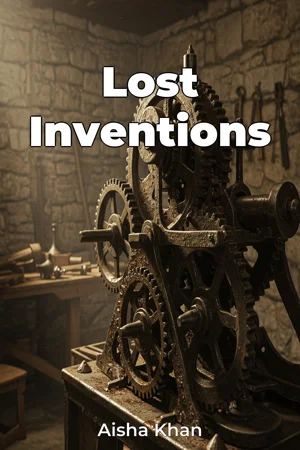
"Lost Inventions" explores the fascinating history of technological progress by examining innovations that vanished from our collective memory. It delves into the "lost potential" of forgotten technology, investigating why certain advancements disappeared despite their revolutionary possibilities. The book also considers instances of technology suppression, where progress may have been deliberately hindered. From flexible glass to self-repairing Roman concrete, each chapter offers a compelling case study of innovation history. The book challenges the traditional view of technological advancement as a linear process, revealing a more complex narrative influenced by social, economic, and political factors. The author presents these investigations within their original historical contexts, analyzing the circumstances that led to both invention and subsequent disappearance. It progresses from introducing the concept of technological loss to showcasing specific examples and examining broader themes of rediscovery.
Book Details
ISBN
9788235235596
Publisher
Publifye AS
Your Licenses
You don't own any licenses for this book
Purchase a license below to unlock this book and download the EPUB.
Purchase License
Select a tier to unlock this book
Need bulk licensing?
Contact us for enterprise agreements.