
About This Book
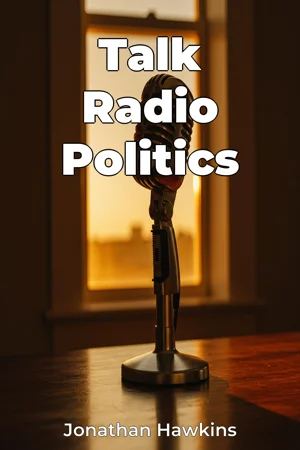
Is political talk radio merely a platform for partisan voices, or does it play a more profound role in shaping civic discourse and influencing the political landscape? "Talk Radio Politics" delves into the multifaceted influence of this powerful medium, exploring how its hosts craft narratives, mobilize audiences, and impact elections. This book examines the enduring significance of political talk radio despite the rise of social media and other digital platforms. This exploration is crucial because political talk radio remains a dominant force in shaping public opinion, particularly among politically engaged citizens. Understanding its mechanics, rhetorical strategies, and impact is essential for anyone seeking to navigate the complexities of modern political communication. The book first establishes a historical context, tracing the evolution of talk radio from its early days to its current prominence as a conservative stronghold. This includes examining the repeal of the Fairness Doctrine and its impact on the rise of partisan programming. We analyze the core elements that define the genre: the charismatic host, the dedicated listener base, and the emphasis on opinion over objective reporting. The central argument of "Talk Radio Politics" is that political talk radio operates as a vital, if often polarizing, mechanism for political engagement, agenda-setting, and mobilization. While frequently criticized for its partisan nature and the potential for spreading misinformation, it also provides a space for alternative viewpoints, fosters community among listeners, and holds elected officials accountable (albeit selectively). The book unfolds in three major sections. The first introduces the key figures and formats within political talk radio, providing detailed portraits of influential hosts and analyses of their on-air strategies. The second section explores the psychological and sociological factors that contribute to the medium's persuasive power, including the use of emotional appeals, framing techniques, and identity politics. This section also reviews existing research on the effects of talk radio exposure on political attitudes, voting behavior, and civic participation. The final section examines the real-world implications of talk radio's influence, focusing on its role in shaping political campaigns, influencing policy debates, and contributing to political polarization. Our analysis relies on a variety of sources, including content analysis of talk radio programming, surveys of talk radio listeners, and interviews with hosts, producers, and political strategists. We incorporate data from media consumption studies and political science research to provide a comprehensive and evidence-based assessment of talk radio's impact. "Talk Radio Politics" connects to several related fields, including media studies, political communication, sociology, and psychology. By drawing on insights from these disciplines, the book offers a holistic understanding of the complex dynamics at play in political talk radio. This book offers a unique approach by focusing on the interplay between the individual host, the audience, and the broader political context and offers a balanced perspective, acknowledging both the positive and negative aspects of political talk radio's influence. Written in an accessible and engaging style, "Talk Radio Politics" avoids academic jargon and presents complex information in a clear and concise manner. It is intended for a broad audience, including students, journalists, political professionals, and anyone interested in understanding the role of media in contemporary politics. The book adheres to the conventions of political science and media studies, presenting rigorous analysis and empirical evidence to support its claims. While the book focuses primarily on the American context, it also draws comparisons to talk radio in other countries to provide a broader perspective. The scope of the book is limited to terrestrial and satellite radio formats, omitting podcasts and online streaming. It also does not delve into the financial structure of the talk radio industry. The information in "Talk Radio Politics" can be used by media consumers to critically evaluate the information they receive from talk radio, by political actors to understand the potential of the medium for mobilization and persuasion, and by media scholars to further research on the role of talk radio in shaping public discourse. The book addresses ongoing debates about the role of talk radio in contributing to political polarization, the spread of misinformation, and the erosion of trust in mainstream media. It offers a nuanced perspective on these issues, acknowledging the challenges while highlighting the medium's potential for fostering civic engagement.
Is political talk radio merely a platform for partisan voices, or does it play a more profound role in shaping civic discourse and influencing the political landscape? "Talk Radio Politics" delves into the multifaceted influence of this powerful medium, exploring how its hosts craft narratives, mobilize audiences, and impact elections. This book examines the enduring significance of political talk radio despite the rise of social media and other digital platforms. This exploration is crucial because political talk radio remains a dominant force in shaping public opinion, particularly among politically engaged citizens. Understanding its mechanics, rhetorical strategies, and impact is essential for anyone seeking to navigate the complexities of modern political communication. The book first establishes a historical context, tracing the evolution of talk radio from its early days to its current prominence as a conservative stronghold. This includes examining the repeal of the Fairness Doctrine and its impact on the rise of partisan programming. We analyze the core elements that define the genre: the charismatic host, the dedicated listener base, and the emphasis on opinion over objective reporting. The central argument of "Talk Radio Politics" is that political talk radio operates as a vital, if often polarizing, mechanism for political engagement, agenda-setting, and mobilization. While frequently criticized for its partisan nature and the potential for spreading misinformation, it also provides a space for alternative viewpoints, fosters community among listeners, and holds elected officials accountable (albeit selectively). The book unfolds in three major sections. The first introduces the key figures and formats within political talk radio, providing detailed portraits of influential hosts and analyses of their on-air strategies. The second section explores the psychological and sociological factors that contribute to the medium's persuasive power, including the use of emotional appeals, framing techniques, and identity politics. This section also reviews existing research on the effects of talk radio exposure on political attitudes, voting behavior, and civic participation. The final section examines the real-world implications of talk radio's influence, focusing on its role in shaping political campaigns, influencing policy debates, and contributing to political polarization. Our analysis relies on a variety of sources, including content analysis of talk radio programming, surveys of talk radio listeners, and interviews with hosts, producers, and political strategists. We incorporate data from media consumption studies and political science research to provide a comprehensive and evidence-based assessment of talk radio's impact. "Talk Radio Politics" connects to several related fields, including media studies, political communication, sociology, and psychology. By drawing on insights from these disciplines, the book offers a holistic understanding of the complex dynamics at play in political talk radio. This book offers a unique approach by focusing on the interplay between the individual host, the audience, and the broader political context and offers a balanced perspective, acknowledging both the positive and negative aspects of political talk radio's influence. Written in an accessible and engaging style, "Talk Radio Politics" avoids academic jargon and presents complex information in a clear and concise manner. It is intended for a broad audience, including students, journalists, political professionals, and anyone interested in understanding the role of media in contemporary politics. The book adheres to the conventions of political science and media studies, presenting rigorous analysis and empirical evidence to support its claims. While the book focuses primarily on the American context, it also draws comparisons to talk radio in other countries to provide a broader perspective. The scope of the book is limited to terrestrial and satellite radio formats, omitting podcasts and online streaming. It also does not delve into the financial structure of the talk radio industry. The information in "Talk Radio Politics" can be used by media consumers to critically evaluate the information they receive from talk radio, by political actors to understand the potential of the medium for mobilization and persuasion, and by media scholars to further research on the role of talk radio in shaping public discourse. The book addresses ongoing debates about the role of talk radio in contributing to political polarization, the spread of misinformation, and the erosion of trust in mainstream media. It offers a nuanced perspective on these issues, acknowledging the challenges while highlighting the medium's potential for fostering civic engagement.
"Talk Radio Politics" explores the significant impact of political talk radio on civic discourse and the political landscape, despite the rise of digital media. It examines how hosts craft narratives, mobilize audiences, and influence elections, revealing its enduring power in shaping public opinion, especially among politically engaged citizens. The book highlights the importance of understanding this medium's mechanics and rhetorical strategies in today's complex political communication environment. The book charts the evolution of talk radio, noting the impact of the repeal of the Fairness Doctrine, and analyzes the core elements of the genre: the charismatic host, dedicated listener base, and emphasis on opinion. It argues that political talk radio, while often criticized for partisanship and potential misinformation, also provides space for alternative viewpoints and fosters community. Emotional appeals and framing techniques are key to the medium's persuasive power. The book progresses through detailed portraits of influential hosts, explores the psychological and sociological factors contributing to its persuasive power, and examines its real-world implications in shaping political campaigns and contributing to political polarization. Utilizing content analysis, listener surveys, and interviews, it offers a balanced perspective on both the positive and negative aspects of political talk radio's influence, making it valuable for students, journalists, and anyone interested in contemporary politics.
Book Details
ISBN
9788235235428
Publisher
Publifye AS
Your Licenses
You don't own any licenses for this book
Purchase a license below to unlock this book and download the EPUB.
Purchase License
Select a tier to unlock this book
Need bulk licensing?
Contact us for enterprise agreements.