
About This Book
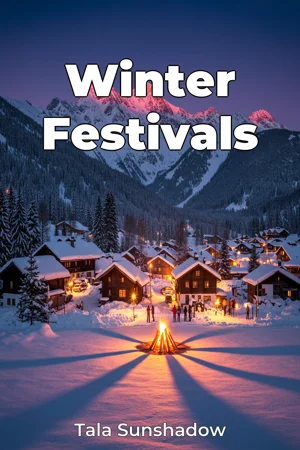
Why, across continents and millennia, do humans gather in the darkest days of winter to celebrate with light, feasts, and communal traditions? "Winter Festivals" explores the rich tapestry of cultural celebrations that illuminate the year's shortest, coldest days, examining the deep-seated human need for connection, hope, and renewal during the winter season. This book delves into the historical, religious, and social underpinnings of winter celebrations, highlighting the shared human experiences that transcend geographical boundaries. Central to this exploration are three main concepts: the role of light in overcoming darkness, the significance of communal feasting, and the enduring power of cultural traditions. These topics are crucial because they reveal the ways in which diverse societies have historically coped with the challenges of winter and used ritual to reinforce social bonds and shared values. The book provides background on pre-Christian winter solstice observations, the evolution of religious practices, and the impact of agricultural cycles on seasonal festivities. No specific prerequisite knowledge is needed, as the book is designed to be accessible to a broad audience interested in world history, comparative religion, and cultural studies. The central argument of "Winter Festivals" posits that winter celebrations, despite their diverse forms, share common functions: to provide psychological comfort during a challenging season, to reinforce community identity, and to mark the cyclical return of light and life. The book argues that understanding these commonalities sheds light on the fundamental aspects of human culture and the enduring power of ritual. The book begins by introducing the main concepts of light, feasting, and tradition, setting the stage for an in-depth exploration of specific celebrations. It then develops its ideas through three major sections. The first examines celebrations rooted in ancient agricultural practices, focusing on how early societies marked the winter solstice and ensured the return of spring. Case studies include pre-Christian solstice rituals in Europe and the Near East. The second section delves into religious festivals such as Hanukkah, Christmas, and Lunar New Year (Spring Festival), tracing their historical development and exploring their theological and cultural meanings. The third section investigates traditions that have evolved alongside societal changes, highlighting how these practices have adapted to modern contexts. The book culminates by demonstrating how these disparate celebrations reflect universal human needs and desires and what the continued practice teaches us about society. The book draws upon a variety of sources, including archaeological findings, historical texts, religious scriptures, and ethnographic studies. It analyzes primary source material, such as ancient calendars and liturgical texts, alongside secondary scholarly research in anthropology, religious studies, and folklore. "Winter Festivals" connects to other fields such as anthropology, sociology, and art history. Anthropological insights illuminate the cultural symbolism embedded in winter rituals. Sociological perspectives explore the role of these celebrations in maintaining social cohesion. Art historical analysis reveals the visual and material culture associated with these festivals. The book's unique perspective lies in its comparative approach, which brings together celebrations from different cultures and historical periods to reveal underlying patterns and shared human experiences. The tone is informative yet engaging, presenting complex ideas in an accessible and compelling manner. The target audience includes general readers interested in world cultures, history enthusiasts, students of religious studies, and anyone who wants to understand the deeper meanings behind winter celebrations. It would be valuable to them by offering a more nuanced and informed appreciation for the diverse traditions that enrich the winter season. As a work of non-fiction in the genres of world history, history world, and religion, "Winter Festivals" adheres to the conventions of academic rigor, presenting well-researched information in a balanced and objective manner. The scope of the book is broad, covering a range of winter celebrations across different regions and time periods. However, it is limited by its focus on major, well-documented festivals, acknowledging that many smaller, localized traditions also exist. The information can be applied practically by readers seeking to understand cultural diversity, plan inclusive holiday celebrations, or engage in interfaith dialogue. While the book seeks to present a balanced view, it acknowledges that interpretations of religious and cultural practices can sometimes be subject to debate, and that different communities may hold varying perspectives on the meaning and significance of their traditions.
Why, across continents and millennia, do humans gather in the darkest days of winter to celebrate with light, feasts, and communal traditions? "Winter Festivals" explores the rich tapestry of cultural celebrations that illuminate the year's shortest, coldest days, examining the deep-seated human need for connection, hope, and renewal during the winter season. This book delves into the historical, religious, and social underpinnings of winter celebrations, highlighting the shared human experiences that transcend geographical boundaries. Central to this exploration are three main concepts: the role of light in overcoming darkness, the significance of communal feasting, and the enduring power of cultural traditions. These topics are crucial because they reveal the ways in which diverse societies have historically coped with the challenges of winter and used ritual to reinforce social bonds and shared values. The book provides background on pre-Christian winter solstice observations, the evolution of religious practices, and the impact of agricultural cycles on seasonal festivities. No specific prerequisite knowledge is needed, as the book is designed to be accessible to a broad audience interested in world history, comparative religion, and cultural studies. The central argument of "Winter Festivals" posits that winter celebrations, despite their diverse forms, share common functions: to provide psychological comfort during a challenging season, to reinforce community identity, and to mark the cyclical return of light and life. The book argues that understanding these commonalities sheds light on the fundamental aspects of human culture and the enduring power of ritual. The book begins by introducing the main concepts of light, feasting, and tradition, setting the stage for an in-depth exploration of specific celebrations. It then develops its ideas through three major sections. The first examines celebrations rooted in ancient agricultural practices, focusing on how early societies marked the winter solstice and ensured the return of spring. Case studies include pre-Christian solstice rituals in Europe and the Near East. The second section delves into religious festivals such as Hanukkah, Christmas, and Lunar New Year (Spring Festival), tracing their historical development and exploring their theological and cultural meanings. The third section investigates traditions that have evolved alongside societal changes, highlighting how these practices have adapted to modern contexts. The book culminates by demonstrating how these disparate celebrations reflect universal human needs and desires and what the continued practice teaches us about society. The book draws upon a variety of sources, including archaeological findings, historical texts, religious scriptures, and ethnographic studies. It analyzes primary source material, such as ancient calendars and liturgical texts, alongside secondary scholarly research in anthropology, religious studies, and folklore. "Winter Festivals" connects to other fields such as anthropology, sociology, and art history. Anthropological insights illuminate the cultural symbolism embedded in winter rituals. Sociological perspectives explore the role of these celebrations in maintaining social cohesion. Art historical analysis reveals the visual and material culture associated with these festivals. The book's unique perspective lies in its comparative approach, which brings together celebrations from different cultures and historical periods to reveal underlying patterns and shared human experiences. The tone is informative yet engaging, presenting complex ideas in an accessible and compelling manner. The target audience includes general readers interested in world cultures, history enthusiasts, students of religious studies, and anyone who wants to understand the deeper meanings behind winter celebrations. It would be valuable to them by offering a more nuanced and informed appreciation for the diverse traditions that enrich the winter season. As a work of non-fiction in the genres of world history, history world, and religion, "Winter Festivals" adheres to the conventions of academic rigor, presenting well-researched information in a balanced and objective manner. The scope of the book is broad, covering a range of winter celebrations across different regions and time periods. However, it is limited by its focus on major, well-documented festivals, acknowledging that many smaller, localized traditions also exist. The information can be applied practically by readers seeking to understand cultural diversity, plan inclusive holiday celebrations, or engage in interfaith dialogue. While the book seeks to present a balanced view, it acknowledges that interpretations of religious and cultural practices can sometimes be subject to debate, and that different communities may hold varying perspectives on the meaning and significance of their traditions.
"Winter Festivals" explores the captivating world of winter celebrations across cultures and millennia, revealing the shared human need for light, connection, and renewal during the darkest time of year. It examines how societies, both ancient and modern, have used communal feasting, light overcoming darkness, and enduring cultural traditions to cope with the challenges of winter. Did you know that many pre-Christian winter solstice observations laid the groundwork for later religious festivals? This book highlights the evolution of these practices and their impact on seasonal festivities around the world. The book uniquely compares celebrations from different historical periods and regions to uncover underlying patterns and shared human experiences. Beginning with ancient agricultural practices and the winter solstice, it progresses through religious festivals like Hanukkah, Christmas, and Lunar New Year, before investigating modern traditions. By understanding these diverse winter festivals, readers gain a deeper appreciation for cultural diversity.
Book Details
ISBN
9788235235336
Publisher
Publifye AS
Your Licenses
You don't own any licenses for this book
Purchase a license below to unlock this book and download the EPUB.
Purchase License
Select a tier to unlock this book
Need bulk licensing?
Contact us for enterprise agreements.