
About This Book
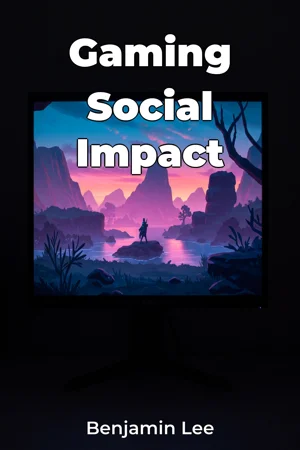
Does the glow of a screen illuminate connection or isolate individuals in the digital age? "Gaming Social Impact" delves into the multifaceted effects of multiplayer gaming on social development, relationship formation, and the construction of communities across diverse age groups. Examining how virtual interactions translate into tangible social outcomes, this book navigates the complex landscape where digital play intersects with real-world social dynamics. The book addresses three core themes: the role of multiplayer games in fostering social skills, the formation and maintenance of relationships within gaming environments, and the development of online communities centered around shared gaming interests. These topics are crucial as digital interactions increasingly shape social experiences, particularly for younger generations who have grown up immersed in online gaming culture. Understanding these dynamics is vital for educators, parents, policymakers, and anyone interested in the evolving nature of human interaction in the digital age. We begin by contextualizing the explosion of multiplayer gaming within broader technological and social trends. From the early days of local area network parties to the globally connected ecosystems of today, the evolution of gaming technology has significantly altered how people connect and socialize. We acknowledge the ongoing debates surrounding screen time and its potential impact on mental health, framing our exploration within a balanced perspective that recognizes both the potential risks and the opportunities inherent in digital play. The central argument of "Gaming Social Impact" posits that multiplayer gaming environments, when approached thoughtfully and critically, can serve as valuable spaces for social learning and community building. While concerns about addiction, cyberbullying, and social isolation are valid, the book demonstrates that these risks can be mitigated through awareness, responsible gaming practices, and the cultivation of supportive online communities. The book is structured in three parts. Part one introduces core concepts of social development and relationship formation, examining how these processes are manifested within gaming contexts. Part two explores the dynamics of online communities, analyzing how shared gaming interests can foster social bonds, cooperation, and collective identity. Part three addresses the practical implications of our findings, offering insights for educators, parents, and game developers seeking to harness the positive potential of multiplayer gaming while mitigating potential risks. The analysis presented relies on a synthesis of existing research across psychology, sociology, and communication studies, supplemented by original case studies and surveys of gamers from various age groups and backgrounds. We incorporate data gathered from online forums, social media platforms, and in-game interactions to provide a comprehensive understanding of the social dynamics at play. This book bridges connections between the fields of psychology (understanding individual behavior and social development), sociology (analyzing group dynamics and community formation), and communication studies (examining the role of technology in shaping social interaction). These interdisciplinary perspectives enrich the analysis and provide a more holistic understanding of the social impact of gaming. "Gaming Social Impact" offers a balanced and nuanced perspective, moving beyond simplistic narratives to explore the intricate ways in which multiplayer gaming shapes social experiences. The approach favors empirical evidence and critical analysis over anecdotal claims, providing readers with credible insights grounded in research. The target audience includes academics in social sciences, educators, parents, game developers, and anyone interested in understanding the evolving nature of social interaction in the digital age. This book offers valuable insights into how multiplayer gaming influences social skills, relationships, and community building, providing readers with the knowledge and tools to navigate this complex landscape. As a work in the genres of Psychology and Social Science, this book assumes a commitment to empirical data, logical argumentation, and clear communication of complex ideas. The scope is limited to the social impacts of multiplayer gaming, focusing primarily on social development, relationship formation, and community building. Other aspects of gaming, such as its economic or political implications, are addressed only insofar as they directly relate to these core themes. The information can be applied practically by educators seeking to incorporate gaming into their curricula, parents aiming to guide their children's gaming habits, and game developers striving to create more socially supportive and inclusive gaming environments. The book addresses ongoing debates surrounding the potential negative impacts of gaming on mental health and social well-being, offering a balanced perspective that recognizes both the risks and the opportunities associated with digital play. It contributes new data and perspectives to these discussions, aiming to foster a more informed and nuanced understanding of the role of gaming in contemporary society.
Does the glow of a screen illuminate connection or isolate individuals in the digital age? "Gaming Social Impact" delves into the multifaceted effects of multiplayer gaming on social development, relationship formation, and the construction of communities across diverse age groups. Examining how virtual interactions translate into tangible social outcomes, this book navigates the complex landscape where digital play intersects with real-world social dynamics. The book addresses three core themes: the role of multiplayer games in fostering social skills, the formation and maintenance of relationships within gaming environments, and the development of online communities centered around shared gaming interests. These topics are crucial as digital interactions increasingly shape social experiences, particularly for younger generations who have grown up immersed in online gaming culture. Understanding these dynamics is vital for educators, parents, policymakers, and anyone interested in the evolving nature of human interaction in the digital age. We begin by contextualizing the explosion of multiplayer gaming within broader technological and social trends. From the early days of local area network parties to the globally connected ecosystems of today, the evolution of gaming technology has significantly altered how people connect and socialize. We acknowledge the ongoing debates surrounding screen time and its potential impact on mental health, framing our exploration within a balanced perspective that recognizes both the potential risks and the opportunities inherent in digital play. The central argument of "Gaming Social Impact" posits that multiplayer gaming environments, when approached thoughtfully and critically, can serve as valuable spaces for social learning and community building. While concerns about addiction, cyberbullying, and social isolation are valid, the book demonstrates that these risks can be mitigated through awareness, responsible gaming practices, and the cultivation of supportive online communities. The book is structured in three parts. Part one introduces core concepts of social development and relationship formation, examining how these processes are manifested within gaming contexts. Part two explores the dynamics of online communities, analyzing how shared gaming interests can foster social bonds, cooperation, and collective identity. Part three addresses the practical implications of our findings, offering insights for educators, parents, and game developers seeking to harness the positive potential of multiplayer gaming while mitigating potential risks. The analysis presented relies on a synthesis of existing research across psychology, sociology, and communication studies, supplemented by original case studies and surveys of gamers from various age groups and backgrounds. We incorporate data gathered from online forums, social media platforms, and in-game interactions to provide a comprehensive understanding of the social dynamics at play. This book bridges connections between the fields of psychology (understanding individual behavior and social development), sociology (analyzing group dynamics and community formation), and communication studies (examining the role of technology in shaping social interaction). These interdisciplinary perspectives enrich the analysis and provide a more holistic understanding of the social impact of gaming. "Gaming Social Impact" offers a balanced and nuanced perspective, moving beyond simplistic narratives to explore the intricate ways in which multiplayer gaming shapes social experiences. The approach favors empirical evidence and critical analysis over anecdotal claims, providing readers with credible insights grounded in research. The target audience includes academics in social sciences, educators, parents, game developers, and anyone interested in understanding the evolving nature of social interaction in the digital age. This book offers valuable insights into how multiplayer gaming influences social skills, relationships, and community building, providing readers with the knowledge and tools to navigate this complex landscape. As a work in the genres of Psychology and Social Science, this book assumes a commitment to empirical data, logical argumentation, and clear communication of complex ideas. The scope is limited to the social impacts of multiplayer gaming, focusing primarily on social development, relationship formation, and community building. Other aspects of gaming, such as its economic or political implications, are addressed only insofar as they directly relate to these core themes. The information can be applied practically by educators seeking to incorporate gaming into their curricula, parents aiming to guide their children's gaming habits, and game developers striving to create more socially supportive and inclusive gaming environments. The book addresses ongoing debates surrounding the potential negative impacts of gaming on mental health and social well-being, offering a balanced perspective that recognizes both the risks and the opportunities associated with digital play. It contributes new data and perspectives to these discussions, aiming to foster a more informed and nuanced understanding of the role of gaming in contemporary society.
"Gaming Social Impact" explores how multiplayer gaming influences social development in the digital age. It examines the formation of relationships and the building of online communities, analyzing how these virtual interactions translate into real-world social outcomes. The book highlights that multiplayer gaming, when approached thoughtfully, can foster social learning and community building, demonstrating how shared gaming interests can lead to cooperation and collective identity. The book is structured into three parts, starting with core concepts of social development within gaming. It then explores online community dynamics and concludes with practical implications for educators, parents, and game developers. Through case studies and surveys, the book provides empirical evidence from psychology, sociology, and communication studies, offering a balanced perspective on the potential risks and opportunities of digital play.
Book Details
ISBN
9788235235299
Publisher
Publifye AS
Your Licenses
You don't own any licenses for this book
Purchase a license below to unlock this book and download the EPUB.
Purchase License
Select a tier to unlock this book
Need bulk licensing?
Contact us for enterprise agreements.