
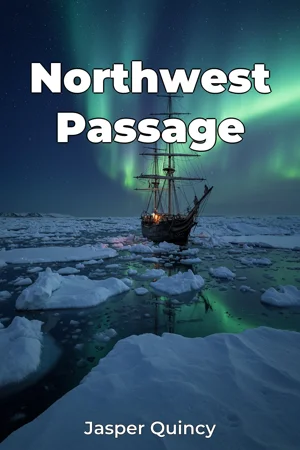
About This Book
For centuries, the icy grip of the Arctic has both beckoned and repelled explorers and traders, promising untold riches and a shorter sea route between Europe and Asia. _Northwest Passage_ delves into the relentless, often tragic, quest to discover and navigate a viable northern sea route through the Arctic archipelago, examining its profound impact on global commerce, geopolitical strategy, and the indigenous populations of the region. This book focuses on three key themes: the evolving motivations behind the search for the Northwest Passage, the immense technological and human challenges faced by explorers, and the long-term consequences of Arctic exploration on global trade networks and the environment. Understanding these elements is crucial for grasping the historical context of modern Arctic geopolitics and the ongoing debate about resource extraction and climate change in the region. The pursuit of the Northwest Passage began in the 15th century, fueled by the desire to circumvent the established trade routes controlled by rival European powers. Initial voyages, driven by mercantilist ambitions, quickly revealed the formidable obstacles posed by ice, unpredictable weather, and the vast, uncharted territories. This book builds on existing scholarship in maritime history and Arctic studies, offering a synthesis of primary source accounts from explorers, archival maps, and contemporary scientific data. The central argument of _Northwest Passage_ is that the persistent drive to conquer the Arctic, despite repeated failures and immense costs, reveals a fundamental human impulse to expand horizons and overcome geographical barriers, with lasting and often unintended consequences. This argument is significant because it challenges romanticized notions of exploration, highlighting the complex interplay of economic incentives, technological innovation, and environmental impact. The book begins by introducing the early European voyages, tracing the evolution of navigational techniques and ship design. It then develops into three major sections. The first explores the age of discovery, examining the expeditions of figures such as John Cabot, Martin Frobisher, and Henry Hudson, and the initial encounters with Inuit communities. The second section analyzes the 19th-century push for the passage, highlighting the expeditions of John Franklin and the subsequent search efforts that ultimately led to a greater understanding of Arctic geography, also discussing the impact of technology such as steam power. The third section examines the eventual successful navigation of the passage in the 20th century, the implications for global shipping, and the environmental and geopolitical ramifications of increased Arctic access. The argument culminates in an assessment of the Northwest Passage as a symbol of human ambition and its complex legacy for the Arctic region and the world. To support its arguments, the book draws upon a diverse range of evidence: explorers' journals, ship logs, cartographic data, archaeological findings from abandoned expedition sites, and Inuit oral histories. It also incorporates scientific research on climate change and ice conditions to provide a contemporary perspective on the viability and sustainability of Arctic navigation. _Northwest Passage_ connects to several other fields of study. It offers insights into environmental history by examining the impact of human activity on the fragile Arctic ecosystem. It engages with indigenous studies by exploring the interactions between explorers and Inuit populations. Finally, it links to international relations by analyzing the geopolitical implications of Arctic resource competition and maritime sovereignty. What sets this book apart is its integrated approach, combining traditional historical analysis with contemporary scientific perspectives to offer a balanced and nuanced understanding of the Northwest Passage. The narrative unfolds in a clear and descriptive style, making it accessible to a broad audience while maintaining scholarly rigor. The target audience includes readers interested in world history, maritime exploration, Arctic studies, and the history of science and technology. It will be valuable to anyone seeking a comprehensive and engaging account of the quest for the Northwest Passage and its enduring significance. As a work of non-fiction history, the book adheres to the genre’s conventions of accuracy, objectivity, and evidence-based analysis. It provides a detailed narrative but makes use of analysis and interpretation. The scope of the book encompasses the entire history of the Northwest Passage, from the early voyages of discovery to the present day. It focuses primarily on the maritime expeditions and their consequences, while acknowledging the broader social, economic, and environmental context. The information presented in _Northwest Passage_ has practical applications for understanding contemporary Arctic issues, such as climate change, resource management, and indigenous rights. It provides a historical perspective on the challenges and opportunities facing the region today. The book addresses ongoing debates about the environmental impact of Arctic shipping, the sovereignty claims of Arctic nations, and the rights of indigenous peoples, offering a balanced and informed perspective on these complex issues.
For centuries, the icy grip of the Arctic has both beckoned and repelled explorers and traders, promising untold riches and a shorter sea route between Europe and Asia. _Northwest Passage_ delves into the relentless, often tragic, quest to discover and navigate a viable northern sea route through the Arctic archipelago, examining its profound impact on global commerce, geopolitical strategy, and the indigenous populations of the region. This book focuses on three key themes: the evolving motivations behind the search for the Northwest Passage, the immense technological and human challenges faced by explorers, and the long-term consequences of Arctic exploration on global trade networks and the environment. Understanding these elements is crucial for grasping the historical context of modern Arctic geopolitics and the ongoing debate about resource extraction and climate change in the region. The pursuit of the Northwest Passage began in the 15th century, fueled by the desire to circumvent the established trade routes controlled by rival European powers. Initial voyages, driven by mercantilist ambitions, quickly revealed the formidable obstacles posed by ice, unpredictable weather, and the vast, uncharted territories. This book builds on existing scholarship in maritime history and Arctic studies, offering a synthesis of primary source accounts from explorers, archival maps, and contemporary scientific data. The central argument of _Northwest Passage_ is that the persistent drive to conquer the Arctic, despite repeated failures and immense costs, reveals a fundamental human impulse to expand horizons and overcome geographical barriers, with lasting and often unintended consequences. This argument is significant because it challenges romanticized notions of exploration, highlighting the complex interplay of economic incentives, technological innovation, and environmental impact. The book begins by introducing the early European voyages, tracing the evolution of navigational techniques and ship design. It then develops into three major sections. The first explores the age of discovery, examining the expeditions of figures such as John Cabot, Martin Frobisher, and Henry Hudson, and the initial encounters with Inuit communities. The second section analyzes the 19th-century push for the passage, highlighting the expeditions of John Franklin and the subsequent search efforts that ultimately led to a greater understanding of Arctic geography, also discussing the impact of technology such as steam power. The third section examines the eventual successful navigation of the passage in the 20th century, the implications for global shipping, and the environmental and geopolitical ramifications of increased Arctic access. The argument culminates in an assessment of the Northwest Passage as a symbol of human ambition and its complex legacy for the Arctic region and the world. To support its arguments, the book draws upon a diverse range of evidence: explorers' journals, ship logs, cartographic data, archaeological findings from abandoned expedition sites, and Inuit oral histories. It also incorporates scientific research on climate change and ice conditions to provide a contemporary perspective on the viability and sustainability of Arctic navigation. _Northwest Passage_ connects to several other fields of study. It offers insights into environmental history by examining the impact of human activity on the fragile Arctic ecosystem. It engages with indigenous studies by exploring the interactions between explorers and Inuit populations. Finally, it links to international relations by analyzing the geopolitical implications of Arctic resource competition and maritime sovereignty. What sets this book apart is its integrated approach, combining traditional historical analysis with contemporary scientific perspectives to offer a balanced and nuanced understanding of the Northwest Passage. The narrative unfolds in a clear and descriptive style, making it accessible to a broad audience while maintaining scholarly rigor. The target audience includes readers interested in world history, maritime exploration, Arctic studies, and the history of science and technology. It will be valuable to anyone seeking a comprehensive and engaging account of the quest for the Northwest Passage and its enduring significance. As a work of non-fiction history, the book adheres to the genre’s conventions of accuracy, objectivity, and evidence-based analysis. It provides a detailed narrative but makes use of analysis and interpretation. The scope of the book encompasses the entire history of the Northwest Passage, from the early voyages of discovery to the present day. It focuses primarily on the maritime expeditions and their consequences, while acknowledging the broader social, economic, and environmental context. The information presented in _Northwest Passage_ has practical applications for understanding contemporary Arctic issues, such as climate change, resource management, and indigenous rights. It provides a historical perspective on the challenges and opportunities facing the region today. The book addresses ongoing debates about the environmental impact of Arctic shipping, the sovereignty claims of Arctic nations, and the rights of indigenous peoples, offering a balanced and informed perspective on these complex issues.
"Northwest Passage" explores the centuries-long, often tragic, quest to find a viable sea route through the Arctic, connecting Europe and Asia. This book examines the motivations, challenges, and consequences of Arctic exploration, highlighting the impact on global commerce, geopolitics, and indigenous populations. The pursuit, driven by economic ambitions and a desire to overcome geographical barriers, reveals a fundamental human impulse to expand horizons, though often with lasting and unintended consequences. Early voyages faced formidable obstacles like ice and uncharted territories, while later expeditions saw technological advancements like steam power. The book's narrative progresses chronologically, beginning with early voyages of discovery and encounters with Inuit communities. It then analyzes the 19th-century push, including the ill-fated Franklin expedition, and concludes with the successful navigation of the passage in the 20th century. Drawing on explorers' journals, maps, and scientific data, this book provides a balanced and nuanced understanding of Arctic exploration. It connects to broader themes such as environmental history, indigenous studies, and international relations, offering insights into contemporary Arctic issues like climate change and resource management.
Book Details
ISBN
9788235235145
Publisher
Publifye AS
Your Licenses
You don't own any licenses for this book
Purchase a license below to unlock this book and download the EPUB.
Purchase License
Select a tier to unlock this book
Need bulk licensing?
Contact us for enterprise agreements.